Key takeaways
- A Norwegian geography for schools, printed in 1910, states without argument that whaling is forbidden on the coast of the Tromso diocese, while seal and walrus are still hunted up in the polar regions.
- The 1899 topographical survey of the county records that whaling was driven especially around Tromso, in Balsfjorden and Ullsfjorden and around Karlsoy, where the whale pressed in in numbers.
- In October 1881 a northern paper reported that Svend Foyn had closed his year's whaling with a yield of one hundred and seven whales and left Vadso for home.
- An 1887 paper called it the blue whale's enemy and faster than the blue whale. As late as 1938 another was still asking its readers which of its local names was the right one.
The sentence that changes how you read this coast
A Norwegian geography written for county and folk high schools, printed in 1910, disposes of the matter in one line. From Tonsberg, Kristiania, Tromso and the Finnmark towns, seal and walrus are hunted up in the polar regions, it says, and then: whaling is forbidden on the coast of the Tromso diocese. [1]
Not discouraged. Forbidden, in a schoolbook, as a fact a child was expected to learn.
A geography for middle schools five years earlier had already put it in the past tense: whaling was formerly carried on in the counties of Tromso and Finnmark, but is now stopped. [2] Between those two sentences and the boat you are about to board lies everything worth knowing about why whale watching happens here at all.
It happened in the water you are sailing
The great topographical survey Norges land og folk, in its 1899 volume on Tromso county, is precise about where. It was driven especially around Tromso, it records, namely in Balsfjorden and Ullsfjorden and around Karlsoy and several other places, where the whale pressed in in numbers. [3]
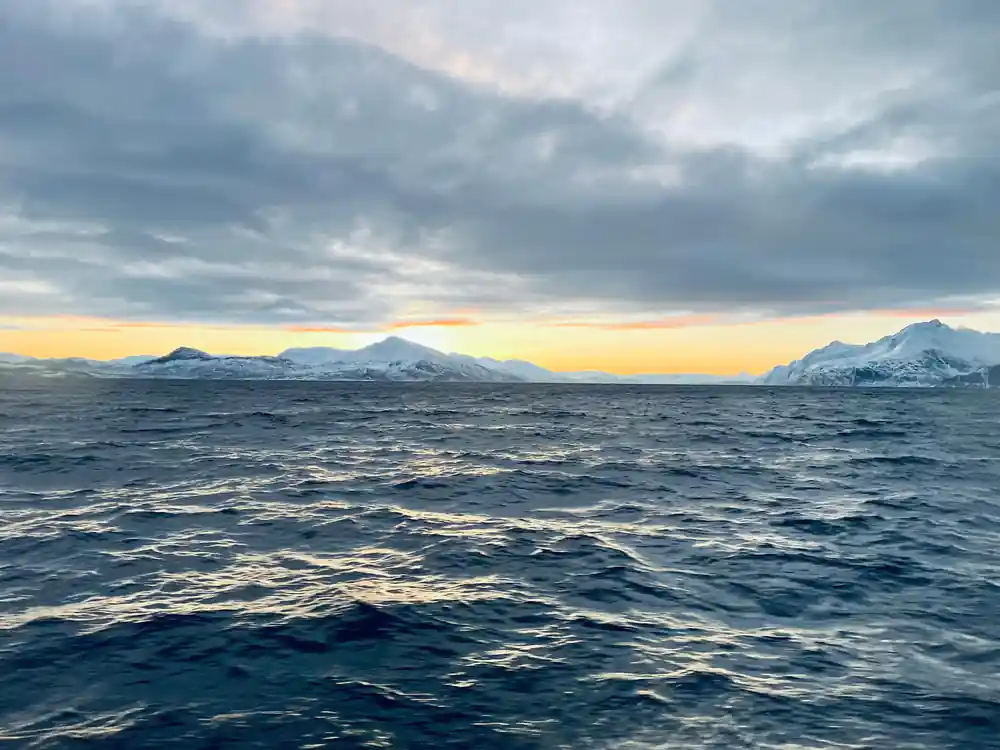
Read that list against your route. Ullsfjorden opens off the run north. Karlsoy is the island group the boat threads. These are not adjacent waters. They are the waters.
And the reason the whales were there is the reason they are there now. In 1928 a paper reported from Nikkeby, on the same sailing, that a line boat had taken sixteen hundred kilos of cod, and explained it in five words: the cod had followed the herring. [21] Everything in this sea follows the herring, and always has.
The scale of it, in the papers' own numbers
Nordlands Amtstidende, October 1881: Svend Foyn had closed his whaling for the year with a yield of one hundred and seven whales, and left Vadso on the Wednesday morning for home. [8] One operator. One season.
Vestfinmarkens Socialdemokrat, September 1918: a vessel came in on her second trip to Tromso with six fin whales and one bear, and one whale lost in a gale. [13] Vardo-Posten, April 1890, reporting what the whalers said: fin whale standing about a mile off the coast, but only in smaller schools. [14]
The trade did not end when the coastal ban came. It moved. In August 1938 the paper Tromso relayed word from Honningsvag that a couple of whalers working off the Finnmark coast had each come up with about eight tonnes of whale meat. [16] In November that year another reported a vessel into Tromso with three thousand kilograms of whale meat and three thousand five hundred of blubber. [15] The same year, the Swedish whalers Alende and Bjorn, working at Bjornoya, had been in to Tromso with twelve thousand kilograms of whale meat. [11]
And in September 1938 Haugesunds Dagblad printed a captain's own tally to a Tromso paper: one sperm whale and twenty-seven minke whales, with a blubber catch of about thirty-five tonnes. [12]
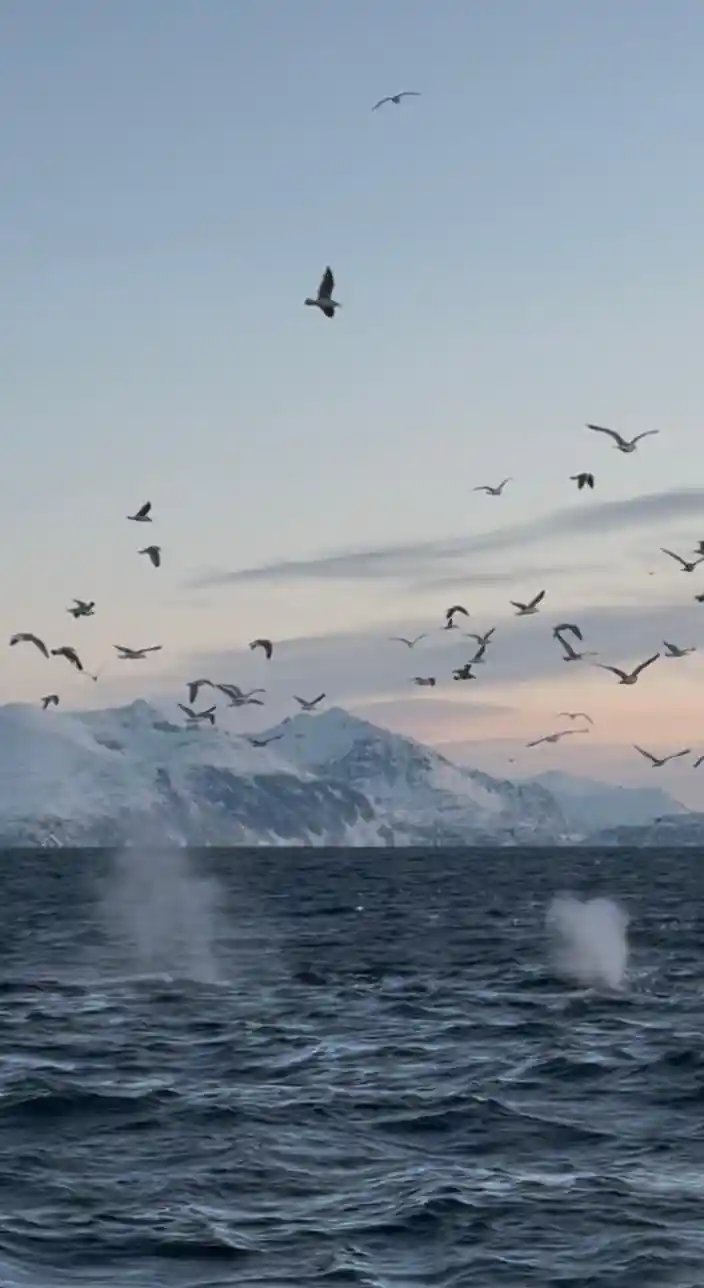
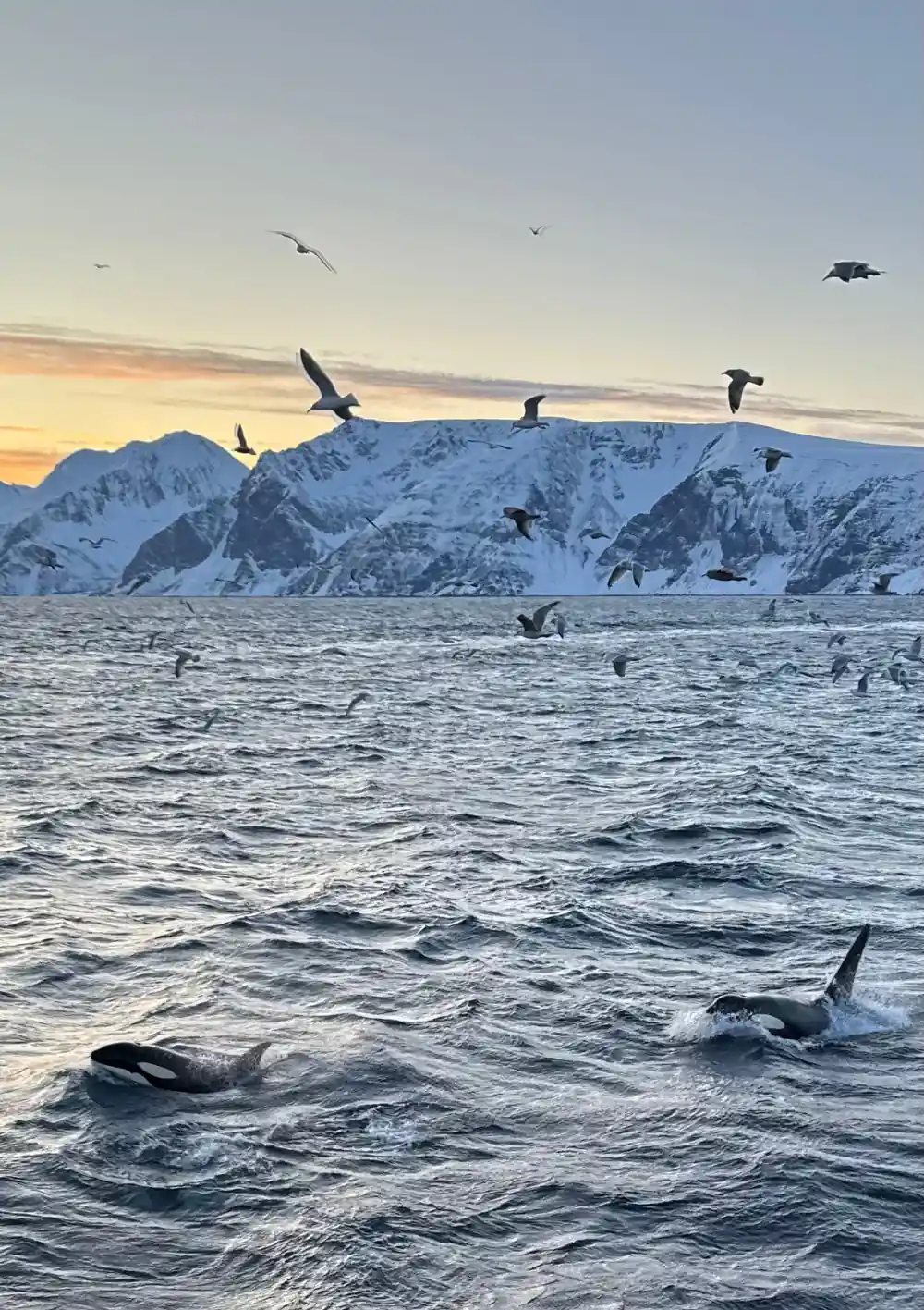
The animal a Norwegian paper in 1887 called the blue whale's enemy, and that another in 1938 still could not settle on a name for.
The strangest cargo, and the strangest object
Two entries stand out from the accounting.
In July 1925 Nordlandsposten reported that a whaling boat had taken a large sperm whale in the Atlantic carrying no less than one hundred and three kilograms of ambergris. [17] Ambergris is what a sperm whale's gut makes of squid beaks it cannot digest, and it was worth more than the whale.
The other is quieter. In July 1886 a northern paper described a vertebra in a collection that had belonged to a killer whale, and noted that it bears the marks of a blow struck while the bone was still fresh. [5] Somebody hit a living orca hard enough to mark its spine, and a museum kept the evidence.
The hunting was never only whales, either. A government submission of 1932 records a vessel turning for home on 19 August and reaching Tromso on 6 September with seventy-nine musk ox, two live calves, thirteen walrus and a hundred and twenty other seals. [19] Two years later a skipper told an illustrated paper, with a dry twinkle in his eye, that they had managed to bring back a hundred and fifty walrus as well. [20]
The orca had a bad name and several names
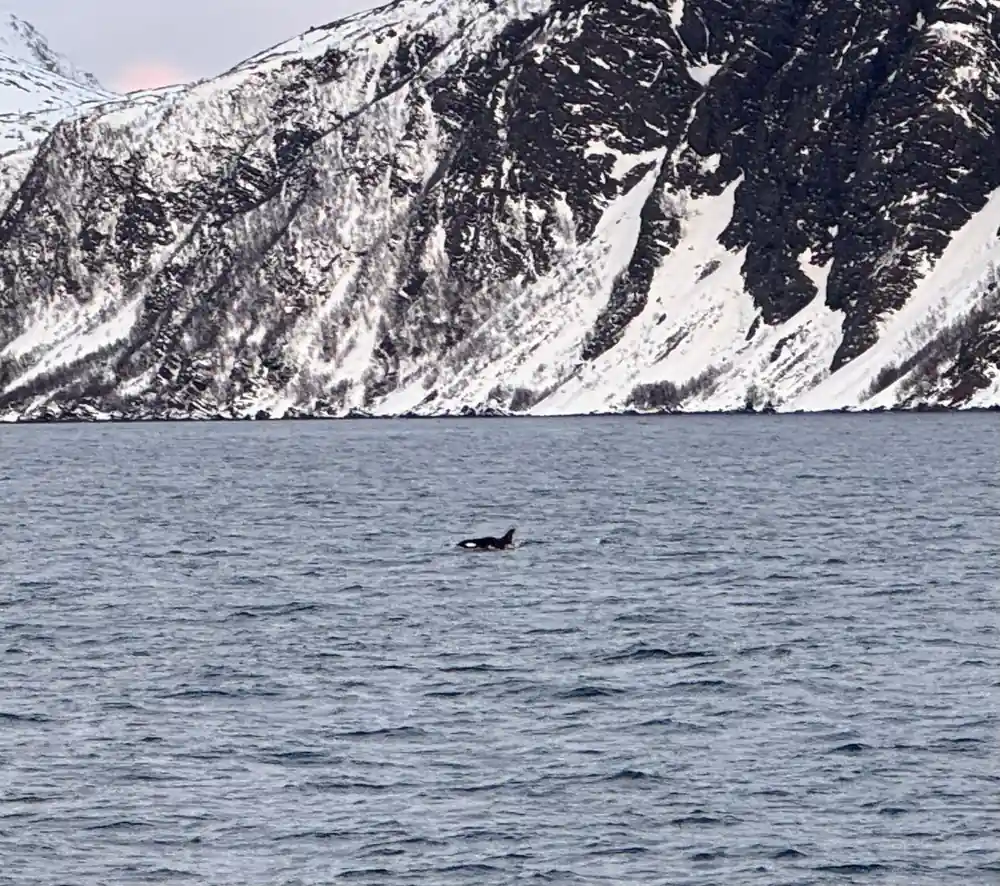
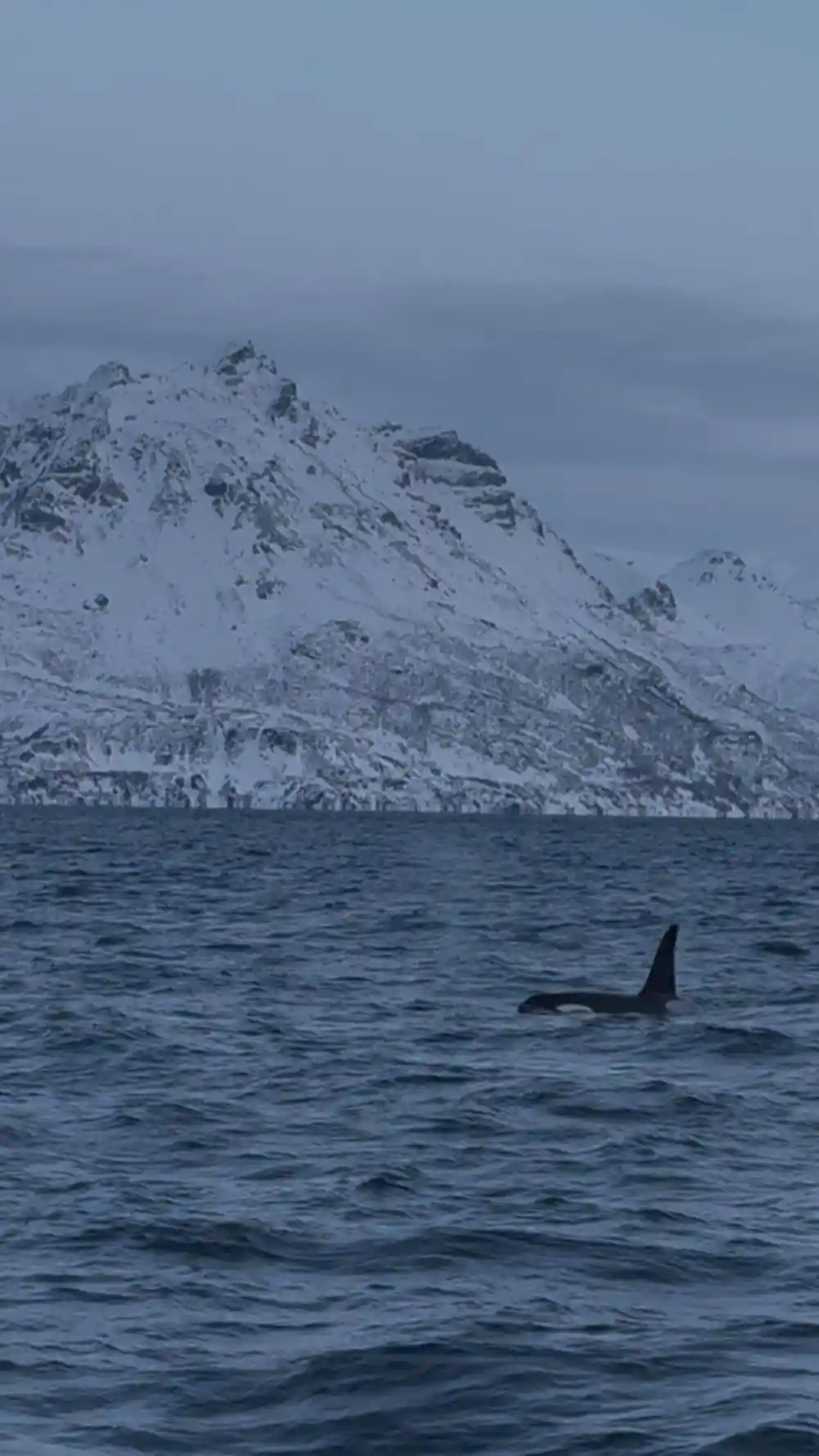
The animal most people now come here specifically to see was, in the old papers, a problem.
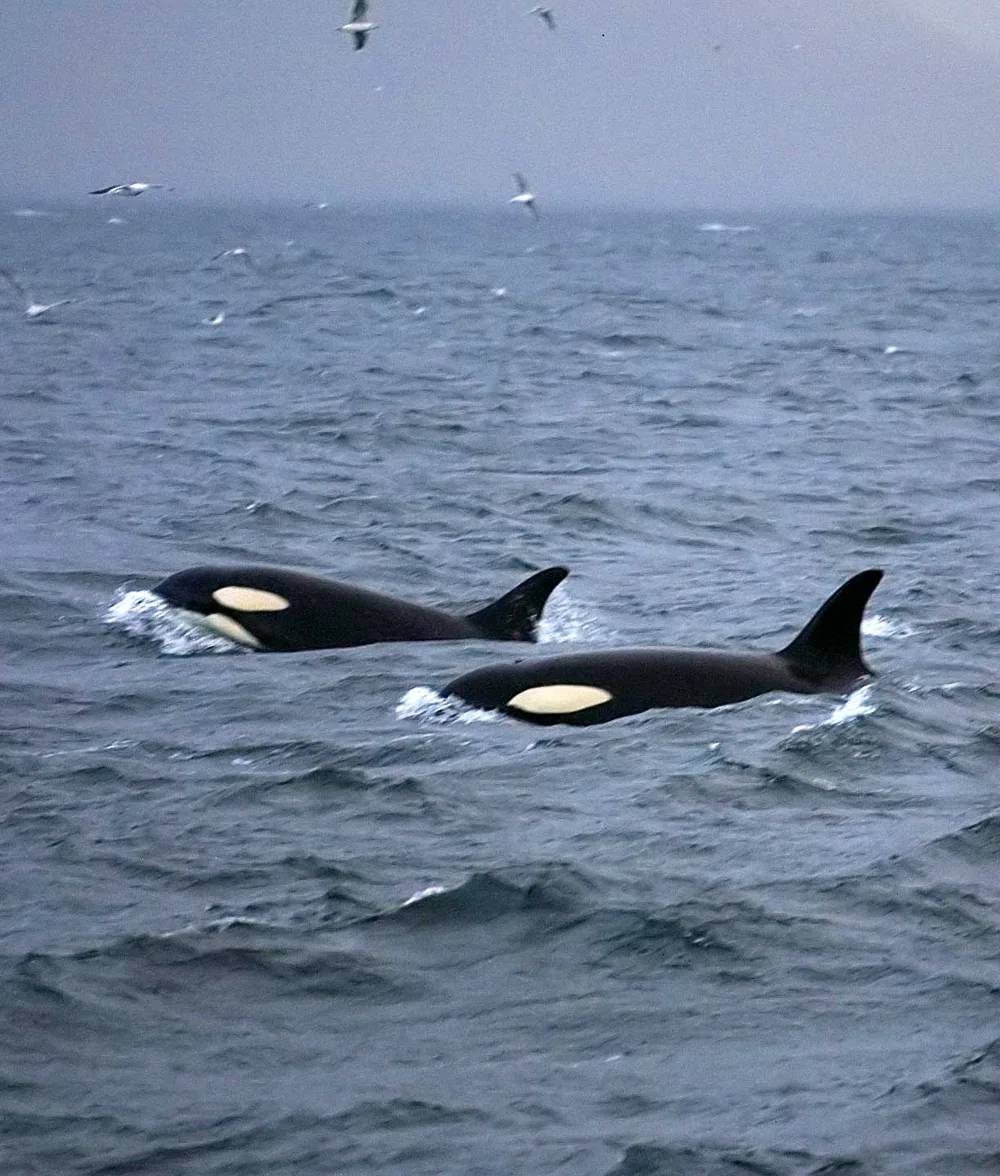
Vardo-Posten in May 1887: however fast and powerful the blue whale is, its enemy the killer whale is faster still, and voracious with it. [4] That is the whole nineteenth-century case against orca in one sentence, and it is why the species was shot on sight in many places.
It did not even have a settled name. In April 1935 the paper Tromso reported masses of them at certain times, and the writer flatly admitted he did not know which of the local names, springer, staurvang or spekkhugger, was the right one. [6] Three years later Nordlands Avis was still asking its readers, as a question: is the staurkval the so-called killer whale? [7]
Uncertainty about what to call an animal is not a small thing. It tells you how little attention was paid to it while it was being killed, and how much has changed in the way it is now watched.
How the ban was argued, and how it was resisted
The Norwegian coastal whaling ban was not gently arrived at. In June 1928 Lofotposten recalled what had happened a generation earlier: in unbridled rage at the whaling then going on along the coast, people tore down the great whaling station that stood at Mehamn in Finnmark. [9]
That is fishermen, not conservationists. The argument was that the whalers were driving off the fish, and the rage was about a livelihood. But the outcome is the one you benefit from.
It did not stop there. In March 1926 Vestfinnmark Arbeiderblad printed an appeal to the state authorities to refuse whaling in the Arctic Ocean, and put its case as a question: is Bear Island and Svalbard not Norwegian property? [10]
Meanwhile the private trade went on trying. In October 1893 a paper reported that the whaler Ingebrigtsen of Tromso was moving his buildings that autumn to Vestmarken, where he had bought a site to lay out a whaling station. [18] Businesses relocate; laws follow them.
The record, in order
1881: one hundred and seven whales
Svend Foyn closes his season and leaves Vadso for home. [8]
1886: a marked vertebra
A killer whale's bone bears the mark of a blow struck while it was fresh. [5]
1887: the blue whale's enemy
A paper explains that the killer whale is faster than the blue whale, and voracious. [4]
1890: a mile off the coast
Whalers report fin whale standing off the coast, but only in smaller schools. [14]
1893: a station planned
A Tromso whaler buys a site at Vestmarken and moves his buildings to it. [18]
1899: where it was driven
Around Tromso, in Balsfjorden and Ullsfjorden and around Karlsoy, where the whale pressed in. [3]
1905: past tense
A school geography records that whaling was formerly carried on here, and is now stopped. [2]
1910: forbidden
A school geography states that whaling is forbidden on the coast of the Tromso diocese. [1]
1918: six fin whales
A vessel reaches Tromso with six fin whales and a bear, one whale lost in a gale. [13]
1925: one hundred and three kilos of ambergris
A sperm whale taken in the Atlantic carries a fortune in its gut. [17]
1926: refuse it in the Arctic too
An appeal asks the state to refuse whaling in the Arctic Ocean. [10]
1928: the station torn down
A paper recalls the great whaling station at Mehamn being pulled apart in rage. [9]
1935: nobody agrees on the name
Masses of them at times, and the writer does not know which local name is right. [6]
1938: still asking
Is the staurkval the so-called killer whale, a paper asks its readers. [7]