The essentials
- The migration of Norwegian spring-spawning herring draws killer whales into northern Norwegian waters each winter.[10]
- Orcas and humpbacks follow herring into the Tromsø and Skjervøy fjords roughly from November through January.[11]
- Since around 2017, whales near Tromsø have usually gathered in the Kvænangen fjords near Skjervøy rather than closer to the city.[11]
- The high-speed catamaran safari runs 8 hours and is listed from US$220, with free cancellation up to 24 hours in advance.[12]
- Winter in Tromsø averages around −4°C, and the polar night season runs from November 27th to January 15th.[13][14]
- Top choice High-speed catamaran from US$220 Duration8 hours[12]Rating4.61 from 3,768 reviews[12]CancellationUp to 24h ahead, full refund[12]Good to knowWheelchair accessible[12] Check availability
- Skjervøy RIB safari from US$251 Duration3 - 12 hours[15]Rating4.78 from 136 reviews[15]CancellationUp to 24h ahead, full refund[15]Good to knowSmall group, max 12[15] See this tour
- Fast catamaran tour from US$210 Duration7.5 hours[16]Rating4.71 from 661 reviews[16]CancellationUp to 24h ahead, full refund[16]Good to knowLive guide in English[16] See this tour
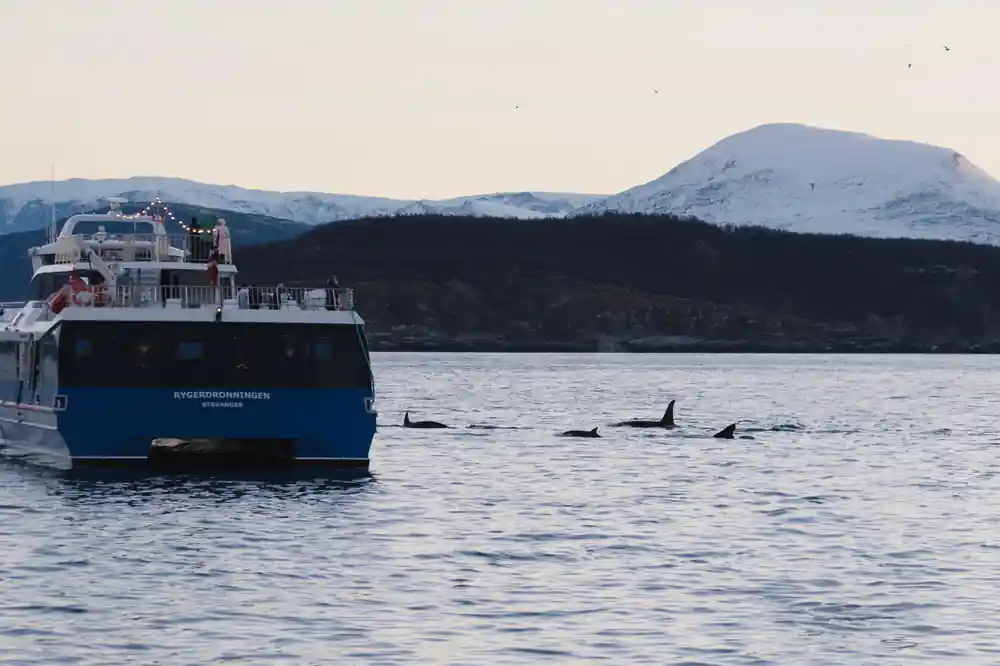
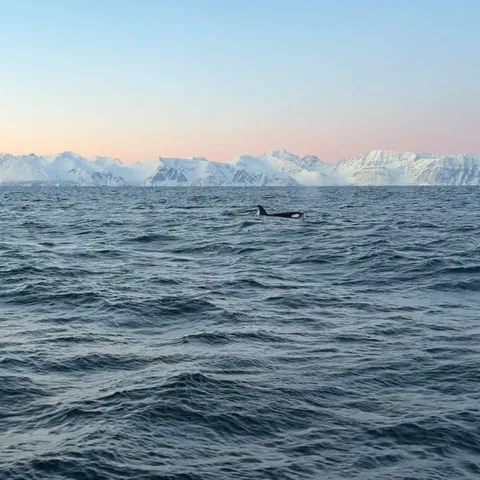
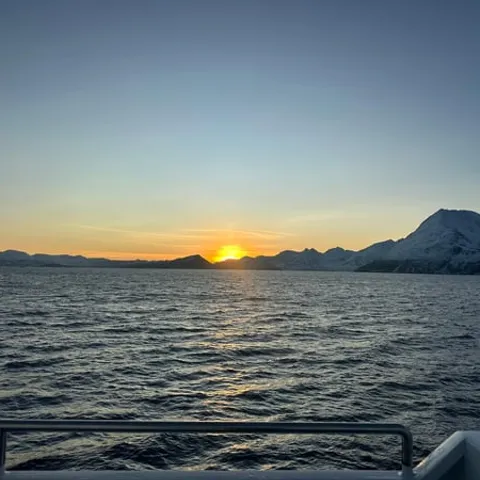
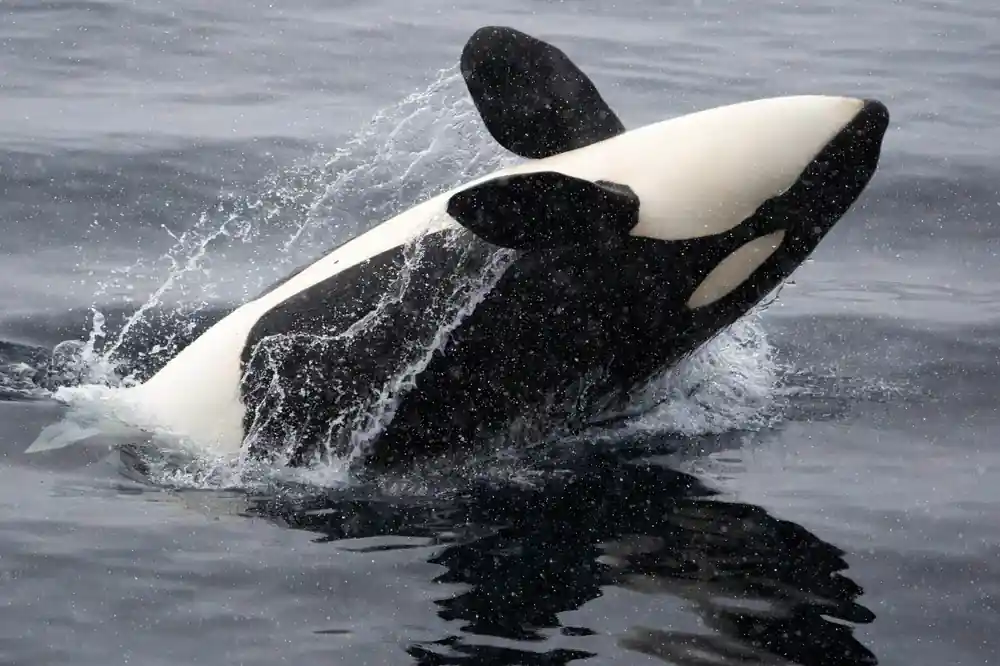
This convergence is choreographed by the migration of Norwegian spring-spawning herring, which draw killer whales into these northern waters each winter.
Is the catamaran whale safari worth it?
Booking and timing
The Herring Engine: Why the Whales Gather
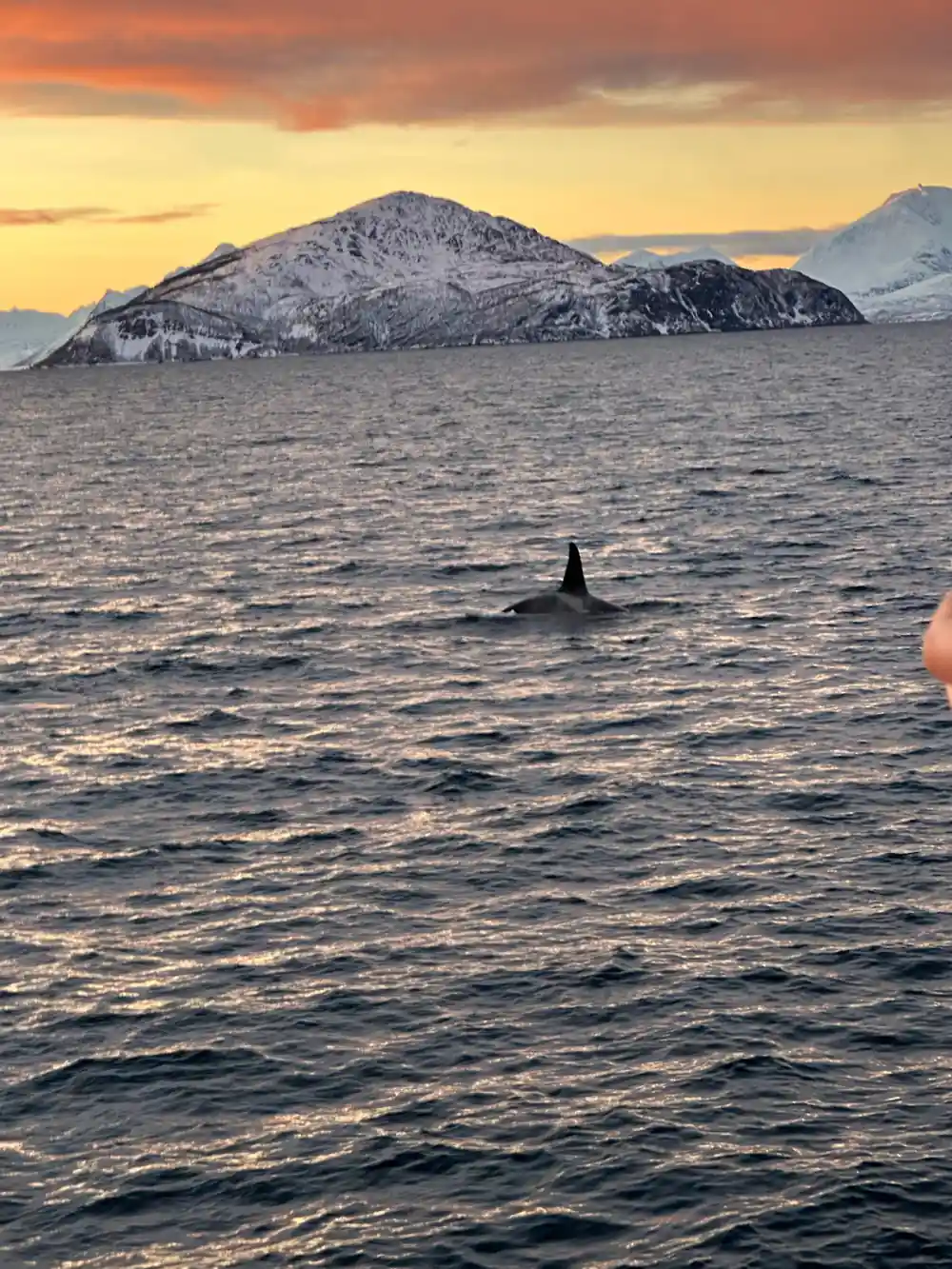
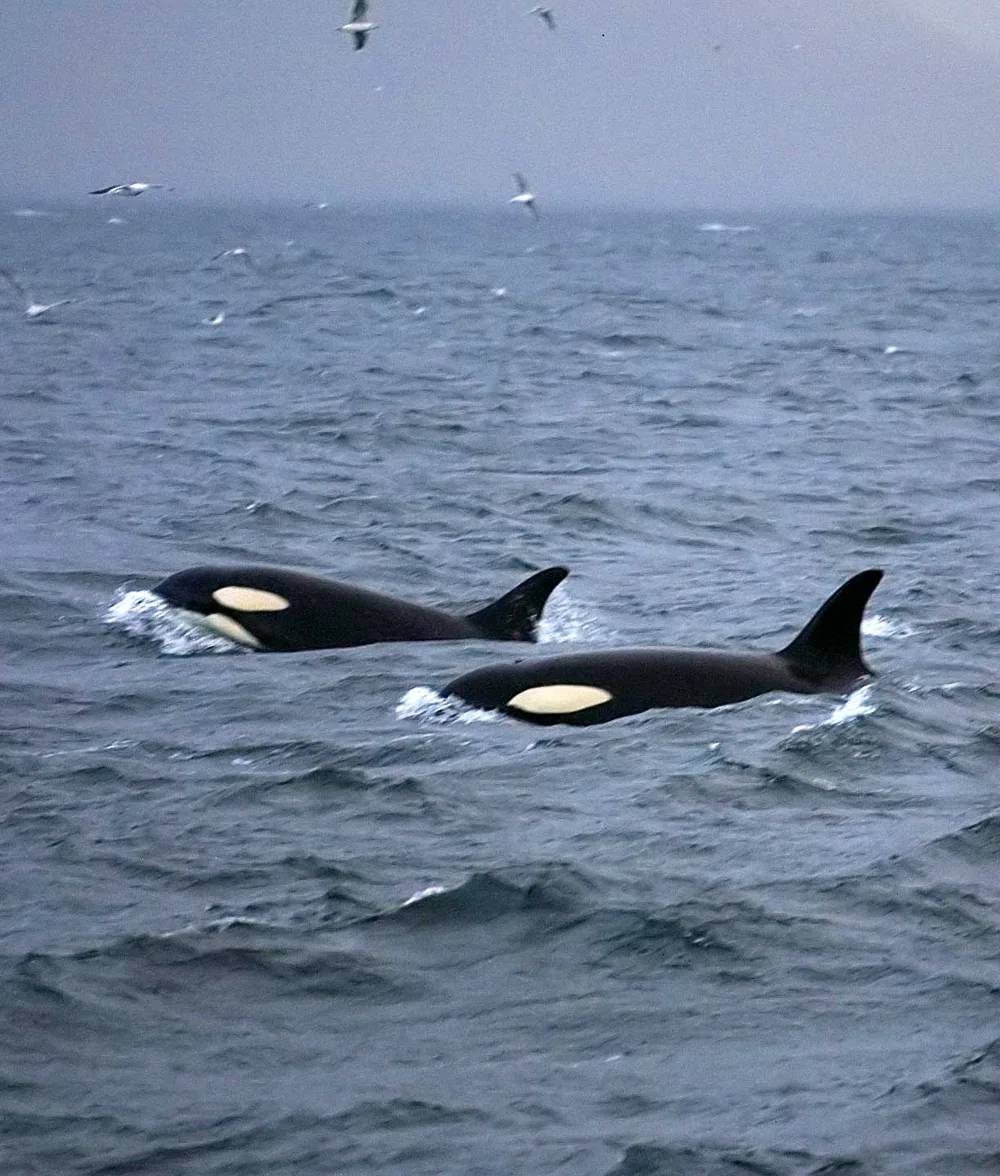
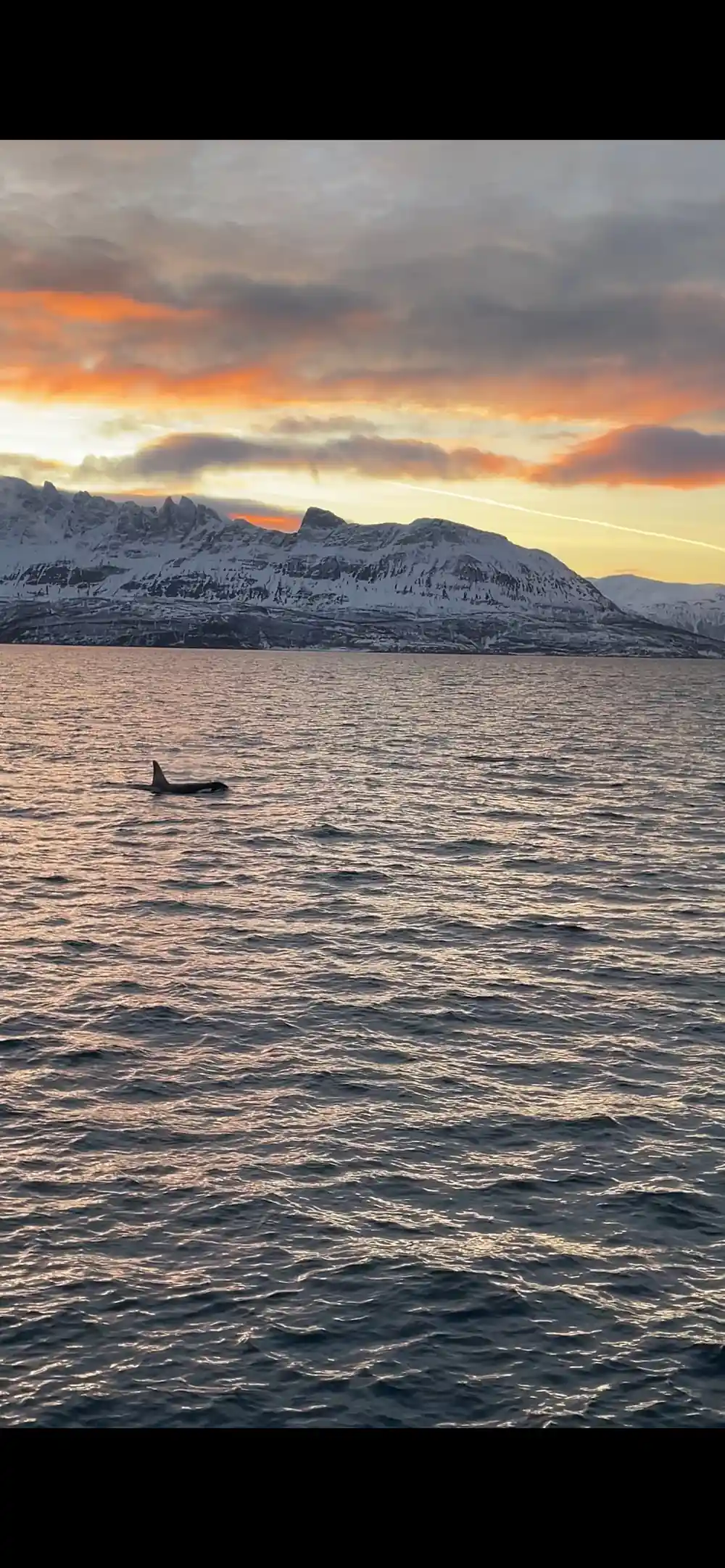
Every winter a river of silver moves along the Norwegian coast. The migration of Norwegian spring-spawning herring draws killer whales into northern waters each winter.[10] Standing on the deck of a boat in the Tromsø region, you are watching the result: orcas and humpbacks follow herring into the Tromsø and Skjervøy fjords, roughly from November through January.[11]
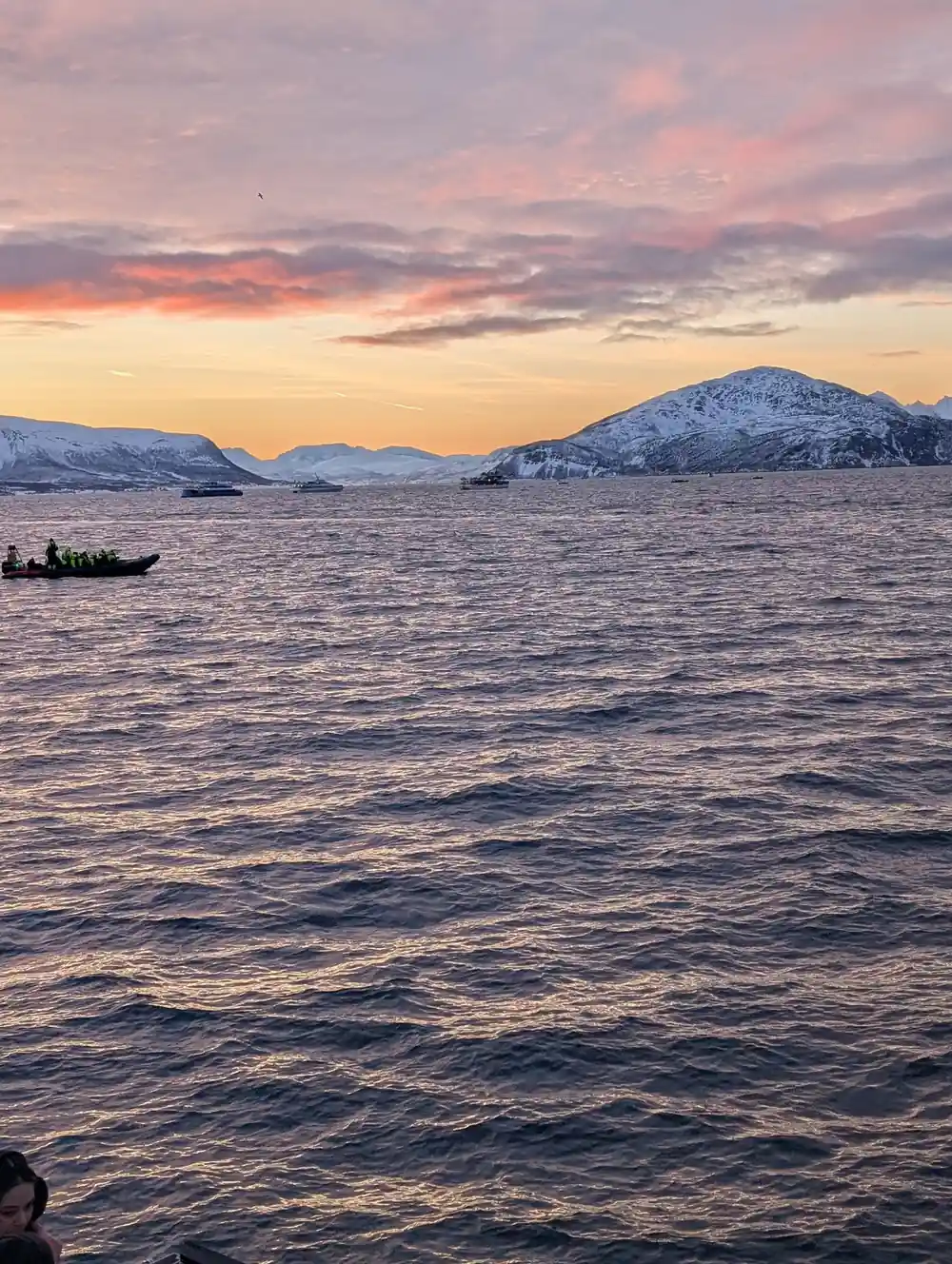
Where the feast happens has shifted. Since around 2017, whales near Tromsø have usually gathered in the Kvænangen fjords near Skjervøy rather than the waters closer to Tromsø.[11] Boats plan around that, and the high-speed catamaran safari from Tromsø sails out to Skjervøy and back.[12] Up there the fjords are wide and quiet in winter, with snow on the mountain shoulders and very little daylight in the middle of the day.
Timing is a balance. Polar night in Tromsø begins on November 27th and lasts until January 15th.[14] Whale season and aurora season overlap, so a week in the darkest part of winter can hold both: blue twilight over the water by day, green light overhead at night. Early in the season the herring is still moving; later, the light returns and the days on deck feel less like night.
Humpback Whales: Giants at Close Range
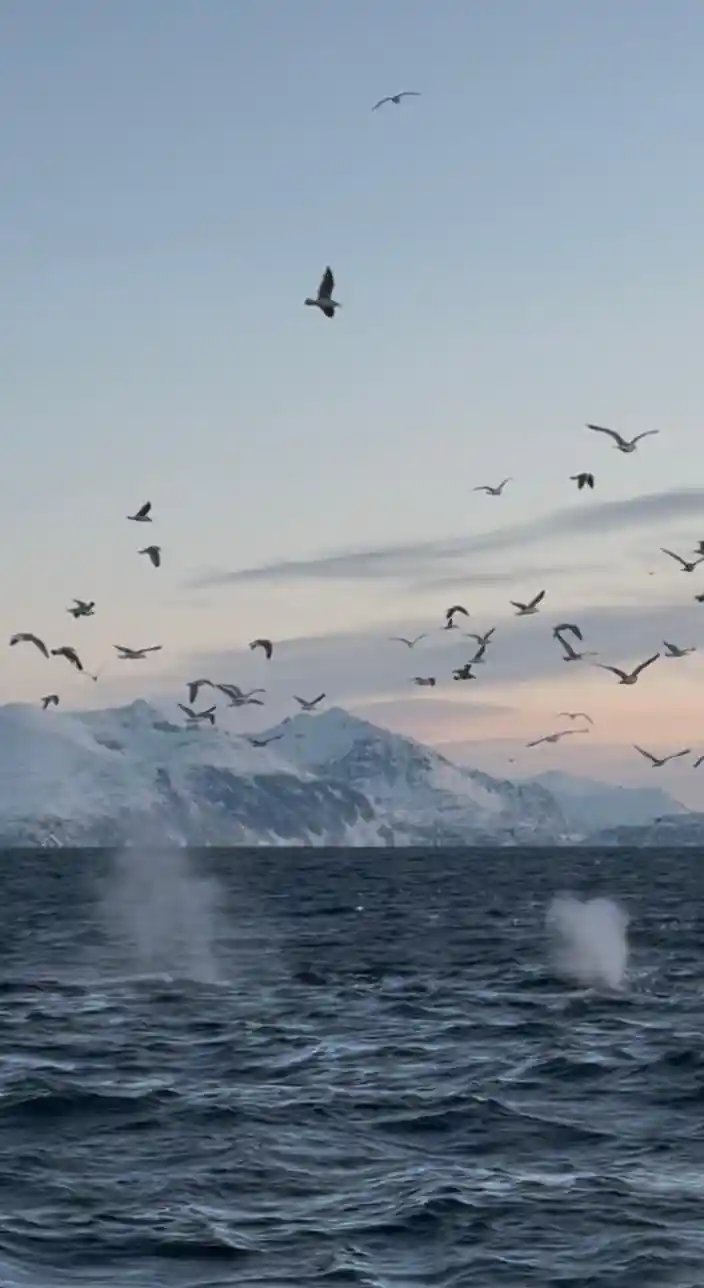
Humpbacks are the great show-offs of the winter fjords. They come to feed, not to perform, but the way they feed looks like theatre: a curtain of bubbles rising from below, herring packed tight at the surface, then a whale lunging through with its mouth open and its throat grooves stretched wide. Crews look for birds flying overhead, because humpbacks push herring to the surface and the birds come to feed on it.[18]
When a humpback sounds, it lifts its tail flukes clear of the water, and that slow movement is the cue everyone on deck waits for. Approach is governed by a shared code rather than by law. Tromsø whale watching guidelines say to approach whales slowly, at less than 5 knots when within 300m, and at constant speed, from the side and slightly to the rear.[17] These are voluntary best-practice guidelines, not government regulations.
Much of the season runs in twilight rather than full daylight, and that soft light is kind to photography: no glare, dark water and a pale sky behind the blow. Keep a wide lens and a fast shutter, and put the camera down when a whale comes close. Watching a humpback roll on its side near the boat is better with nothing between you and it.
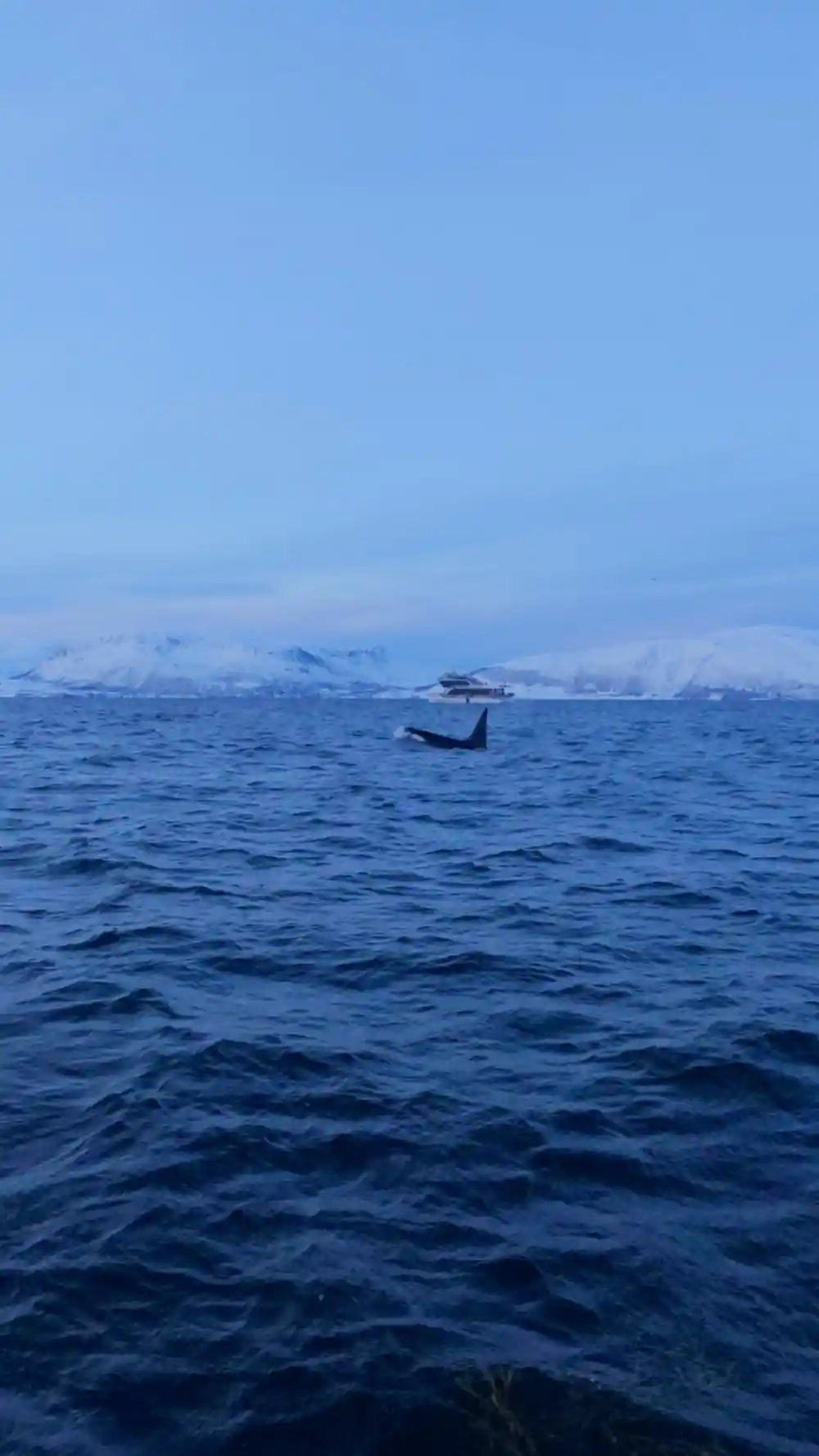
Blue twilight, calm water and a patient crew: winter on the fjord.
Sperm Whales: The Deep Hunters
Not every whale in these waters is here for herring. Sperm whales belong to a different world, the deep water beyond the shelf, where they hunt squid in the dark. They are built for it: a heavy body, a narrow lower jaw and a squared-off head. Between dives they rest at the surface, blowing slowly, and then lift their flukes and go down again.
For whale watchers they are a bonus rather than a guarantee. Sperm whales often surface quietly, with a low, bushy blow that hangs forward from the head, and they rarely gather in the tight, noisy groups that humpbacks do. If you see one, watch for the long, still pause at the surface. Underwater microphones on some boats pick up their clicks before the whale itself comes into view.
The sheltered fjords and the open water outside them hold very different animals, and a crew reads the difference in the sea. Deep channels, steep walls and cold currents shape where prey collects, and that is the geography behind a whale day. You are not staring at empty water; you are reading a moving landscape that is full of food.
Whale Blows: Reading the Surface Signs
A few whale watching terms make the day richer. A blow is warm breath meeting cold air, and it is the most useful thing you can learn to read. Humpbacks tend to send up a tall, puffy plume. Minke whales blow low and quickly, easy to miss against chop. Sperm whales blow forward and low from the left side of the head, and the sound carries across calm water.
Skippers use more than their eyes. Crews watch for birds overhead where humpbacks push herring to the surface, and they use modern technology such as radar and sonar to detect large obstacles in open water.[18] In winter, daylight is short and snow showers can wipe out the horizon in minutes. Your job on deck is simpler: scan for a pale puff, then a dark back, then a fin or a tail.
Listen as well. On a calm day a blow is audible before it is visible, a soft whoosh that carries across the water and tells you which way to turn. When the boat slows and the engine note drops, everyone goes quiet for the same reason. Those few seconds before something surfaces are the best part of the trip, and they happen again and again.
from US$220
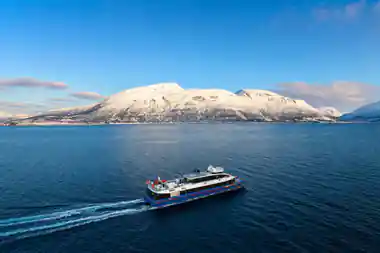
The high-speed catamaran safari leaves Tromsø, calls at Skjervøy and returns the same day.[12]
Eagles, Seals and Porpoises: The Secondary Assembly
Whales are not the only reason to keep binoculars out. White-tailed eagles sit on rocky points and lift off with slow, heavy wingbeats. Seals surface near the skerries, curious enough to stare back at the boat. Porpoises show up as small, quick, rolling backs, usually a breath or two and gone. In summer, minke whales and porpoises are occasionally spotted in Tromsø waters, although sightings are fewer than in the winter season.[19]
The birds are useful as well as beautiful. When a flock suddenly gathers and starts diving in one spot, attention follows, because birds collect where humpbacks push herring to the surface.[18] Keep the camera down for a moment and simply watch the water. The direction of the boat, the way the crew scan and the pattern of the birds all tell you where to look next.
Breath-Holding Champions: How Dives Work
Whales are mammals, and everything they do underwater depends on how they manage oxygen. They store far more of it in blood and muscle than land mammals do, and their hearts slow sharply during a dive, with blood directed towards the brain and heart. A feeding humpback can disappear for many minutes and then surface somewhere you were not expecting.
On deck, this shapes what you should expect. Long silences are normal. A whale that dives is not gone for good, so count the minutes and watch a wide arc of water rather than a single spot. The best sightings often come when the boat has stopped and the engine is quiet, and animals surface close by, as if the silence had drawn them in.
Planning Your Whale Day from Tromsø
Most whale trips from the city are day trips. The high-speed catamaran safari runs 8 hours, is listed from US$220, and has a live tour guide in English, reserve now and pay later, free rebooking, and free cancellation up to 24 hours in advance for a full refund.[12] It is listed as wheelchair accessible, and it sails out from Tromsø, calls at Skjervøy and returns to Tromsø.[12]
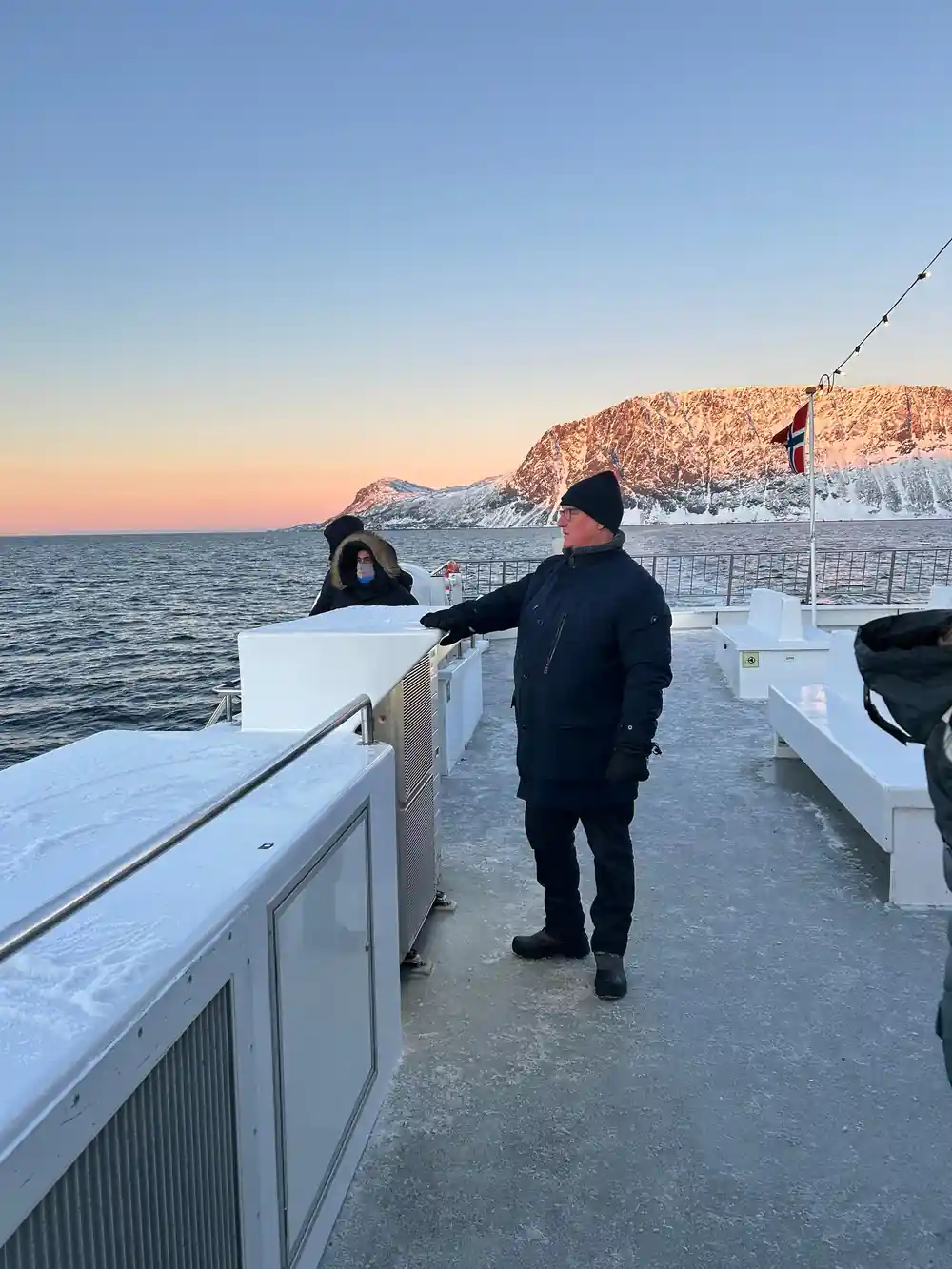
Dress for a cold, wet day on deck: layers, a windproof outer shell, a hat, gloves and something warm for your hands. The average winter temperature in Tromsø is around −4°C, and it feels colder at speed on open water.[13] If you book a RIB trip instead, operators provide full-length flotation suits, often called drysuits or immersion suits, to wear over your own clothing.[20] On the MS Alba winter whale watching cruise, children can join from age 1, and those under 16 must be accompanied by an adult.[21]
If silence and low disturbance matter to you, look at the Silent Whale Watching tour run by Brim Explorer, whose hybrid-electric ship can operate in electric mode.[18] Rødne Fjord Cruise also runs a whale safari from Tromsø, a round trip with no disembarkation.[22] Whichever you choose, keep a spare day free at the end of your trip. Arctic weather moves quickly, and flexibility is the most useful thing you can pack.
Listed trip durations in hours
GetYourGuide: high-speed catamaran 8 hours[12], MS Alba cruise 8 hours[23], fast catamaran 7.5 hours[16], hybrid-electric boat 9 hours[24], MS Gabriele 6 hours[25].
What a whale day costs from Tromsø
From-prices in US dollars on GetYourGuide for five Tromsø whale tours[12][15][16][23][24]
When the whales are here
Planning your whale day
Time it with the herring
Whale season runs roughly November through January, so aim for that window.[11]
Expect a run to Skjervøy
Since around 2017, whales have usually gathered near Skjervøy, north of Tromsø.[11]
Pick the boat that suits you
The high-speed catamaran runs 8 hours, while the Skjervøy RIB safari is limited to 12 participants.[12][15]
Dress for a long, cold day
Tromsø winter averages around −4°C, so bring layers, a windproof shell, hat and gloves.[13]
Book flexibly
Reserve now and pay later, with free cancellation up to 24 hours in advance for a full refund.[12]
See the Arctic feast from the water in Tromsø
from US$220Reserve now & pay later