The essentials
- Orcas and humpbacks follow herring into the Tromsø and Skjervøy fjords roughly every November through January.[7]
- Since around 2017 the whales near Tromsø have usually gathered in the Kvænangen fjords near Skjervøy, and the 2025-2026 season followed the same pattern.[7]
- Polar Night Season in Tromsø begins on November 27th and lasts until January 15th. The average winter temperature is around -4°C.[8][9]
- Minke whales and porpoises are occasionally spotted in Tromsø in summer, although sightings are fewer than in the winter season.[10]
- The whale watching safari on a high-speed catamaran from Tromsø runs 8 hours and is wheelchair accessible.[11]
- Top choice High-Speed Catamaran Safari from US$220 Duration8 hours[11]Rating4.61 from 3,768 reviews[11]Group sizeNot stated in the listingFree cancellationCancel up to 24 hours in advance[11] Check availability
- RIB Whale Safari at Skjervøy from US$251 Duration3 to 12 hours[12]Rating4.78 from 136 reviews[12]Group sizeLimited to 12 participants[12]Free cancellationCancel up to 24 hours in advance[12] See this tour
- Fast Comfortable Catamaran from US$210 Duration7.5 hours[13]Rating4.71 from 661 reviews[13]Group sizeNot stated in the listingFree cancellationCancel up to 24 hours in advance[13] See this tour
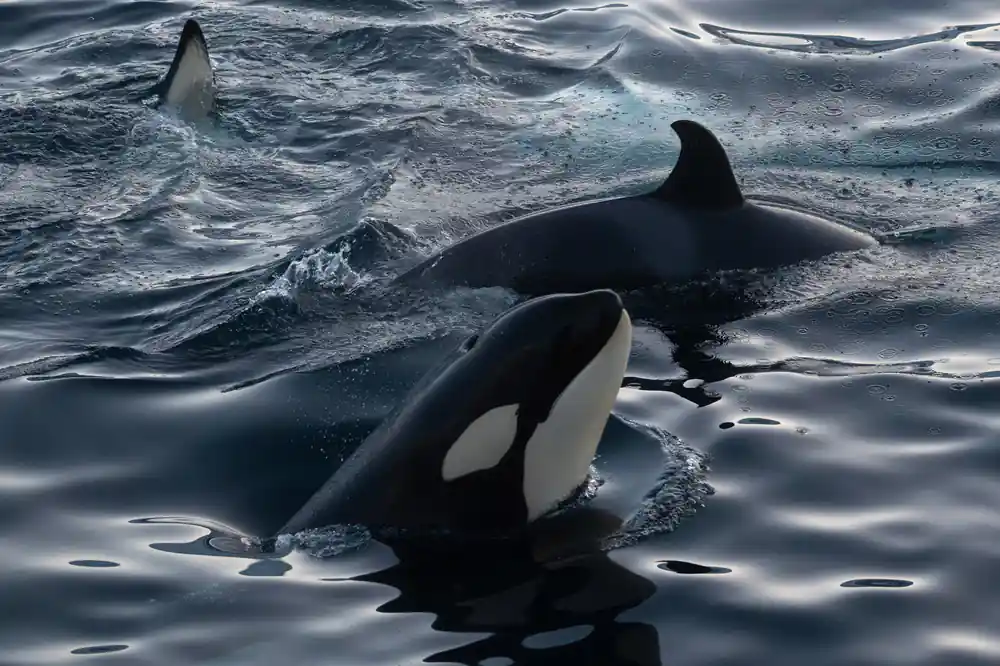
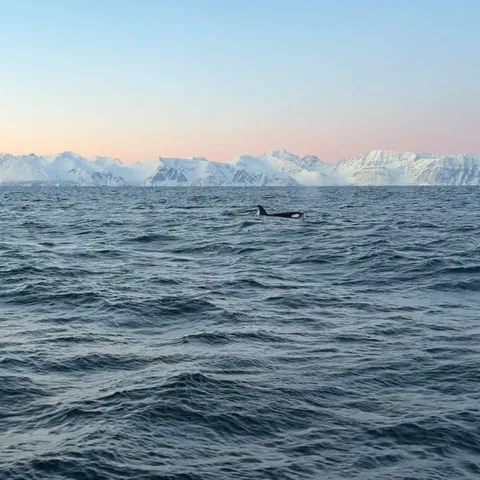
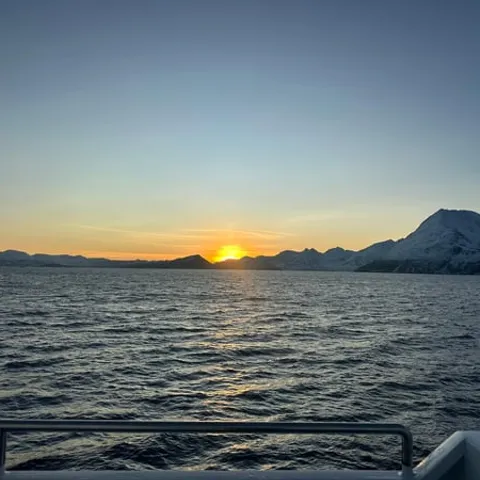
Orcas and humpbacks follow herring into the Tromsø and Skjervøy fjords roughly every November through January.
Is winter the right time for your Tromsø whale trip?
Booking tips
Why Whales Gather in the Tromsø Fjords
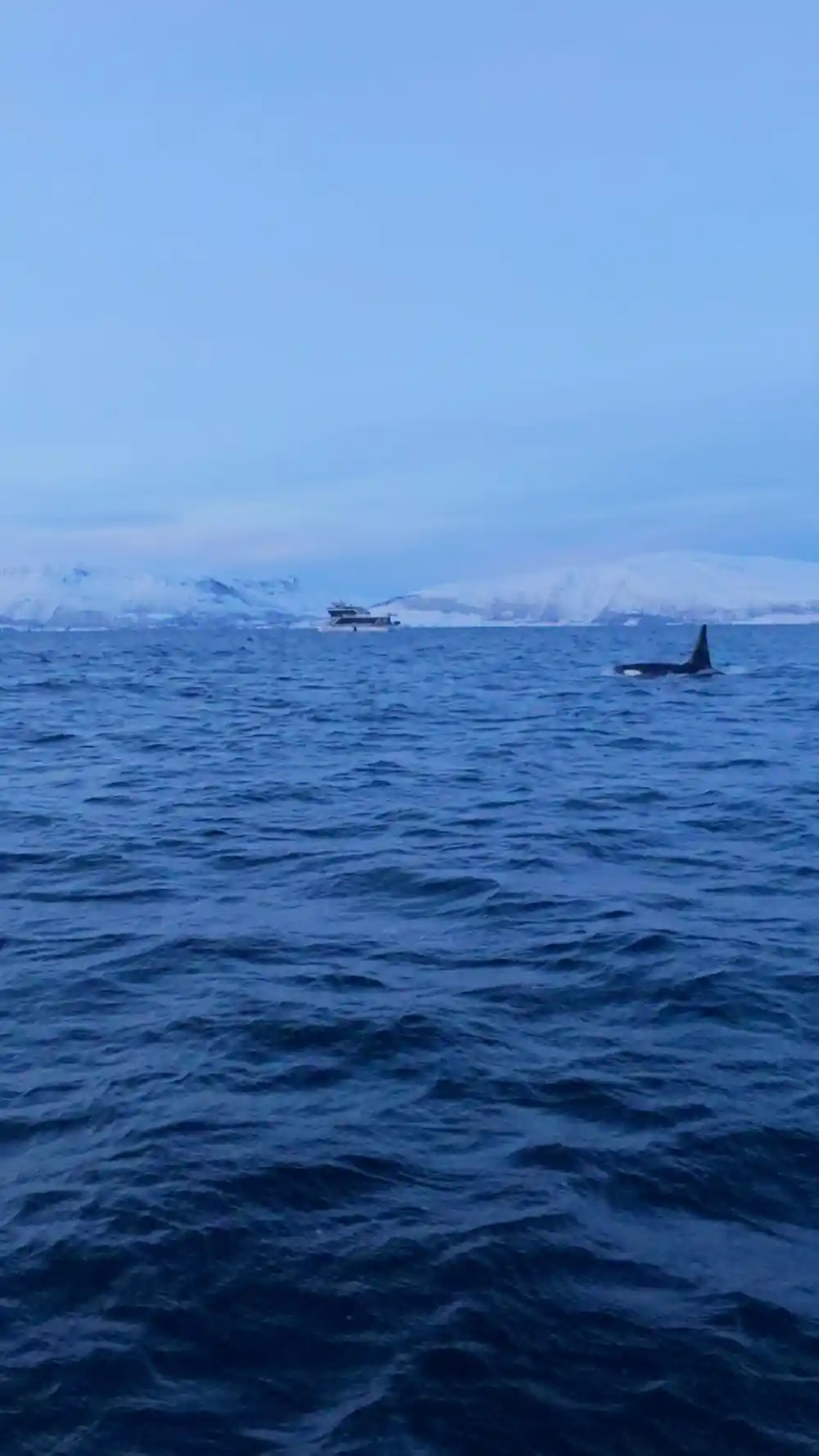
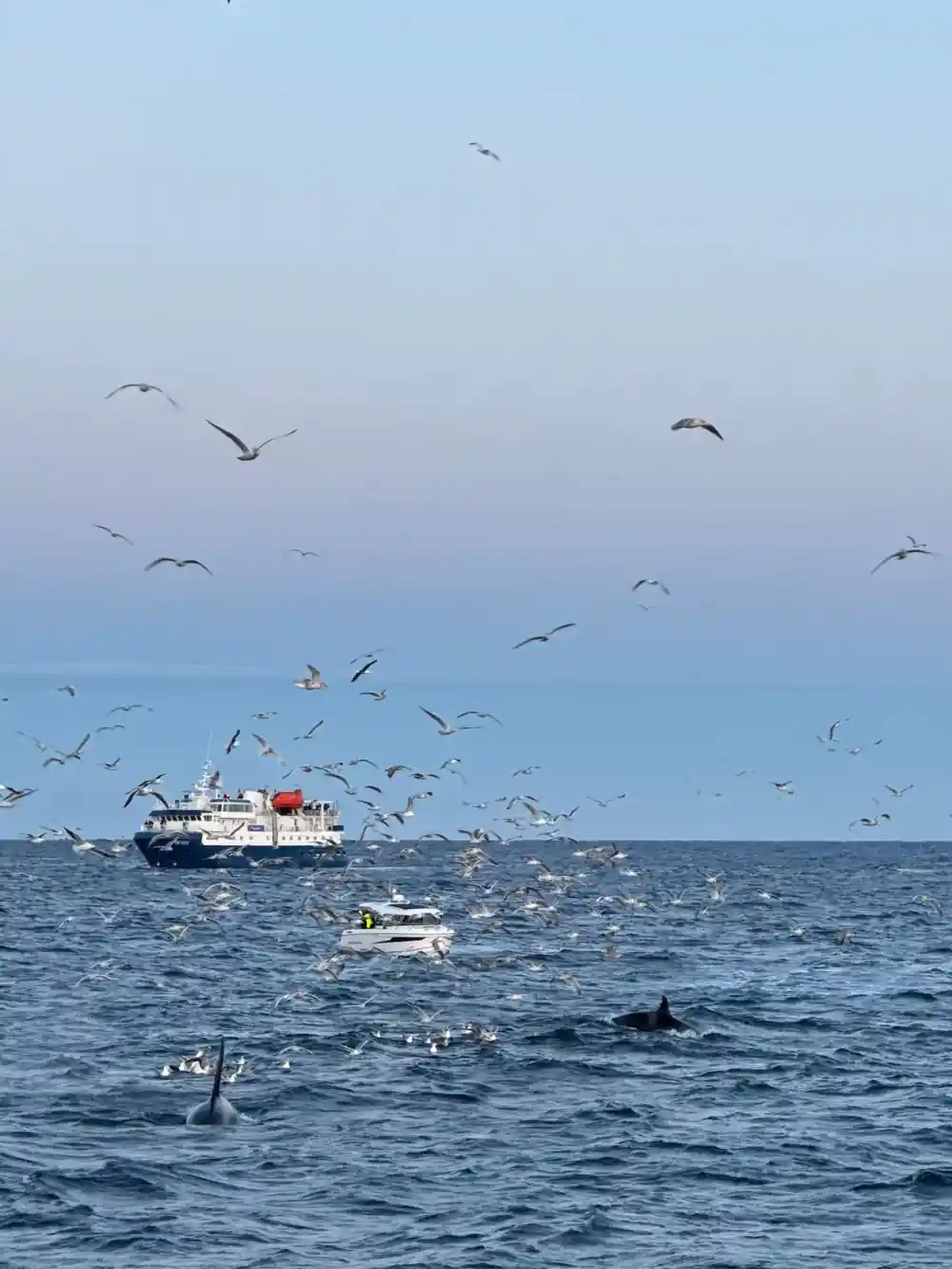
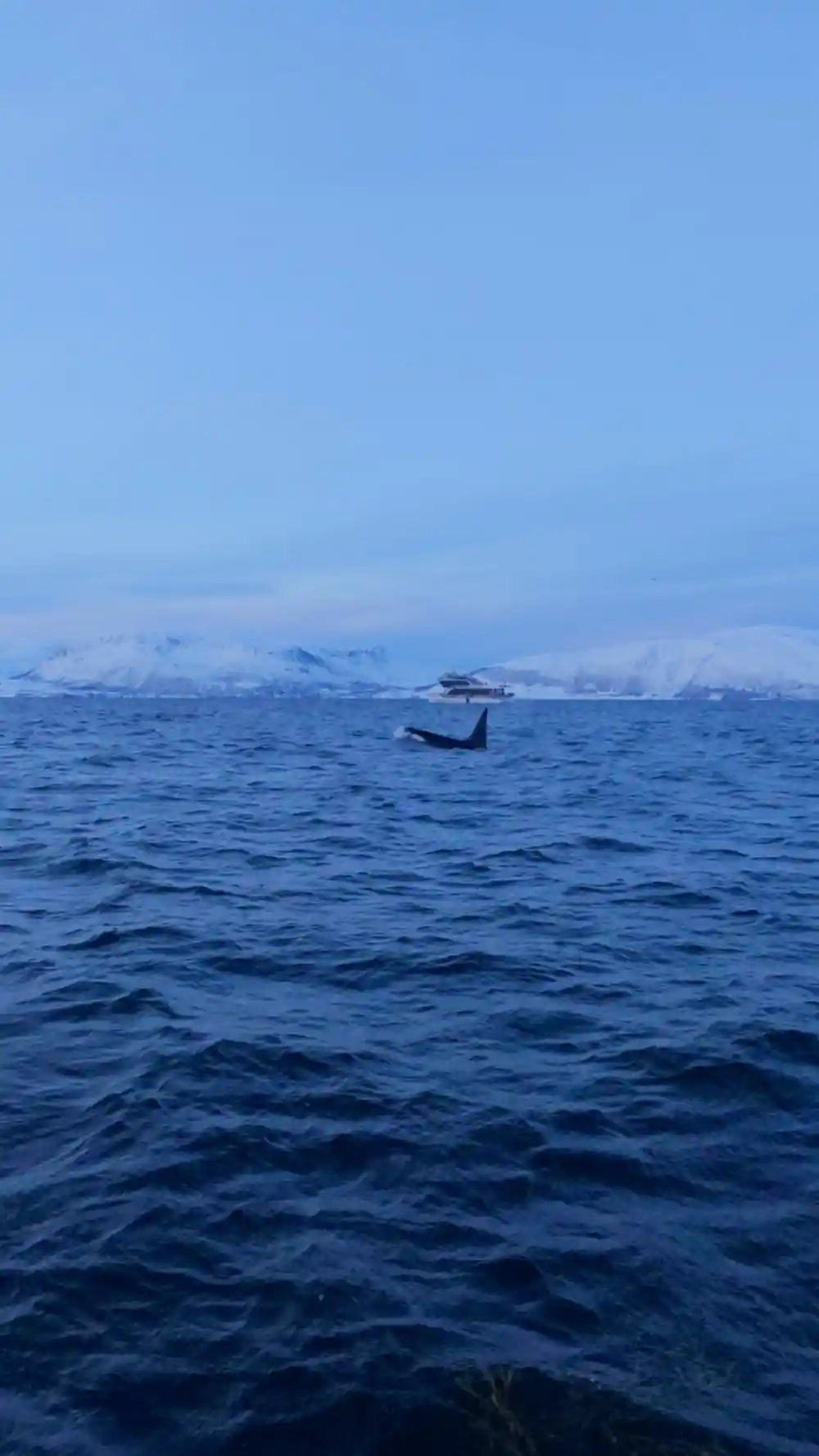
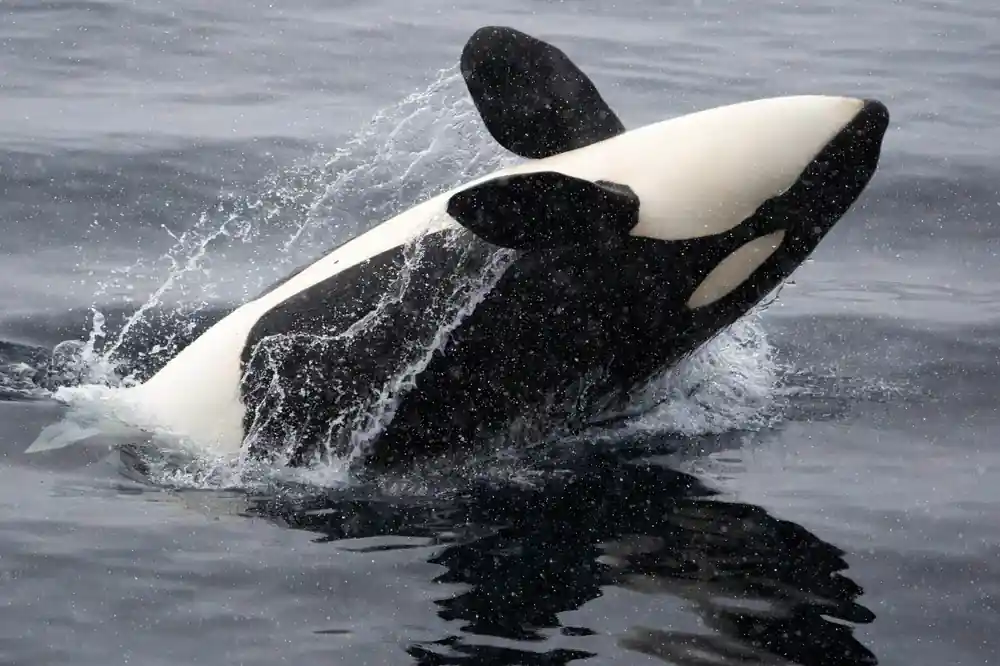
Every winter the fjords outside Tromsø turn into a feeding ground. The migration of Norwegian spring-spawning herring draws killer whales into northern Norwegian waters each winter.[17] Orcas and humpbacks follow the herring into the Tromsø and Skjervøy fjords roughly every November through January.[7] The water here is deep, cold and sheltered, and the herring gather in dense shoals that push up towards the surface. Where the fish go, the whales follow, often holding in the same narrow sounds for days at a time. On a still morning you may see the water boil where humpbacks have driven a shoal upwards, with birds wheeling overhead before the fins break the surface.
The crew on Brim Explorer's silent whale watching tour look for birds flying overhead where humpback whales push herring to the surface, and use radar and sonar to pick out large obstacles in open water.[18] Boats are also asked to approach whales slowly, at less than 5 knots when within 300m, at constant speed, from the side and slightly to the rear.[16] A calm approach gives you a longer look, a steadier camera and a better memory of the encounter. It also matters for the animals: these are feeding whales in the middle of a short, intense winter, and they need the herring more than they need us.
Before the Season: Autumn and Early Winter
The season itself runs roughly from November through January, when orcas and humpbacks follow herring into the Tromsø and Skjervøy fjords.[7] Sailings also run either side of that window, so treat an early autumn trip as a fjord and mountain holiday with a chance of whales rather than a whale trip. Daylight is still generous compared with midwinter, the hills often carry fresh snow, and the roads and ferries are quiet. If you have booked a sailing before the main season gets going, ask the operator what they expect to see at that time of year.
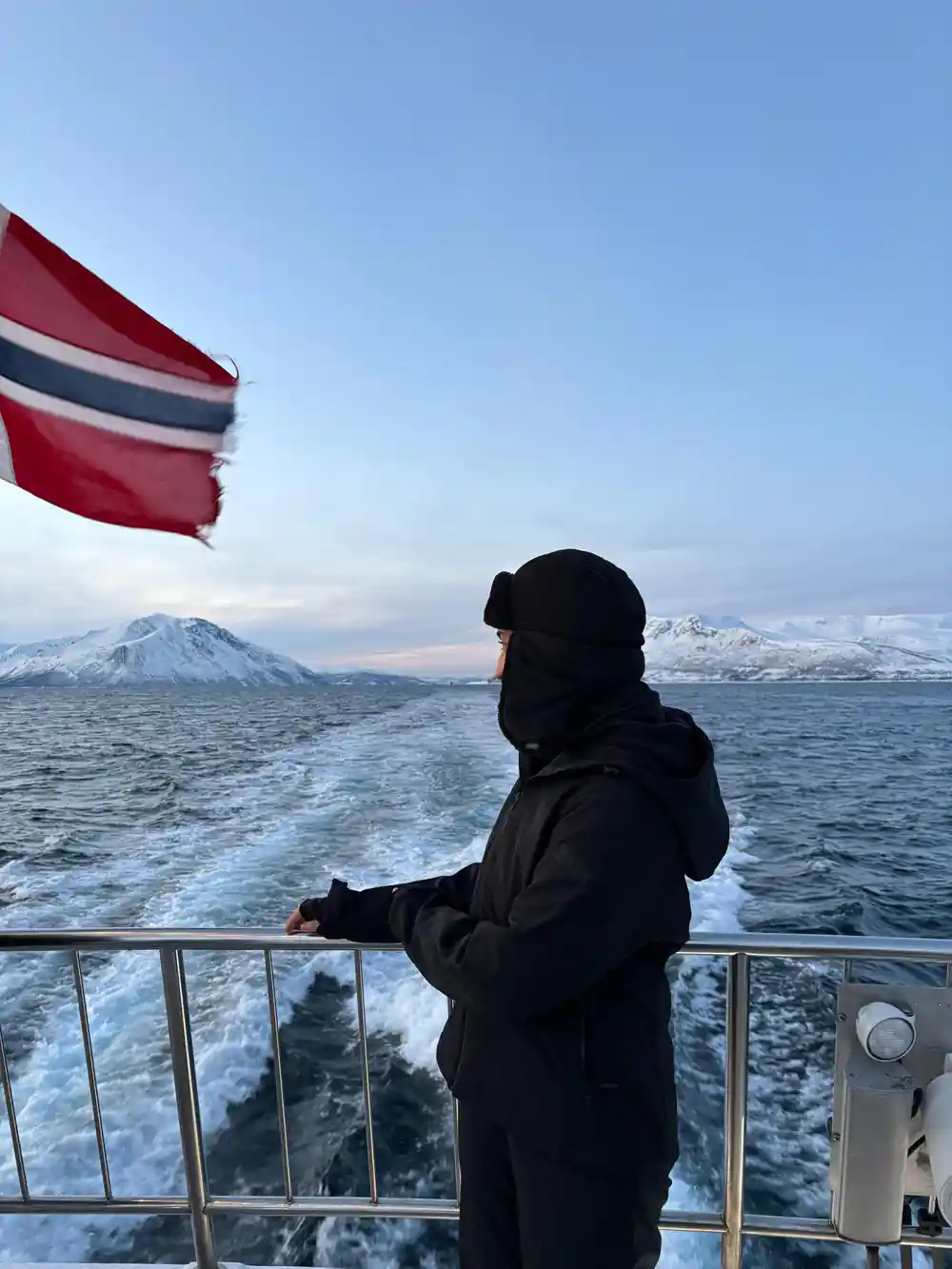
Winter arrives quickly up here. Polar Night Season in Tromsø begins on November 27th and lasts until January 15th.[8] That is not total darkness: the sun stays below the horizon, but the sky often glows pink, orange and deep blue for hours around the middle of the day. The average winter temperature in Tromsø is around -4°C, so bring more layers than you think you need.[9] Sea spray and wind chill make a boat deck feel much colder than the street outside your hotel.
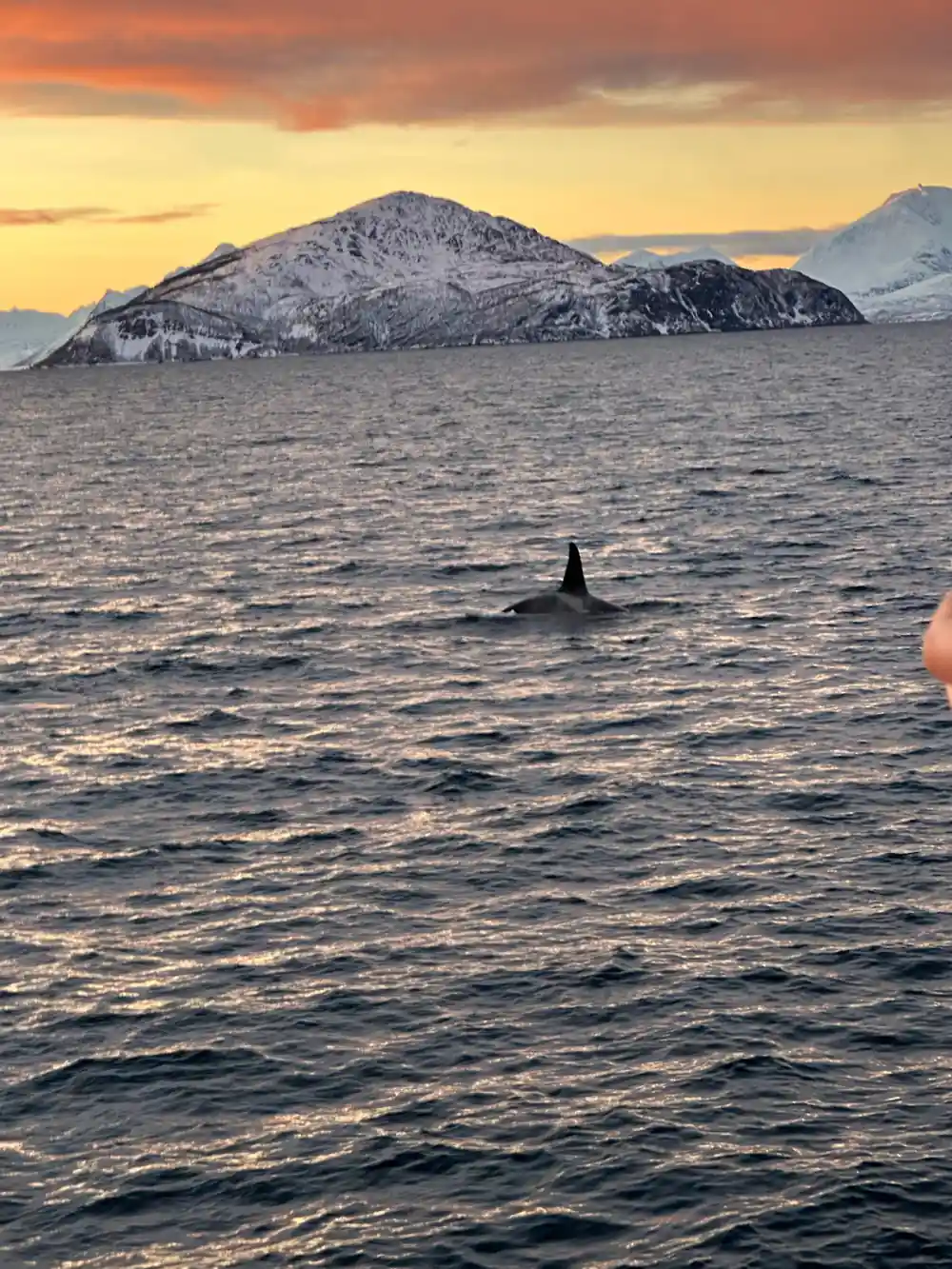
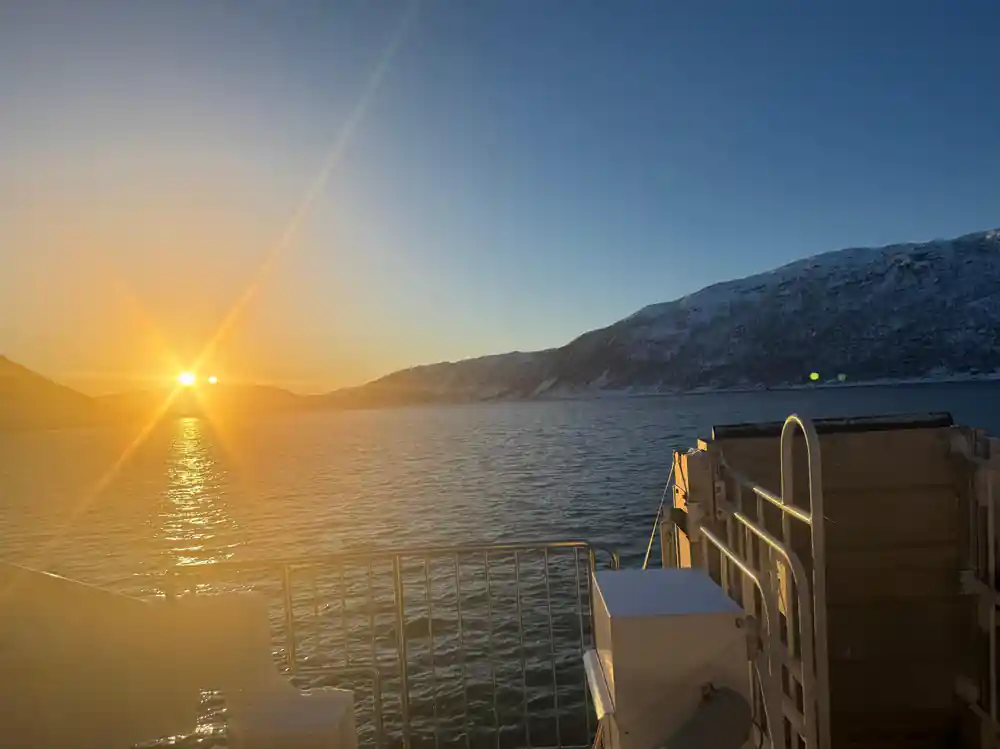
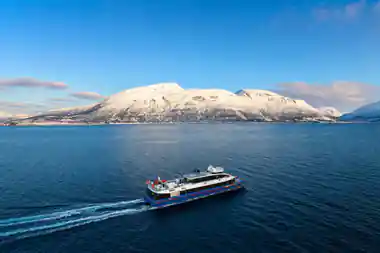
A catamaran crosses flat winter water under a low pink sky on the way north to Skjervøy.
Peak Season: Whale Watching November Through January
Those weeks are the heart of the Tromsø whale year. Orcas and humpbacks follow herring into the Tromsø and Skjervøy fjords roughly every November through January.[7] Since around 2017 the whales near Tromsø have usually gathered in the Kvænangen fjords near Skjervøy rather than the waters closer to Tromsø, and the 2025-2026 season followed the same pattern.[7] Mid-season dates give you the best odds, but the window is a rough guide rather than a promise, and the weather decides a lot. Flexible dates are worth more than a perfect date.
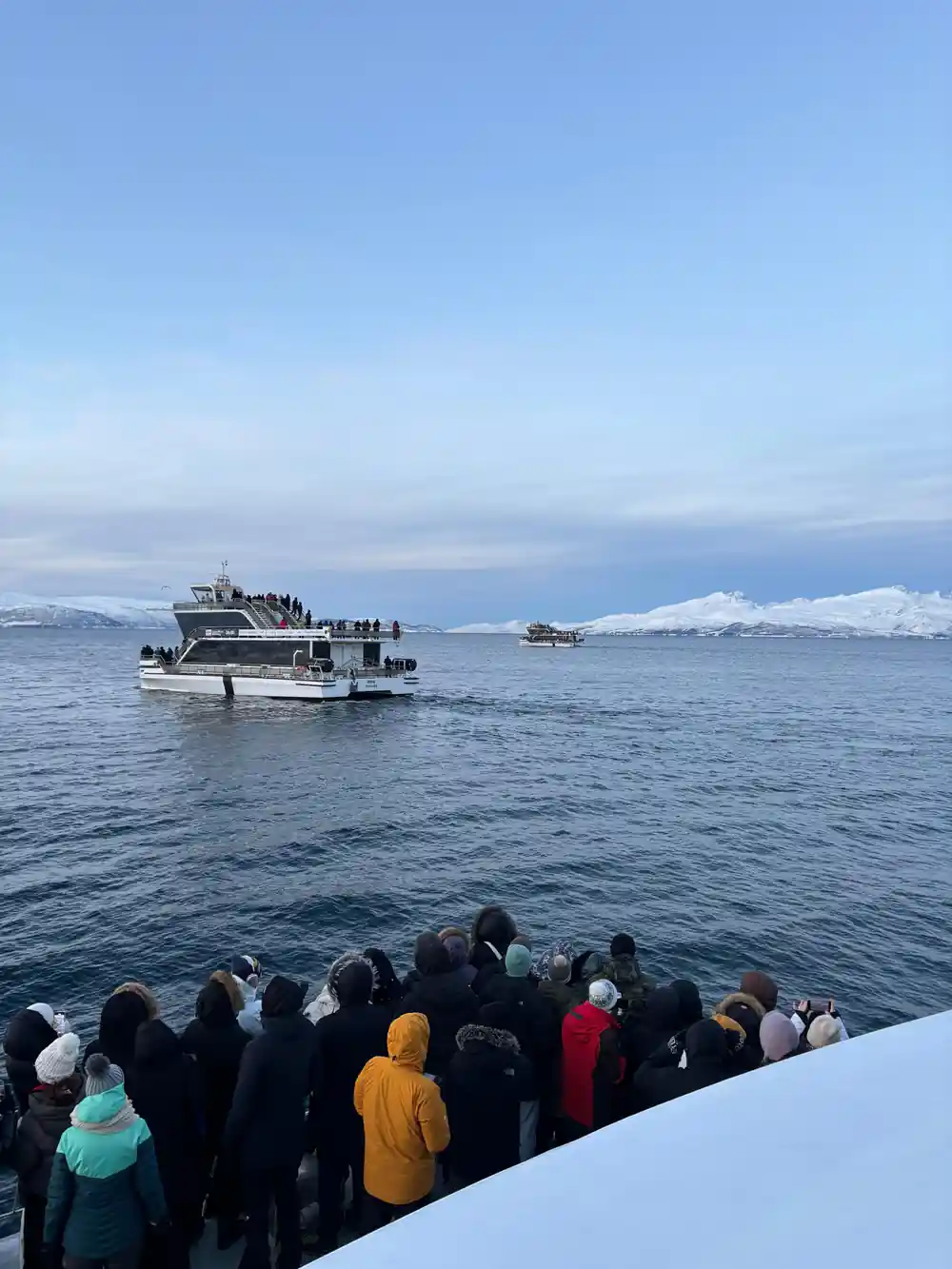
Come dressed for a long day. The whale watching safari on a high-speed catamaran from Tromsø runs 8 hours, with free cancellation up to 24 hours in advance for a full refund.[11] Rødne Fjord Cruise runs a 7-8 hour round trip on a catamaran with no disembarkation during the trip.[19] Brim Explorer's Silent Whale Watching tour uses a hybrid-electric ship that operates silently in electric mode to minimise disturbance.[18] Eat a real breakfast, take seasickness tablets if you need them, and keep a spare day free in case your sailing moves.
Sighting Grounds Shift North Towards Skjervøy
The whales are not waiting in Tromsø harbour. Since around 2017 they have usually gathered in the Kvænangen fjords near Skjervøy rather than the waters closer to Tromsø, and the 2025-2026 season followed the same pattern.[7] Skjervøy sits well north of the city, and the run out there passes islands, frozen lakes and long bare ridges. Expect the journey itself to be a big part of your day, and pack something to do on the way: a book, a podcast, or simply the window and the light.
Most catamaran safaris reflect that geography. The safari from Tromsø runs out to Skjervøy and back.[11] Once the boat is in the right water, the search begins. On Brim Explorer's silent whale watching tour the crew watch for birds flying overhead where humpback whales push herring to the surface, and use radar and sonar to detect large obstacles in open water.[18] Sightings often come in flurries: a quiet hour, then fins and blows in several directions at once. Keep your camera ready and your hands warm between sightings.
from US$220
The high-speed catamaran whale safari from Tromsø runs 8 hours and is wheelchair accessible.[11]
Polar Night and Sailing in Winter Light
Polar Night Season in Tromsø begins on November 27th and lasts until January 15th.[8] For photographers this is the strangest, loveliest light of the year. There is no true sunrise, but the sky can hold colour for hours, and the snow, the water and the boats all take on the same blue cast. A whale surfacing in that light is a silhouette rather than a postcard. Watch with your eyes first, then lift the camera, because the moment passes quickly and the cold makes fumbling fingers slow.
Cold is the main practical issue rather than the whales. The average winter temperature in Tromsø is around -4°C, and temperatures can vary considerably, particularly when travelling inland.[9] On deck it feels sharper. Wool base layers, a windproof and waterproof shell, a hat that covers your ears, gloves you can work a camera in and boots with grip for icy quaysides will do more for you than one heavy coat. Starting times differ by date, so check availability to see starting times before you build your day around a sailing.[11]
Late Season: Spring and Summer Whale Watching
The winter show has a clear end. The season for orcas and humpbacks runs roughly November through January.[7] That raises the obvious question of whether can you whale watch in Norway at any time of year, or only in the dark months. The dependable window for these two species is the winter one, and sailings later in the year are a different kind of day out: fjord scenery, fishing villages, sea eagles and long blue twilights.
Summer is a different proposition, and not a hopeless one. Minke whales and porpoises are occasionally spotted in Tromsø in summer, although sightings are fewer than in the winter season.[10] The midnight sun gives you endless daylight and often calm water, and the fjords are beautiful in their own right. If whales are the reason for your trip, book for winter. If you are coming for hiking, kayaking and light, treat a whale as a bonus rather than the whole plan.
How to Choose Your Travel Month
Start with the season. Orcas and humpbacks follow herring into the Tromsø and Skjervøy fjords roughly every November through January, so those months are the ones to aim for.[7] Since around 2017 the whales have usually gathered in the Kvænangen fjords near Skjervøy rather than the waters closer to Tromsø.[7] If your dates fall outside that window, be honest with yourself about what you are booking and choose a trip that is good value even without fins.
Then choose the boat that matches your group. RIB safaris are limited to 12 participants, and operators provide full-length flotation suits to wear over your own clothing.[12][20] Catamarans and hybrid-electric boats are steadier, warmer and easier with children or older travellers. The high-speed catamaran safari from Tromsø is wheelchair accessible and runs 8 hours.[11] On Arctic Whale Tours' winter cruise from Tromsø aboard MS Alba, children can join from the age of 1, and those under 16 must be accompanied by an adult.[21] Book the sailing that fits the people you are travelling with, then let the whales do the rest.
Tour lengths for whale watching from Tromsø
Durations in hours as listed on GetYourGuide:[11][13][14][22][23].
What a whale watching tour from Tromsø costs
US dollar from-prices as listed on GetYourGuide:[11][12][13][14][24].
Tromsø whales: when to book your trip
Plan your whale season trip
Pick your month
The season runs roughly November through January, when orcas and humpbacks follow herring into the Tromsø and Skjervøy fjords.[7]
Choose boat style
RIB safaris take 12 participants and operators provide flotation suits to wear over your own clothing.[12][20]
Check the start time
Duration is 8 hours on the high-speed catamaran safari; check availability to see starting times.[11]
Book a flexible ticket
Free cancellation up to 24 hours in advance for a full refund applies to the catamaran safari.[11]
Pack for real cold
The average winter temperature in Tromsø is around -4°C, and it feels colder on the water.[9]
Ready for orcas and humpbacks in the Tromsø fjords?
from US$220Reserve now & pay later