The essentials
- In Tromsø the approach guidance is voluntary best practice: slow, at less than 5 knots when within 300m, at constant speed, from the side and slightly to the rear.[1]
- Orcas and humpbacks follow herring into the Tromsø and Skjervøy fjords roughly every November through January.[2]
- Since around 2017 the whales have usually gathered in the Kvænangen fjords near Skjervøy rather than the waters closer to Tromsø.[2]
- Brim Explorer runs a Silent Whale Watching tour on a hybrid-electric ship that operates silently in electric mode to minimise disturbance.[3]
- The average winter temperature in Tromsø is around −4°C, and the Polar Night Season runs from November 27th to January 15th.[4][5]
- Top choice Whale Safari Catamaran from US$220 Duration8 hours[6]Rating4.61 from 3,768 reviews[6]CancellationCancel up to 24 hours in advance[6]GuideLive tour guide: English[6] Check availability
- RIB Safari at Skjervøy from US$251 Duration3 - 12 hours[7]Rating4.78 from 136 reviews[7]CancellationCancel up to 24 hours in advance[7]GuideLive tour guide: English[7] See this tour
- Fast Catamaran Tour from US$210 Duration7.5 hours[8]Rating4.71 from 661 reviews[8]CancellationCancel up to 24 hours in advance[8]GuideLive tour guide: English[8] See this tour
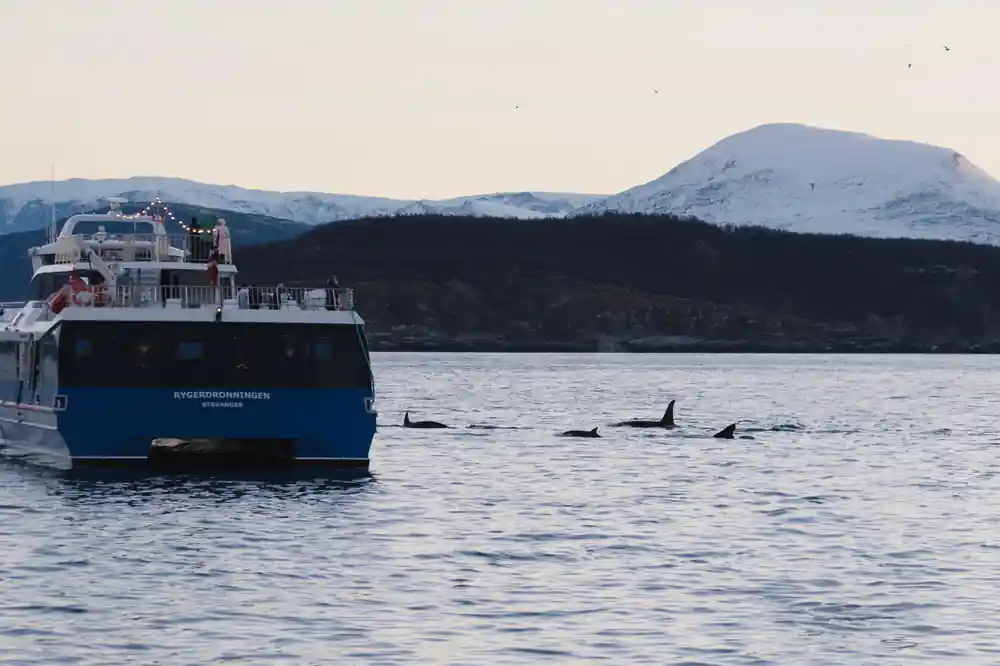
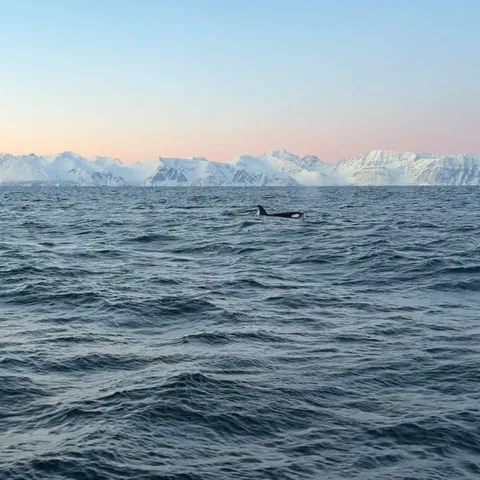
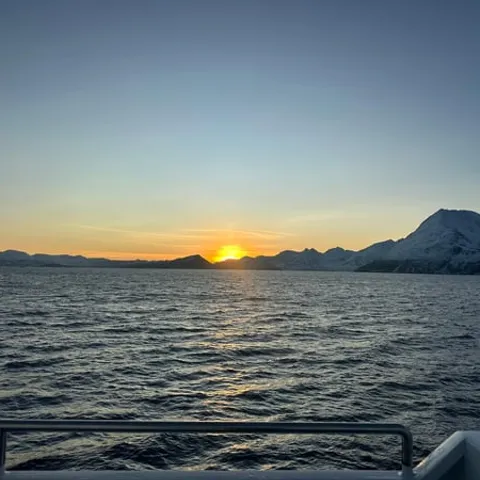
Minimum age to participate: 1 year. Children under 16 must be accompanied by an adult.
Do these guidelines change your trip?
Booking tips
- Check the season before you fix your travel dates
- Confirm where your tour starts, in Tromsø or further north at Skjervøy
- Ask about step-free access and boarding help if you need it
- Compare what is included, not just the headline price
On the day
- Wear thermal layers and a windproof outer shell
- Follow the crew's approach guidance and keep your voice down
- Stay behind the rail when whales surface close by
- Have your booking confirmation ready on your phone
Whale Watching Rules in Norway: What Applies
The rules that shape a whale safari in northern Norway are mostly guidelines rather than law. In Tromsø the approach guidance is voluntary best practice, not direct government regulation, and it is written for the person at the helm.[1] Approach whales slowly, at less than 5 knots when within 300m, at constant speed, from the side and slightly to the rear.[1]
Read that twice. It is a whole philosophy in four moves: slow, steady, predictable, and never head on. A skipper who works to it does not chase a pod, does not cut across a surfacing animal and does not open the throttle to close a gap. From the deck it looks calm, almost lazy, which is exactly how a good encounter should look.
The rest of what you will meet is social rather than written. Stay behind the rail, follow what the crew asks of you, and accept that the skipper may hold the boat still while a pod drifts past rather than steering towards the next blow. Nobody can promise a sighting, and the best trips are the ones where the whales chose the distance themselves.
How Close Can You Actually Get to an Orca?
Distance is the question everyone asks, and the best-practice figure for Tromsø is 300m, with speed kept under 5 knots inside that range.[1] On open water that is a good long stretch of grey between your lens and a dorsal fin. It is also a reminder to pack binoculars and a decent zoom. The whales are usually further from the boat than they look, and there is no way to walk closer.
In practice the animals set the terms. Herring shoals move overnight, and a pod can surface on the far side of a bay and then rise beside the boat while the engine is idling and everyone is quiet. Skippers read the birds, the current and the echo sounder, hold their line, and let the whales close the gap if they choose to.
Patience beats moving. A boat that keeps station near a feeding group is often rewarded with a pass close enough to hear the blow and smell the breath, while a boat that keeps repositioning spends the day chasing its own wake. Bring a thermos, keep your camera ready, and let the crew read the water.
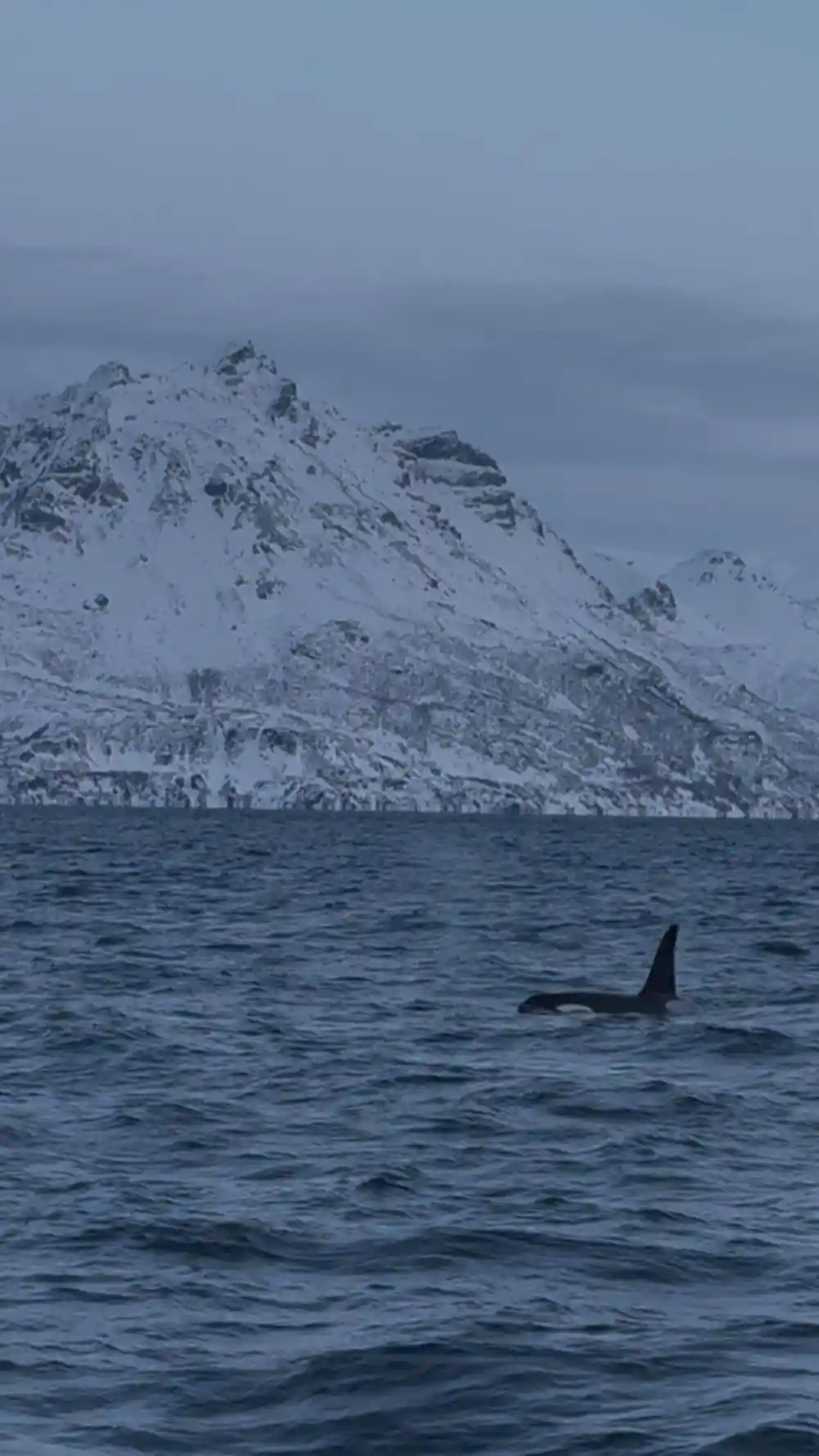
An orca's dorsal fin cuts grey water with snow-covered peaks behind.
Quiet Boats and Why Engine Noise Matters
Sound travels a long way under water, especially in a cold fjord, and the whales that winter here are working. They are hunting herring, feeding, and moving as family groups. Some operators have built their whale watching around that idea: Brim Explorer runs a Silent Whale Watching tour on a hybrid-electric ship that operates silently in electric mode to minimise disturbance.[3]
On any boat you can help by not adding noise of your own. Keep your voice down at the rail, walk softly on metal decks, and let the crew do the positioning. Shutters, shouts and a slamming cabin door all carry further over still water than most people expect.
Small choices add up. If a whale surfaces near the hull, resist the urge to lean over it or wave an arm to get a friend's attention. Point instead, keep your weight inside the rail, and let everyone on board get a look. Quiet boats also tend to produce the better photographs, and nothing on deck is moving except the whale.
Where the Whales Are, and Why Boats Head North
Whales do not read your holiday itinerary. Since around 2017 they have usually gathered in the Kvænangen fjords near Skjervøy rather than the waters closer to Tromsø.[2] That is a long run north from the city, and it shapes how the day is built: an early start, sea time in both directions, and the main event somewhere in the middle.
The season itself is short and tied to the fish. Orcas and humpbacks follow herring into the Tromsø and Skjervøy fjords roughly every November through January.[2] The migration of Norwegian spring-spawning herring draws killer whales into northern Norwegian waters each winter.[9]
Summer is a different story. Minke whales and porpoises are occasionally spotted in Tromsø during summer, although sightings are fewer than in the winter season.[10] If your trip falls outside the herring months, treat the fjord as the main attraction and the whales as a bonus.
Some tours begin further north, from Skjervøy itself, and skip the transfer from the city. If you are staying in Tromsø, check where your tour starts and how you reach the meeting point before you book a hotel. On many itineraries the transfer is a substantial part of the day.
from US$220
The high-speed catamaran whale watching safari from Tromsø is rated 4.61 from 3,768 reviews and is wheelchair accessible.[6]
Drones, Swimming and Staying Topside
The Tromsø guidelines are about topside whale watching: boats, on the surface, approaching slowly, at less than 5 knots when within 300m, and coming in from the side and slightly to the rear.[1] They are written for the person at the helm, not for a drone pilot or a swimmer.
That leaves anything beyond a boat and a camera in a different category. If you want to swim with orcas or fly over them, raise it with an operator long before you travel, and be honest about your experience, your fitness and your kit. Winter fjords are cold, the light is short, and open water needs training and a support boat rather than enthusiasm.
For almost everyone, the encounter happens from a deck. You still get the fluke photographs, the blow you can hear across the water, and the silence that falls over a boatload of strangers when an orca rises beside the hull. That is the experience the safaris are built around, and it is a very good one.
How Crews Find Whales Without Chasing Them
Good whale watching is mostly a matter of looking in the right place rather than covering distance. Brim Explorer's crew watch for birds flying overhead where humpback whales push herring to the surface, and use modern technology such as radar and sonar to detect large obstacles in open water.[3]
Crews also work from experience, from fishing boats and from the sound of blows, which tells them where a group is heading. That kind of knowledge does not come from a chart, and an experienced skipper on a modest boat beats a fast hull with a driver who is guessing.
Finding whales quietly matters as much as finding them at all. A crew that can locate animals with instruments and experience has no need to race another boat's pod or sprint between blows. When a family group is travelling, holding station with a steady engine and letting the whales choose the distance is both the gentler and the more rewarding option.
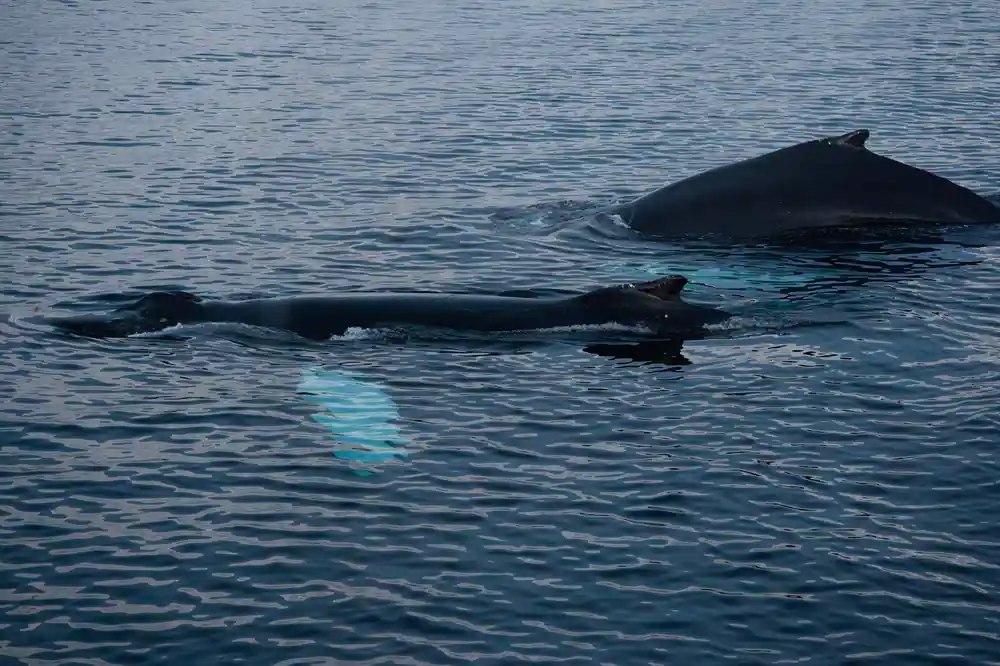
Smaller fins beside larger ones are often a calf travelling with its mother. The pair will move on when they are ready, and watching from where you are is the kindest thing you can do.
Your Responsibility as a Whale Watching Guest
Winter here is genuinely cold. The average winter temperature in Tromsø is around −4°C.[4] The Polar Night Season begins on November 27th and lasts until January 15th.[5] Daylight in that stretch is short and often blue. Set your camera for low light, not for sunshine.
Dress for standing still on deck: thermal base layers, fleece, a windproof and waterproof shell, hat, gloves and warm boots. On RIB whale watching tours, operators provide full-length flotation suits, often called drysuits or immersion suits, to wear over your own clothing.[11]
Then there is behaviour. Follow what the crew asks of you, stay behind the rail, keep your voice low when whales are close, and leave the drone in the bag. Ask before you bring a long lens or a tripod that swings over other people's heads.
Families travel on these trips too. On the Arctic Whale Tours winter cruise from Tromsø, children can join from age 1, and those under 16 must be accompanied by an adult.[12] Leave the fjord as you found it: nothing over the rail, and no chasing a photograph at an animal's expense.
How long the whale safaris from Tromsø run
Compare from-prices for whale safaris from Tromsø
From prices in US dollars as listed on GetYourGuide.[6][7][8][13][15]
When to book a whale safari from Tromsø
Plan your whale safari
Book for the season
Whales follow the herring into the Tromsø and Skjervøy fjords roughly every November through January.[2]
Expect the run north
Since around 2017 the whales have usually gathered in the Kvænangen fjords near Skjervøy, not the waters close to Tromsø.[2]
Choose your boat
Brim Explorer's hybrid-electric ship operates silently in electric mode to minimise disturbance.[3]
Dress for the fjord
Winter temperatures in Tromsø average around −4°C; pack layers and a windproof shell.[4]
Respect the approach
Approach guidelines ask boats to keep under 5 knots when within 300m, from the side and slightly to the rear.[1]
Compare whale safaris from Tromsø and choose your boat
from US$220Reserve now & pay later