The essentials
- Beyond the fjord mouth the sea bed falls away into the slope, and that is the water sperm whales work. Sheltered fjord cruising ends and open swell begins.
- Mature males range far from the warmer breeding grounds and feed over deep water, often alone. Females and calves stay in lower latitudes.
- A low, bushy blow angled forward, a long back, then a raised fluke. The fluke-up signals that the surface spell is over and the next dive has begun.
- From November through January, orcas and humpbacks follow herring into the Tromsø and Skjervøy fjords.[1] Polar Night runs from November 27th to January 15th.[2]
- The booked safari uses a high-speed catamaran, runs 8 hours from Tromsø and is wheelchair accessible.[3] RIB tours supply full-length flotation suits.[4]
- Top choice Catamaran whale safari from US$220 Duration8 hours[3]Rating4.61 from 3,768 reviews[3]GuideEnglish[3]BookingReserve now & pay later[3] Check availability
- RIB safari at Skjervøy from US$251 Duration3 - 12 hours[5]Rating4.78 from 136 reviews[5]GuideEnglish[5]BookingReserve now & pay later[5] See this tour
- Fast catamaran whale tour from US$210 Duration7.5 hours[6]Rating4.71 from 661 reviews[6]GuideEnglish[6]BookingReserve now & pay later[6] See this tour
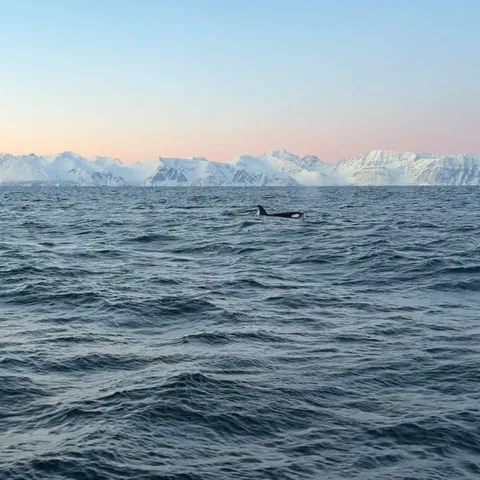
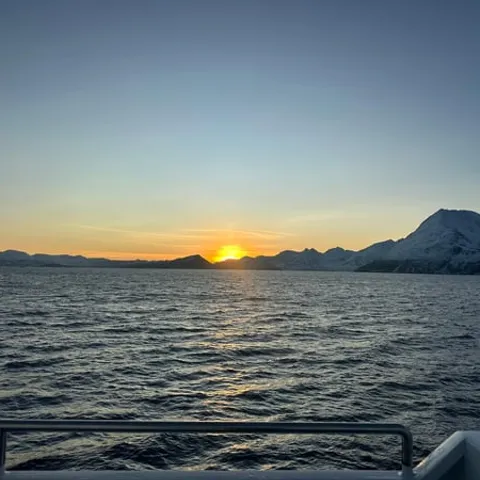
During the Tromso summer months, the Midnight Sun bathes the region in 24-hour daylight , creating a unique atmosphere for boat tours. While the whale sightings are fewer compared to the Tromso winter season, some species, such as minke whales and porpoises , are occasionally spotted during summer.
Into the deep water, with the right boat and the right layers
On the water
The shelf edge: where deep water meets the hunt
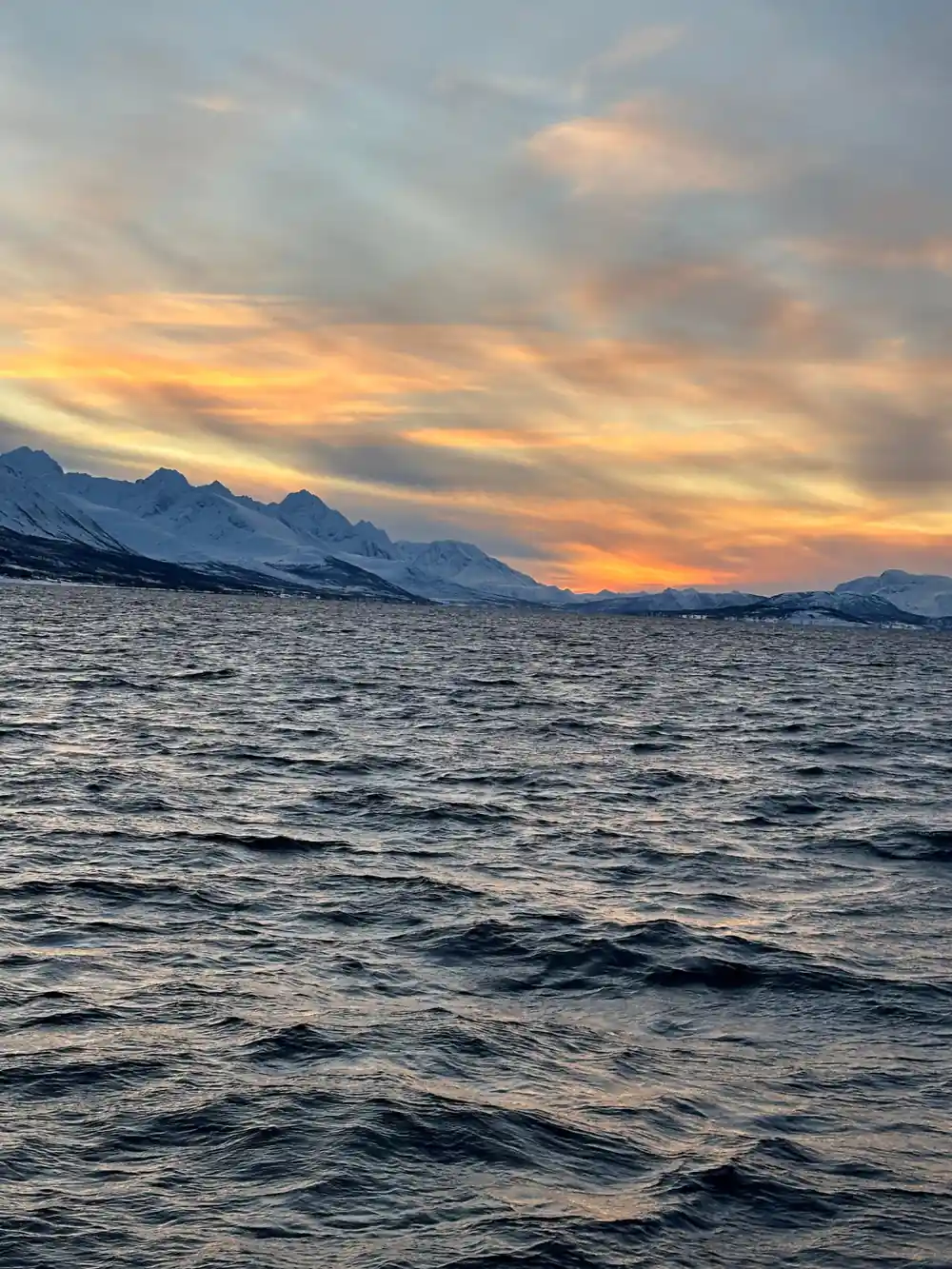
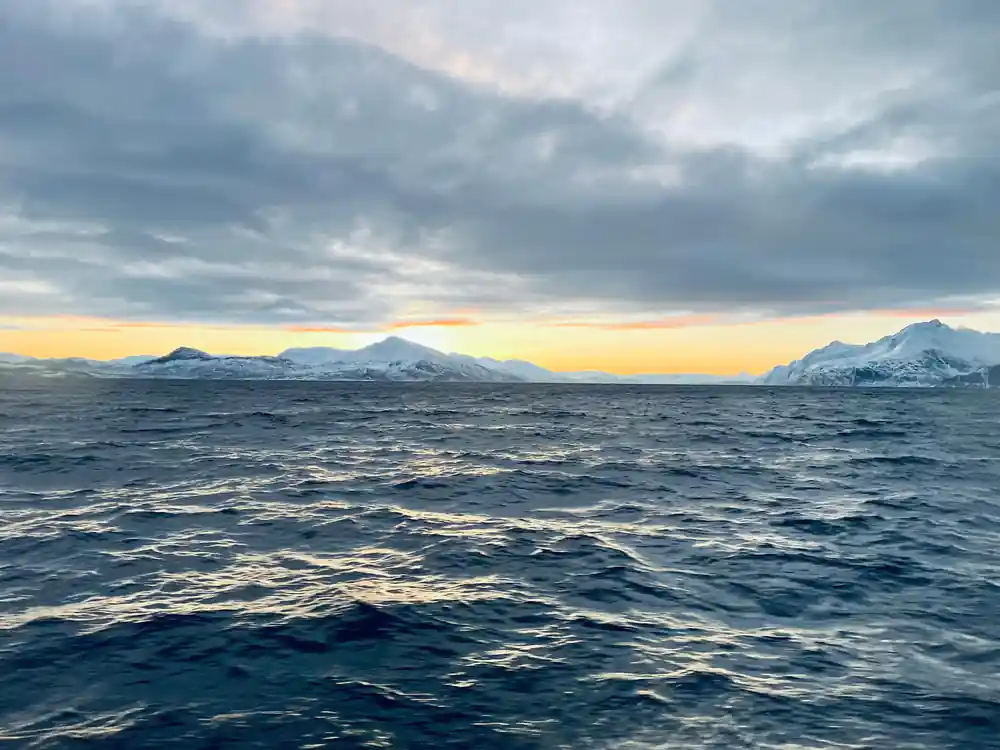
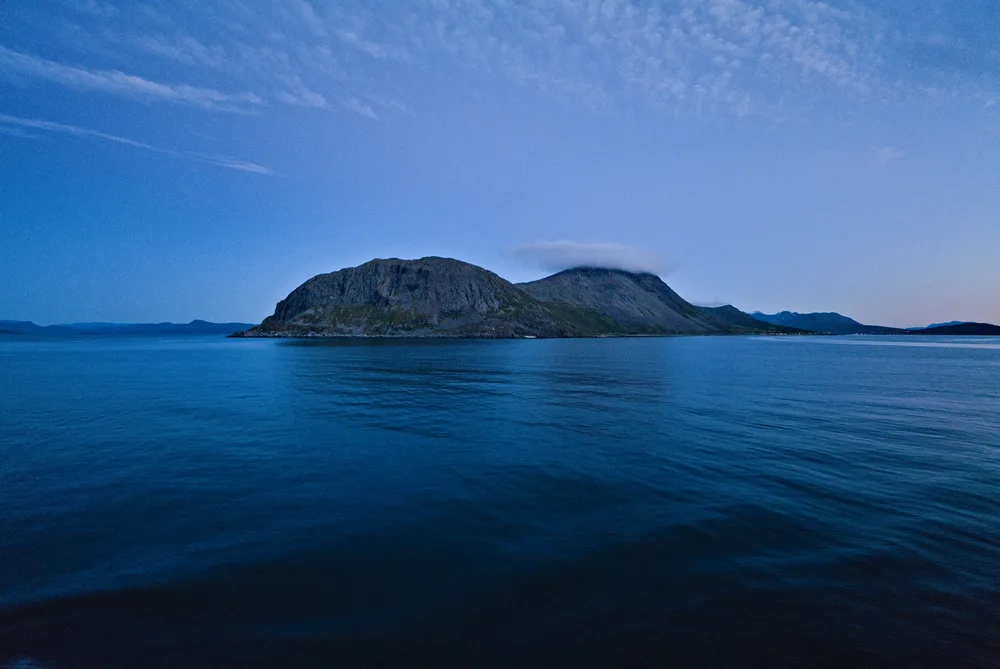
Leave Tromsø harbour and the water is sheltered at first, flat and dark between islands, with steep fjord walls close on either side. Whale boats run out through the sound and turn north, past low skerries and the last of the shelter, until the land drops away behind and the swell has room to build. Somewhere out there the sea bed stops being a floor. The continental shelf breaks into the slope, and the water under the keel becomes suddenly, vertiginously deep. That edge is where a sperm whale belongs, over water far too deep for a fjord animal to work. Cold, nutrient-rich water moves along the slope, plankton blooms, squid gather, and a whale that hunts squid has a reason to be there.
Tromsø whale diving usually starts closer in. Since around 2017, whales near Tromsø have usually gathered in the Kvænangen fjords near Skjervøy rather than the waters closer to Tromsø, and the 2025-2026 season followed the same pattern.[1] The outer coast is honest about itself: no shelter, a longer run home, and weather that decides the plan. What you get in return is scale. Cliffs shrink, the horizon opens, and the water changes, from flat green in the fjord to a slow, heavy swell with a grey light on it.
Why bull sperm whales come this far north
Sperm whales live in structured groups, but not everywhere. Females and calves stay in warmer seas, in family units that look after the young together, while mature males travel far from those grounds and range into cold, high-latitude water. That is the animal you have a chance of meeting offshore from northern Norway: an adult male, often alone and sometimes in a loose group, working a slope or a deep channel. He is not passing through. He is feeding, and he may hold to one stretch of water for days.
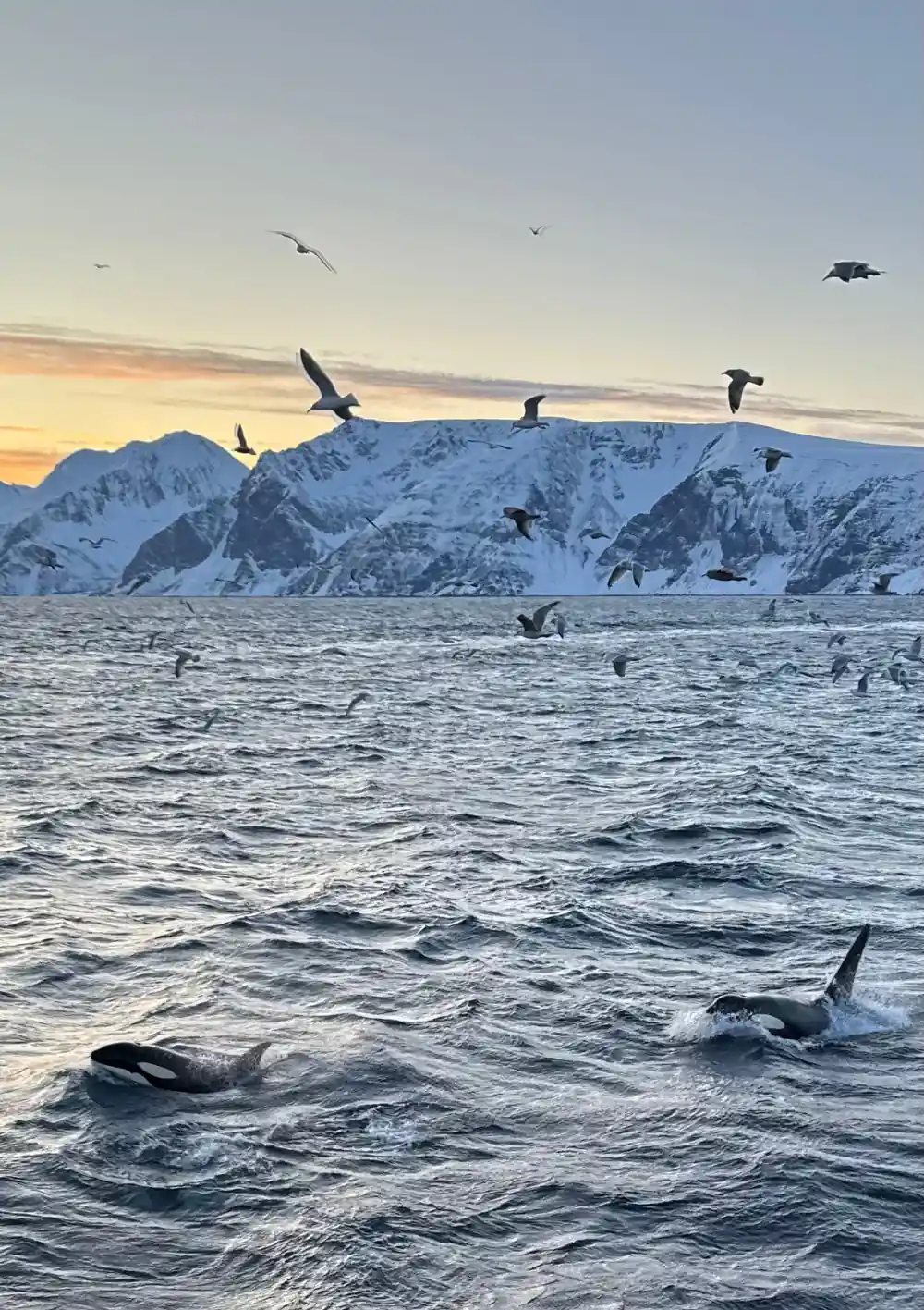
The winter show in the fjords is a different story. From November through January, orcas and humpbacks follow herring into the Tromsø and Skjervøy fjords, and it is the migration of Norwegian spring-spawning herring that draws killer whales into northern Norwegian waters each winter.[1][9] Those whales move into the fjords and sounds with the fish. Sperm whales sit further out, over deeper water, hunting squid in the dark, and the two kinds of whale watching are not the same trip.
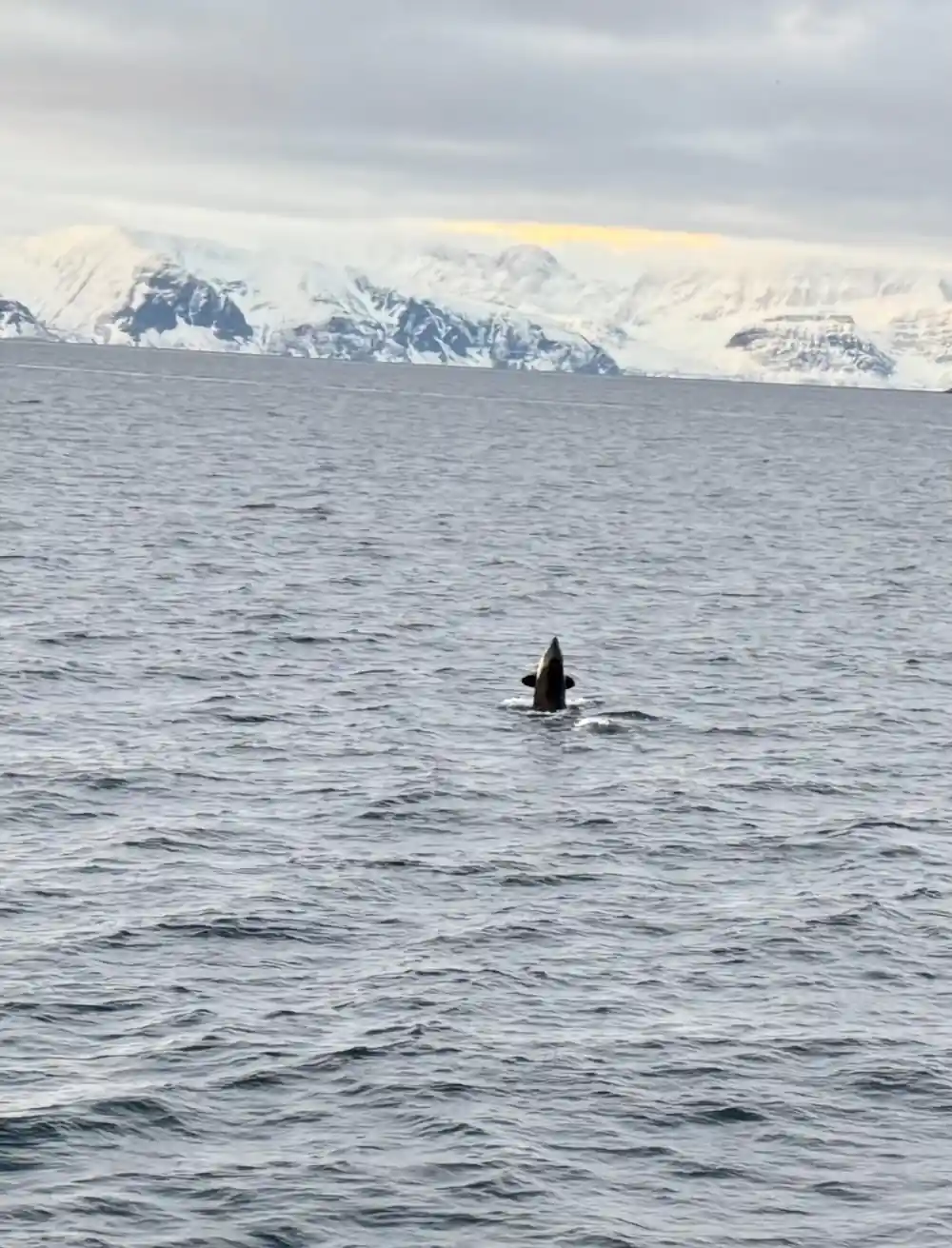
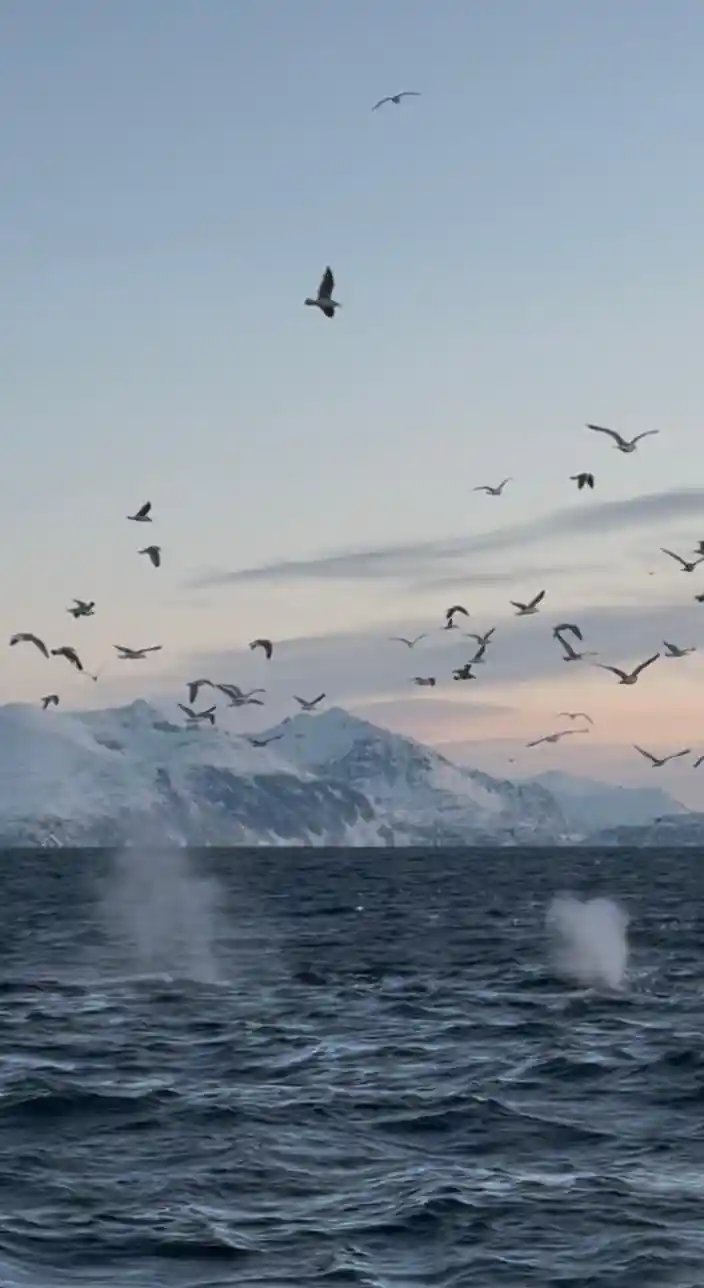
A dorsal fin breaks the swell far offshore, where the shelf drops away into deep water.
Inside a deep dive: hunting in the dark
A sperm whale's dive begins with the back arching and the flukes lifting clear of the water. Then the animal is gone, dropping head-down through water that goes from blue to grey to black, with its lower jaw slightly open. The clicks start almost at once. A sperm whale makes sound in its huge blocky head and reads the echo that comes back, which is how it finds soft-bodied prey in water where no light reaches. Squid, including the big deep-water kinds, are the main quarry.
The hunt happens out of sight, so most of what you see is the before and after. Down there the whale passes through a dark that is not entirely empty, because many deep-sea animals glow, and in that dark a sperm whale hunts by sound rather than sight, sweeping its head through the water and reading the shape of whatever is ahead. This is why a quiet boat and a patient crew are worth more than a fast one. Nothing about the dive is visible from the deck, and nothing about the wait is wasted.
The surface breathing cycle, and how to read it
When the whale comes up it usually surfaces somewhere other than where it went down, so the first sign is often a blow rather than a back. The spout of a sperm whale is not a tall fountain. The blowhole sits at the front left of that great head, so the plume goes up and forward at a low angle, bushy and pale against dark water. Then the head appears, then a long, knobbly back with a small dorsal hump set well back, and then the animal settles and blows again.
This breathing spell is the part of the encounter you can plan around. A whale that has come up from a long hunt at depth needs time at the surface before it can go down again, so it will lie there breathing steadily, and that is your window. Whale watching guidelines in Tromsø say to approach whales slowly, at less than 5 knots when within 300m, at constant speed, from the side and slightly to the rear.[8] A steady course and a quiet engine do more for a sighting than any amount of manoeuvring.
from US$220
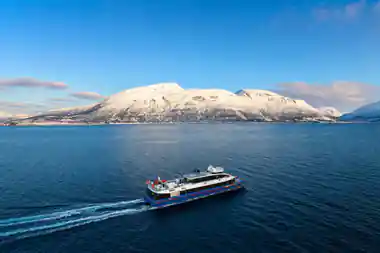
The high-speed catamaran whale safari from Tromsø is the tour booked from this site and runs 8 hours.[3]
A bull sperm whale beside an orca
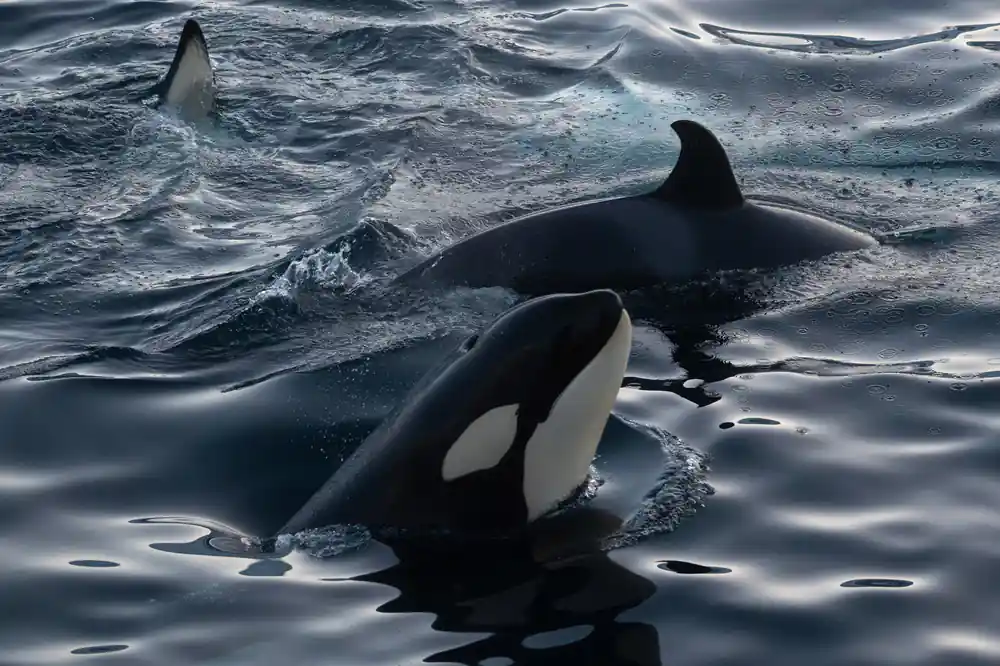
Put a bull sperm whale next to an orca and you are looking at two different answers to the same cold sea. The orca is a fast, sharp-toothed hunter that works near the surface, taking fish and smaller marine mammals. The sperm whale is a blocky, deep-diving squid hunter with a narrow lower jaw set underneath an enormous head, built for pressure and darkness. One reads the water with eyes and speed. The other reads it with sound, far below the light.
You may see both on the same stretch of coast in winter, though rarely in the same minute. Orcas and humpbacks come into the fjords after herring from November through January.[1] Sperm whales stay over the slope, further out. Summer is a different season entirely: in Tromsø, minke whales and porpoises are occasionally spotted during summer, although sightings are fewer than in the winter season.[10] Whatever is on the water, the method is the same. Look for a blow, a back, a fin, or a patch of water that behaves oddly.
The fluke-up dive and what comes next
The photograph you will want to keep is usually the last one. When the animal is ready to go down, it lifts its tail high and holds it there, a wide notched fluke with water sheeting off the trailing edge, and then it slides out of sight. That raised tail tells you exactly what the whale is about to do, and it usually comes at the end of a surface breathing spell. If you are on deck with a camera, keep it up during the quiet moments. The fluke-up is over quickly.
After that, the day keeps moving. Crews read the water, the birds and the weather, and a whale that has gone quiet may mean a run to a different line of deep water. Some trips stay in the fjords from start to finish: the whale watching safari run by Rødne Fjord Cruise from Tromsø is a 7-8 hour round trip with no disembarkation.[11] Others search the way Brim Explorer's crew do, watching for birds flying overhead where humpback whales push herring to the surface and using modern technology such as radar and sonar to find obstacles in open water.[12]
Preparing for an offshore whale watching day
Tromsø whale diving off the shelf edge asks more of you than a sheltered fjord cruise. The average winter temperature in Tromsø is around -4°C, and on open water with wind and spray it feels sharper than that.[7] Dress in layers you can move in: a warm base layer, a fleece or wool mid layer and a windproof, waterproof outer layer. Take a hat, gloves and something for your neck. On RIB whale watching tours, operators provide full-length flotation suits, often called drysuits or immersion suits, to wear over your own clothing.[4]
Then there is the light. In Tromsø the Polar Night Season begins on November 27th and lasts until January 15th.[2] Across that stretch the useful daylight is low and brief, which is worth knowing before you choose a date. Seats and vessels matter too. The safari on the high-speed catamaran from Tromsø is wheelchair accessible, runs 8 hours and offers free rebooking, with free cancellation up to 24 hours in advance.[3] Book early in the season, keep a spare day in your plan, and let the crew make the call on the day.
How long Tromsø whale watching tours last
Durations from the GetYourGuide listings[13],[6],[3],[14] and[15].
From-prices on Tromsø whale watching boats
Adult from-prices in US dollars from GetYourGuide listings[3],[5],[6],[14] and[15].
When to plan your whale watching
Planning your offshore day
Pick the season
Whale season runs November through January, with Polar Night from November 27th to January 15th.[1][2]
Choose your boat
Catamarans give you a warm, stable deck; RIB safaris are faster and limit groups to 12 participants.[5]
Dress in layers
RIB tours provide full-length flotation suits over your own clothing, and average winter air is around -4°C.[4][7]
Watch, do not chase
Guidelines ask boats to approach slowly, at less than 5 knots within 300m, from the side and slightly to the rear.[8]
Keep the day flexible
Sightings are never guaranteed; trips follow the whales, the herring and the weather.
Ride out past the fjord mouth on a high-speed catamaran
from US$220Reserve now & pay later