The essentials
- Orcas and humpbacks follow herring into the Tromsø and Skjervøy fjords roughly from November through January.[1]
- The safari booked here, the From Tromsø: Whale Watching Safari on High-Speed Catamaran, is listed at 8 hours with a live English guide.[2]
- It is listed from US$220, with free cancellation up to 24 hours in advance and the option to reserve now and pay later.[2]
- Whale watching guidelines for Tromsø ask boats to approach slowly, at less than 5 knots within 300m, from the side and slightly to the rear.[3]
- Average winter temperatures in Tromsø sit around −4°C, and on RIB trips operators provide full-length flotation suits over your own clothing.[4][5]
- Top choice High-speed catamaran from US$220 Duration8 hours[2]Rating4.61 from 3,768 reviews[2]NotesWheelchair accessible; free rebooking[2]CancellationCancel up to 24 hours ahead[2] Check availability
- RIB safari at Skjervøy from US$251 Duration3 - 12 hours[6]Rating4.78 from 136 reviews[6]NotesSmall group limited to 12[6]CancellationCancel up to 24 hours ahead[6] See this tour
- MS Alba whale cruise from US$215 Duration8 hours[7]Rating4.67 from 53 reviews[7]NotesFree rebooking offered[7]CancellationCancel up to 24 hours ahead[7] See this tour
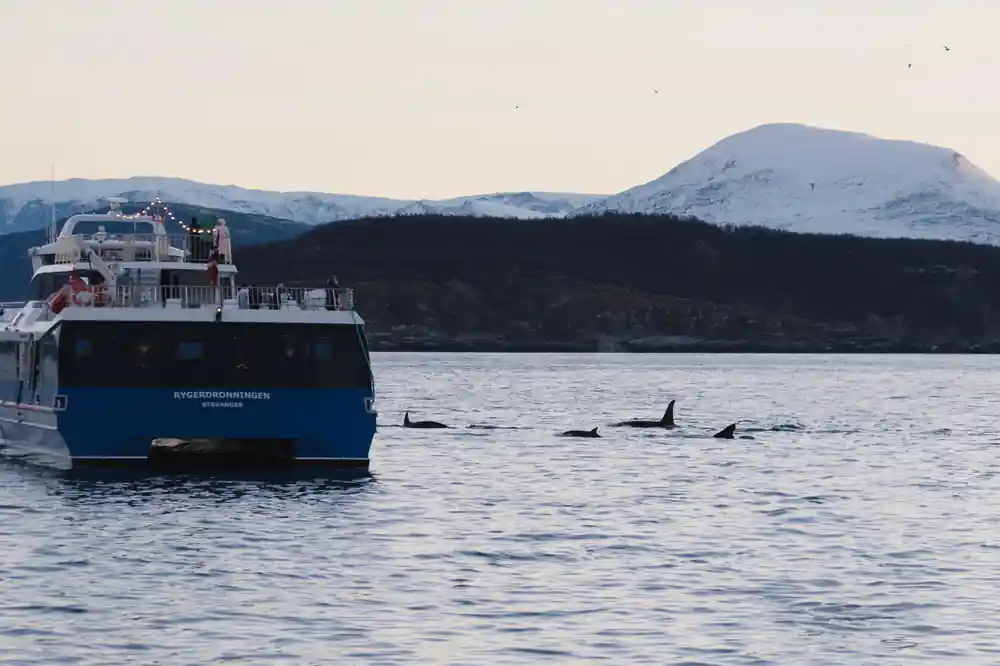
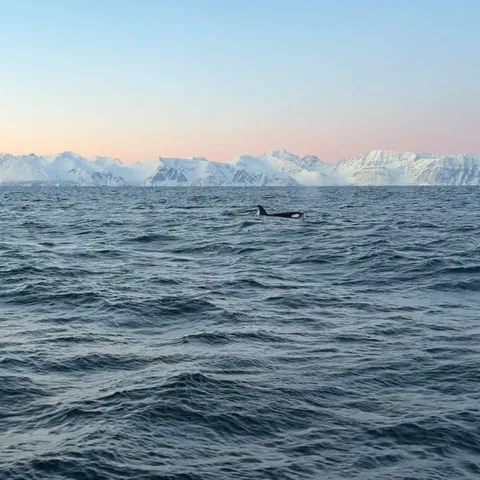
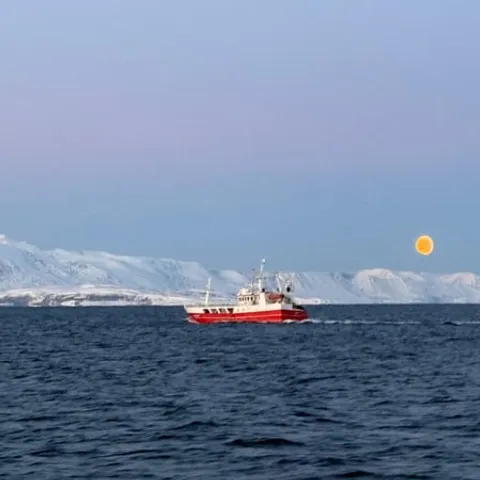
This convergence is choreographed by the migration of Norwegian spring-spawning herring, which draw killer whales into these northern waters each winter.
Is the catamaran safari the right orca tour for you?
Booking tips
Why Orcas Hunt the Norwegian Arctic in Winter
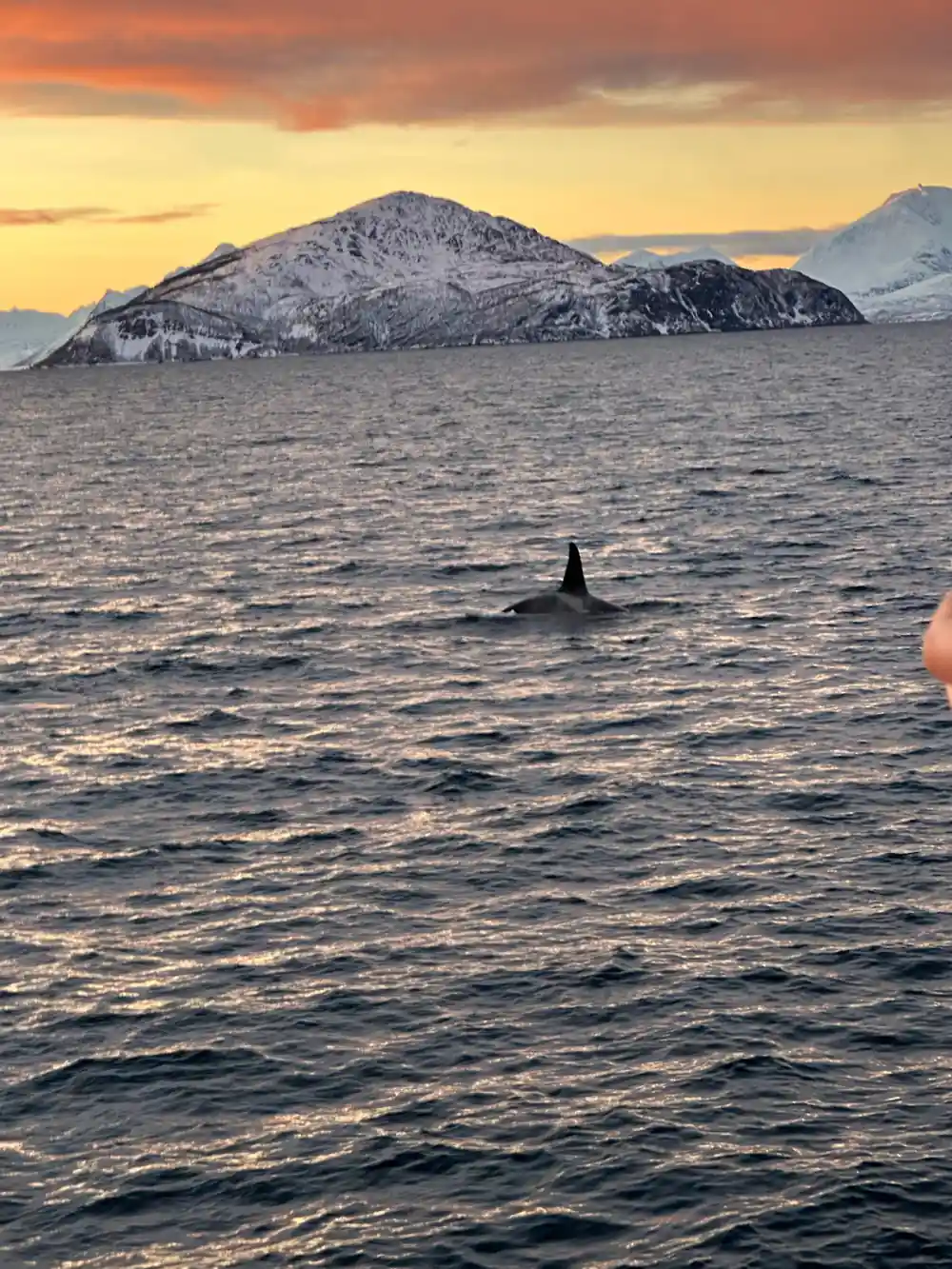
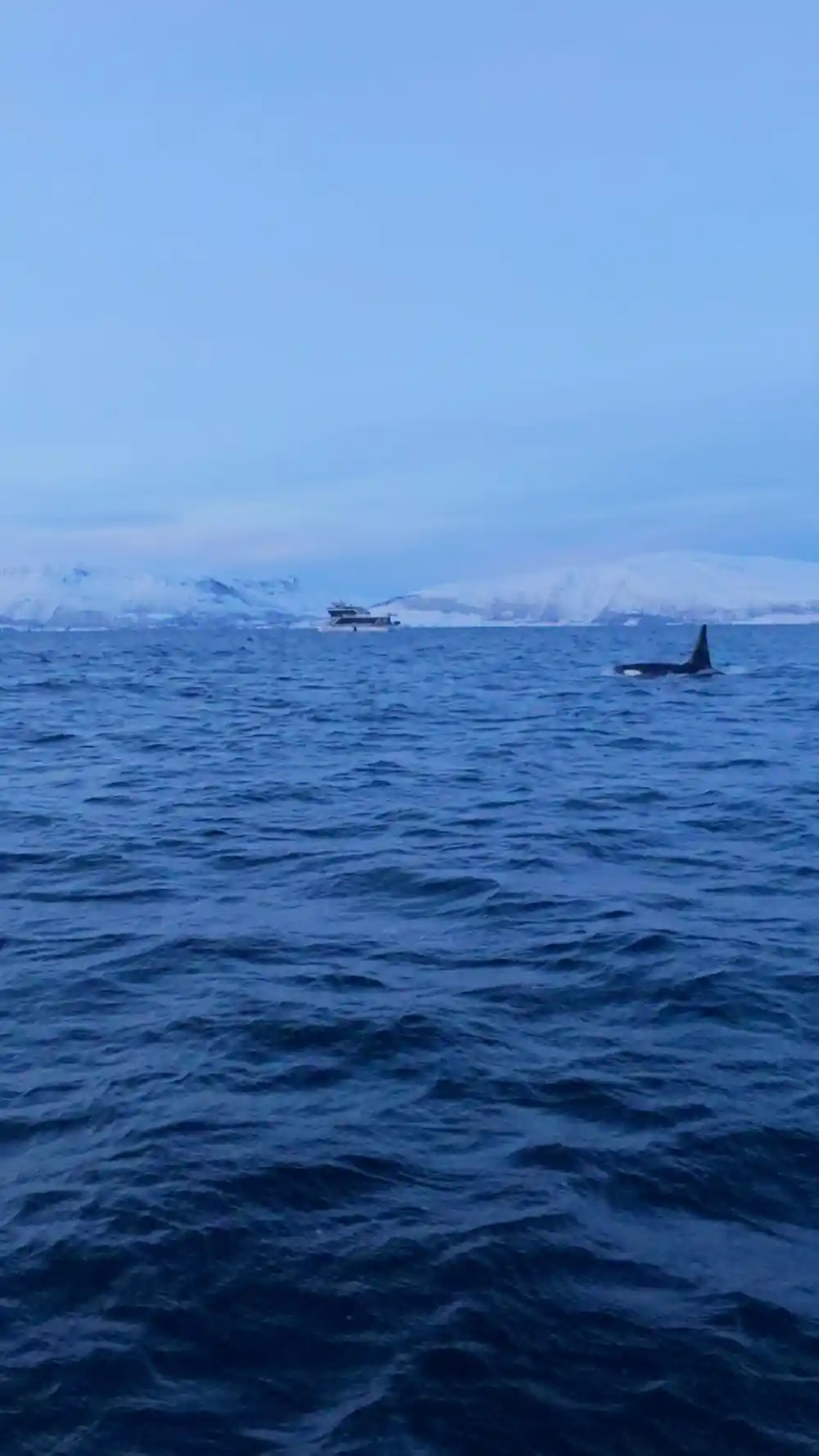
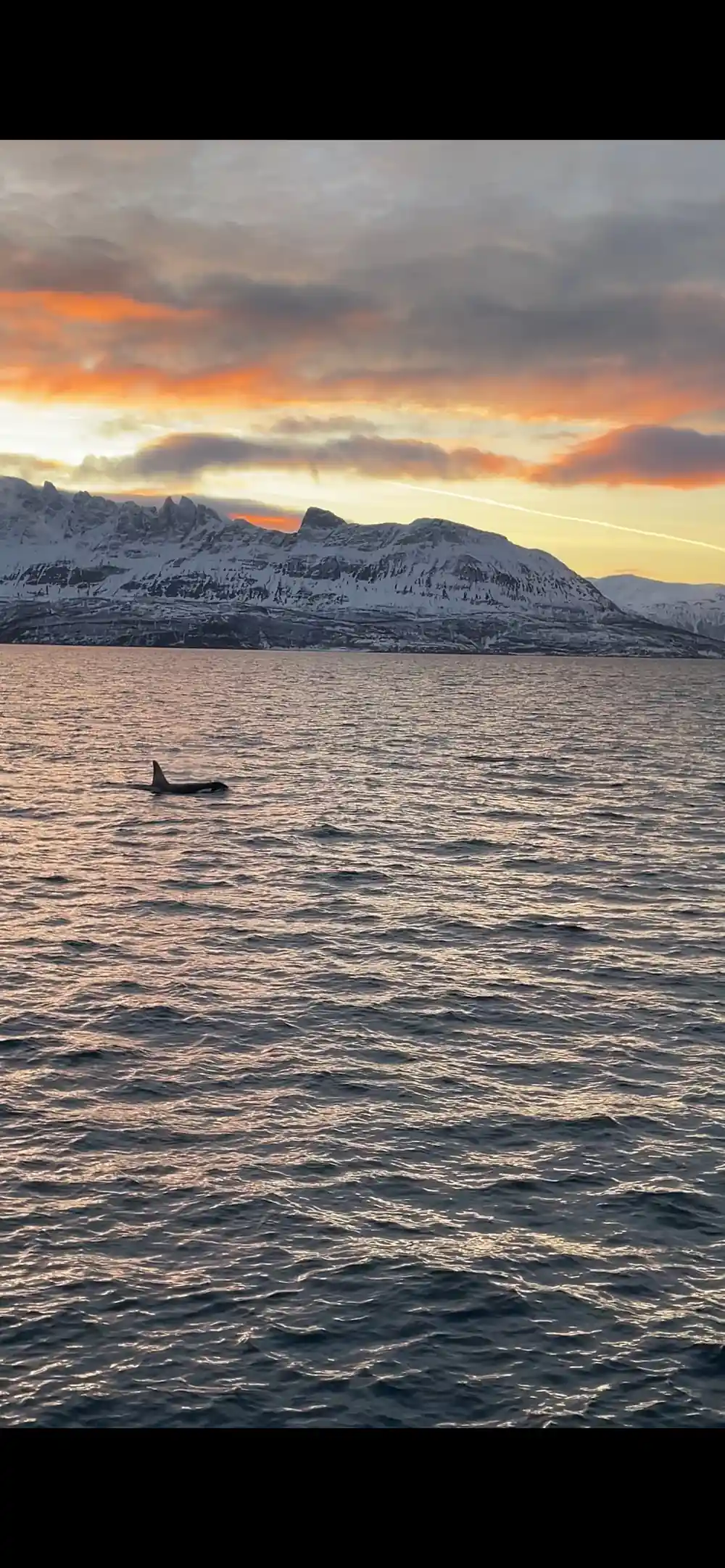
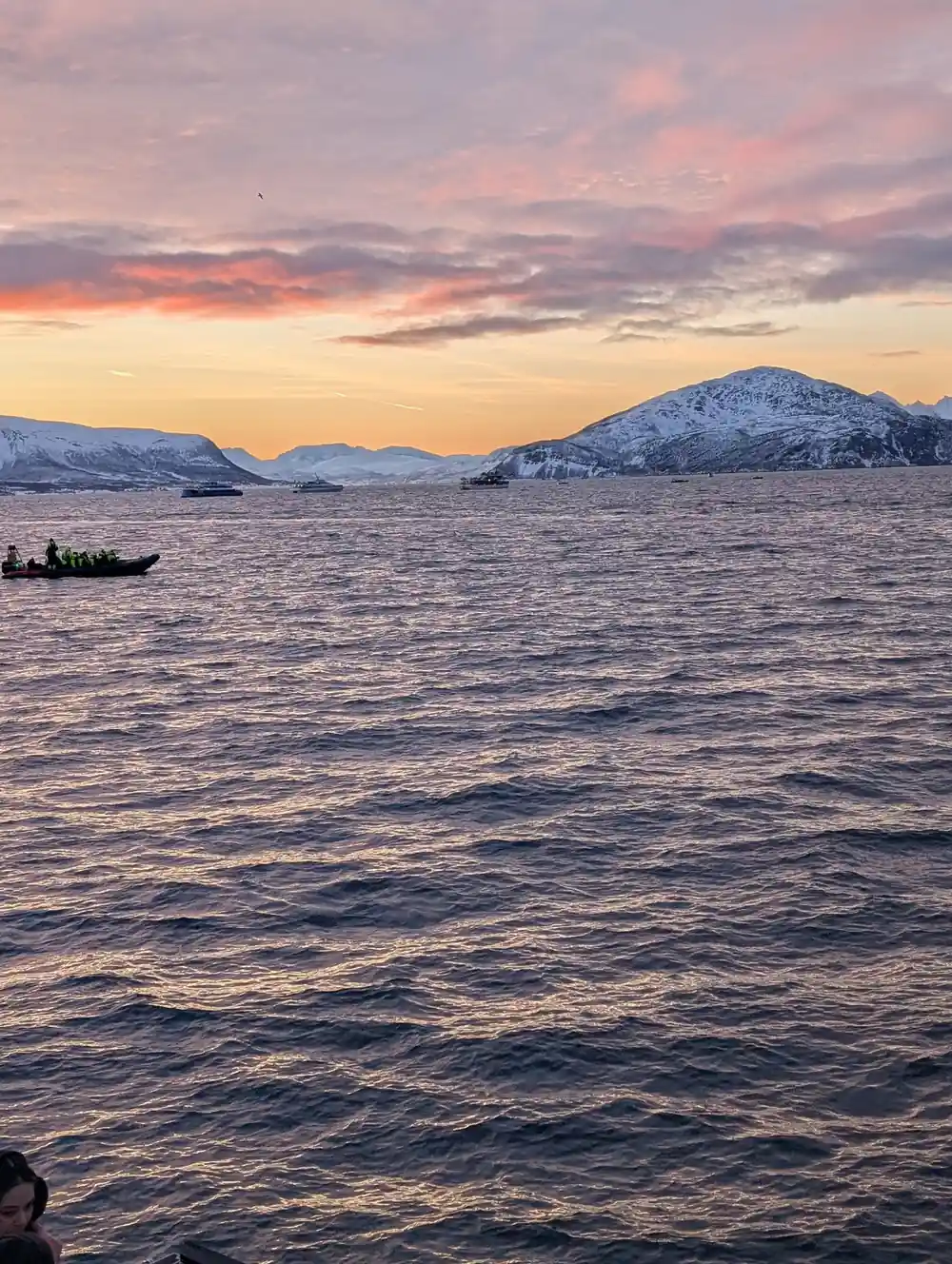
Every winter, northern Norway fills with herring, and the killer whales follow. The migration of Norwegian spring-spawning herring draws killer whales into these northern waters each winter.[9] Around Tromsø, the whale season runs roughly from November through January, when orcas and humpbacks follow herring into the Tromsø and Skjervøy fjords.[1] Stand on deck in that window and the scene is unmistakable: black water, steep snow-covered peaks, seabirds working the surface, and a tall dorsal fin cutting a line through the swell.
The whales are not always on Tromsø's doorstep. Since around 2017, whales near Tromsø have usually gathered in the Kvænangen fjords near Skjervøy rather than the waters closer to Tromsø.[1] Expect a long run north before the search begins, and plan for a full day on the water. Light is another matter: the Polar Night Season in Tromsø begins on November 27th and lasts until January 15th, so some departures sail in deep twilight.[10] Winter temperatures average around −4°C, and the wind off the fjord makes the cold feel sharper.[4]
Herding Herring: How Orcas Work a School Together
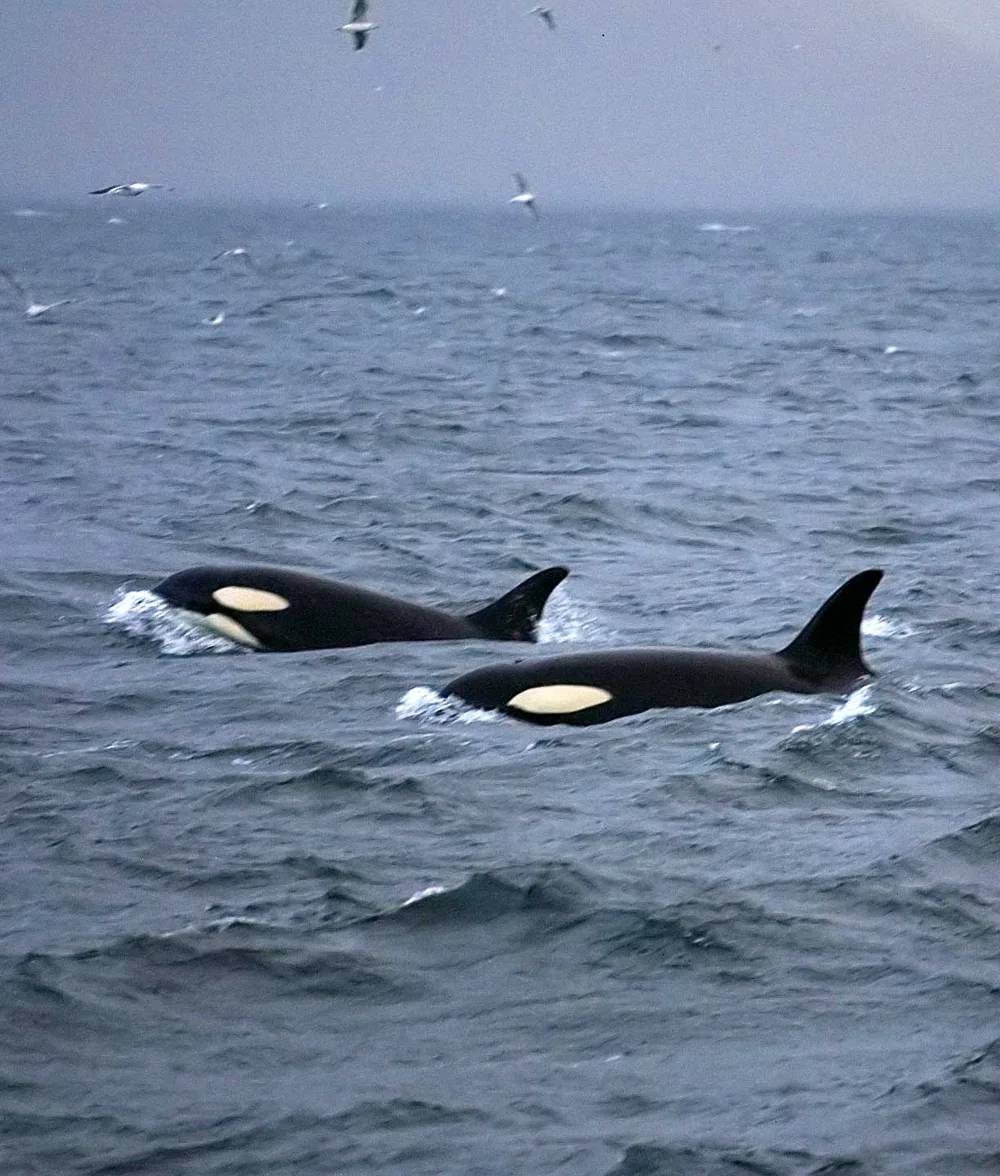
Orcas are patient, cooperative hunters, and the herring shoals of the fjords suit their method. A pod will crowd a school of herring into a tight, panicked ball near the surface, then sweep through it with powerful tail slaps that stun the fish and make them easy to pick off one at a time. From a boat you often see the surface change before you see an animal. Gulls and other seabirds gather overhead, the water dimples and flashes silver, and then a dorsal fin rises through the middle of the commotion.
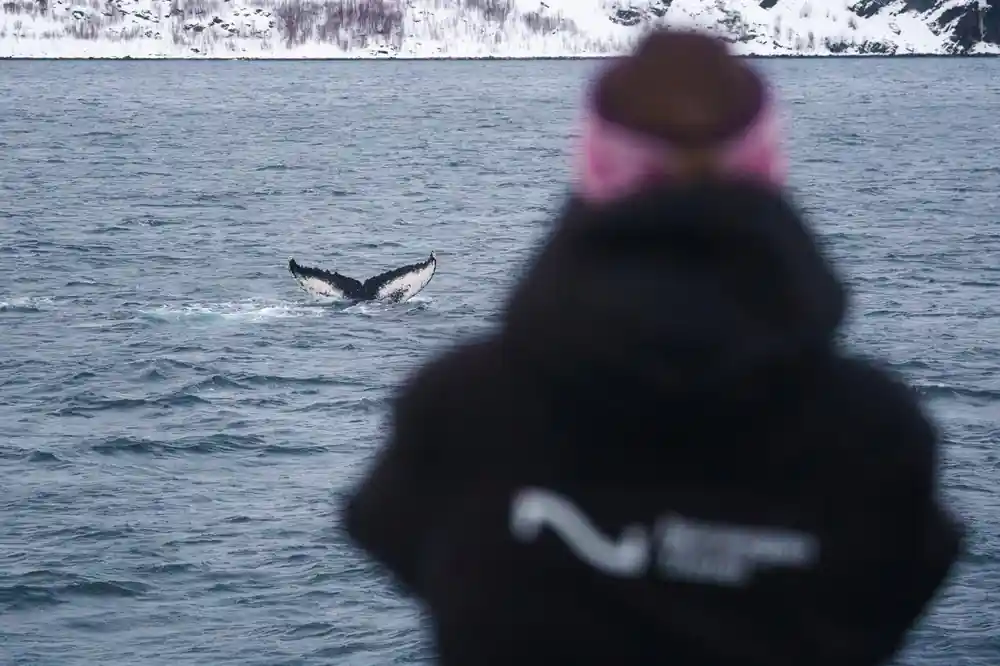
Humpbacks feed in the same waters and tend to lunge straight through a shoal, mouth open, while orcas work around the edges of the fish. Watching two very different hunters on one stretch of water is one of the pleasures of a winter day on the fjord. Keep scanning with your eyes rather than your camera. Whales surface briefly and often without warning, and a fin at the far end of the boat will be gone before you have raised a lens. Binoculars help, and so does standing still and watching the birds.
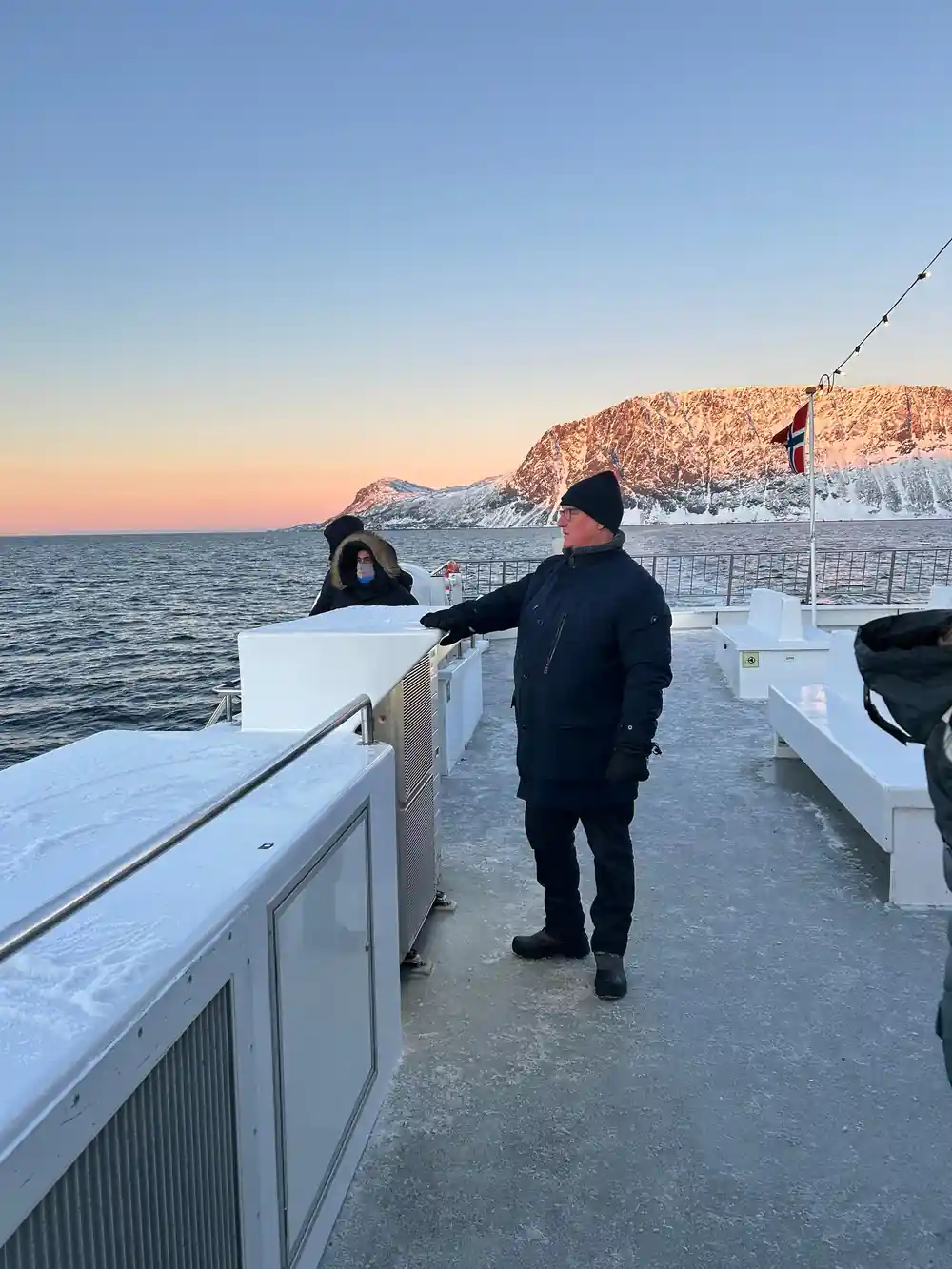
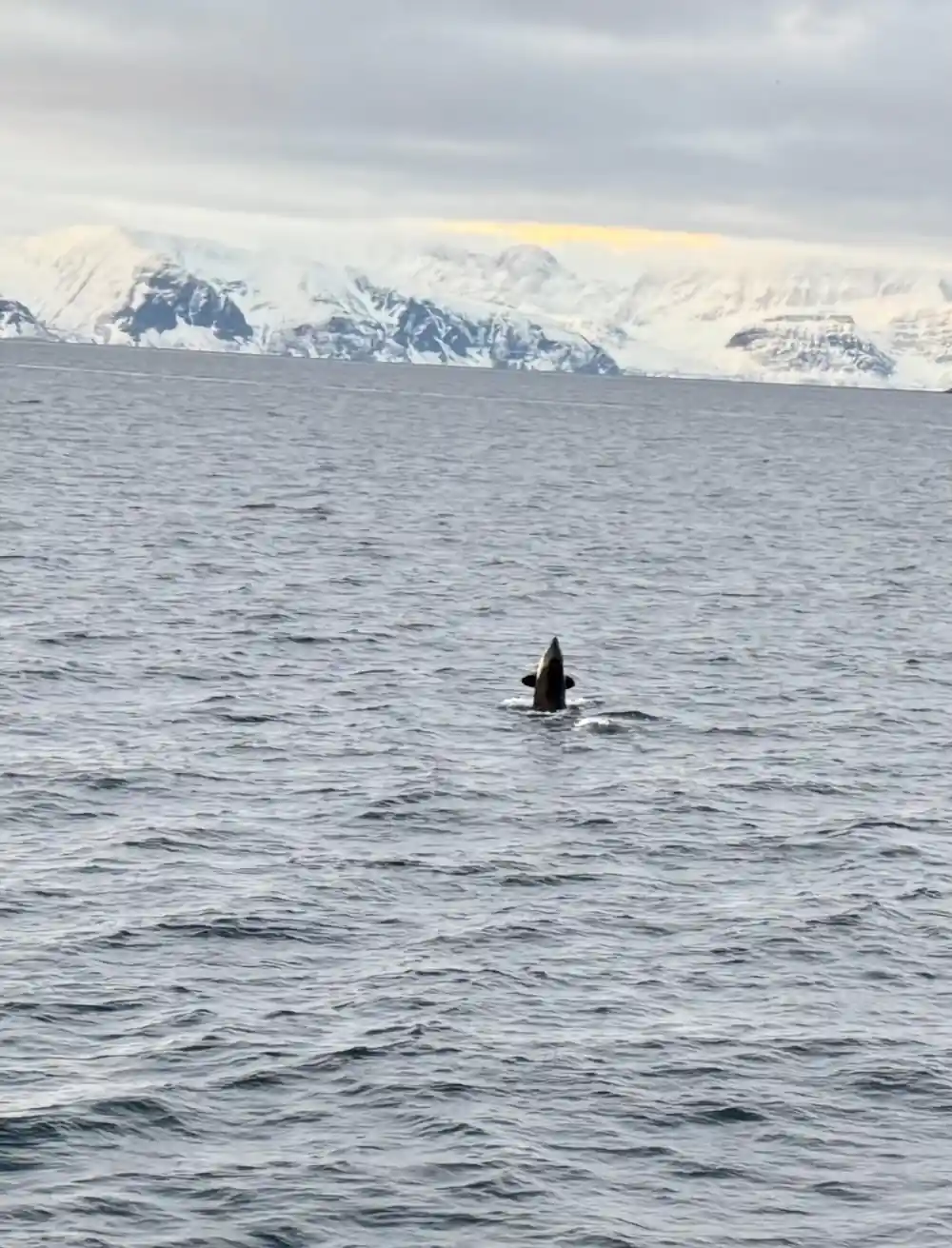
Dorsal fins break the surface in the fjords north of Tromsø.
Pod Life: Matriarchs and Family Bonds That Last Lifetimes
Orca society is built around the family. A pod is usually a group of related animals led by an older female, and sons and daughters tend to stay with their mother's group for years rather than striking out alone. Older females carry knowledge of where the herring gathers, when to move on, and how to hunt a particular stretch of coast. Watching a pod in the fjords, you are often watching several generations travel together, surfacing in loose formation, with the calves tucked close to the adults.
The same family groups come back to the same winter grounds, so the same individuals can turn up year after year. Different pods have their own vocal habits and hunting traditions, passed down from one generation to the next. It is a reminder that you are not watching a random animal crossing a bay, but a community with a long memory of these waters. Keep your distance, stay calm on deck, and let them carry on with the business of the day.
Reading the Dorsal Fin: Telling Individual Orcas Apart
Researchers identify individual killer whales by photographing their dorsal fins and the pale saddle patch behind them. Every fin has its own shape. Some are tall and straight, some lean, some are nicked or ragged along the trailing edge, and some carry scars from a life of hunting and travel. The saddle patch varies too, in size, outline and how much grey it shows. Over a season, a catalogue of local animals builds up from photographs taken off the side of working boats.
You can try the same thing from the deck. Photograph every fin you see, note roughly where you were, and compare the shots later. On a good day the same animal may surface alongside your boat more than once, and matching a notch on its fin to an earlier picture is quietly satisfying. Guides who work these fjords know many of the regulars, so ask them what you are looking at. It turns a wildlife sighting into something closer to recognising an old acquaintance.
from US$220
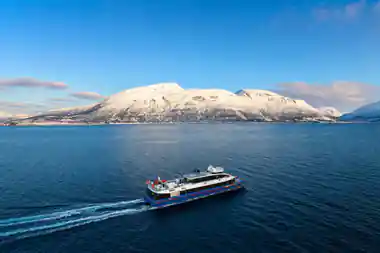
The high-speed catamaran safari runs 8 hours from Tromsø to Skjervøy and back, with free cancellation up to 24 hours in advance.[2]
Clicks, Calls and Pod Talk Underwater
Under the surface, orcas are noisy animals. They produce sharp clicks for echolocation, bouncing sound off fish and terrain to build a picture of what lies ahead, and they use whistles and pulsed calls to stay in touch with each other. Different pods have distinct dialects, and a trained ear can sometimes tell which group is nearby without seeing a fin. Sound travels a long way in cold fjord water, and a pod spread over a wide area can still be hunting as a single unit.
From the deck you will mostly hear wind, engine and water, and that is fine. Listen anyway. A blow is a soft, sudden exhale, and a group of whales surfacing together can sound like a line of animals breathing in sequence. If your boat lowers a hydrophone you may catch clicks and calls live, but even without one the winter fjord is worth hearing in its own right. Keep your voice down when whales are close, and let the quiet do some of the work.
Keeping a Respectful Distance from the Catamaran
Whale watching in Tromsø comes with a clear set of expectations. Local guidelines say to approach whales slowly, at less than 5 knots when within 300m, at constant speed, from the side and slightly to the rear.[3] These are voluntary best-practice guidelines rather than direct government regulations, and they exist to keep encounters calm and predictable for the animals. A boat that charges, turns hard or cuts across a pod's path is doing the wrong thing, however good the photographs.
Quieter boats help. Brim Explorer runs a Silent Whale Watching tour on a hybrid-electric ship that operates silently in electric mode to minimize disturbance.[11] That approach is one reason some travellers choose an operator carefully before booking. On your own watch the useful habits are simple: stay behind the rail, avoid sudden movement, keep flash off, and let the skipper decide how close the boat should sit. The whales set the pace, and the best sightings usually come when nobody is chasing them.
What to Expect on Your Arctic Safari Day
The tour booked here, the From Tromsø: Whale Watching Safari on High-Speed Catamaran, is listed at 8 hours with a live English-speaking guide, and the stops are listed as catamaran, Skjervøy and catamaran.[2] It is wheelchair accessible and free rebooking is offered.[2] It is listed from US$220, you can reserve now and pay later, and free cancellation is available up to 24 hours in advance.[2] Expect a long, cold, memorable day, and dress for the whole of it.
Winter temperatures in Tromsø average around −4°C, and the wind on open water bites.[4] If you switch to a RIB instead, operators provide full-length flotation suits, often called drysuits or immersion suits, to wear over your own clothing.[5] Bring a hat, gloves and something hot in a flask. Boats work with the wildlife as well: to locate whales, crews watch for birds flying overhead where humpback whales push herring to the surface, and use modern technology such as radar and sonar to detect large obstacles in open water.[11]
Travelling with children is possible on some departures. On Arctic Whale Tours' winter whale watching cruise from Tromsø, children can join from age 1, and those under 16 must be accompanied by an adult.[8] Otherwise, the day is much like any Arctic boat trip: a long run out, quiet hours scanning the water, a hot drink, and the sudden electric moment when a fin breaks the surface close enough to hear the animal breathe.
From-prices for Tromsø whale watching tours
All values are US dollar from-prices listed on GetYourGuide for these Tromsø departures.[2][6][7][12][13]
What a Tromsø orca tour costs
US dollar from-prices for these GetYourGuide listings. Child rates are not published there.[2][6][7][12]
When to go for orcas
How to plan your orca day
Pick your boat
Compare a stable catamaran, a small RIB and a hybrid-electric ship; each gives a different view and a different amount of shelter.
Choose your dates
The whale season runs roughly from November through January, when orcas and humpbacks follow herring into the Tromsø and Skjervøy fjords.[1]
Book with flexibility
The safari is listed from US$220 with free cancellation up to 24 hours in advance, and you can reserve now and pay later.[2]
Pack for the deck
Winter days on the water are cold: temperatures in Tromsø average around −4°C, and the wind makes it feel sharper.[4]
Confirm the meeting point
Departures meet in Tromsø and head north towards Skjervøy, so check your meeting time and location the day before.[2]
Sail north from Tromsø to the winter orca grounds
from US$220Reserve now & pay later