The essentials
- In Tromsø the whale season runs roughly from November through January, when orcas and humpbacks follow herring into the Tromsø and Skjervøy fjords.[1]
- Since around 2017, whales near Tromsø have usually gathered in the Kvænangen fjords near Skjervøy rather than the waters closer to Tromsø.[1]
- The Polar Night Season in Tromsø runs from November 27th to January 15th[2], and the average winter temperature is around -4°C.[3]
- The high-speed catamaran safari from Tromsø takes 8 hours, is wheelchair accessible and has a live English-speaking guide.[4]
- On RIB whale tours near Tromsø, operators provide full-length flotation suits to wear over your own clothing.[5]
- Top choice High-speed catamaran from US$220 Duration8 hours[4]Ratingrated 4.61 from 3,768 reviews[4]GuideLive tour guide: English[4]CancellationFree cancellation[4] Check availability
- RIB safari at Skjervøy from US$251 Duration3 - 12 hours[6]Ratingrated 4.78 from 136 reviews[6]GuideLive tour guide: English[6]CancellationFree cancellation[6] See this tour
- MS Alba whale cruise from US$215 Duration8 hours[7]Ratingrated 4.67 from 53 reviews[7]GuideLive tour guide: English[7]CancellationFree cancellation[7] See this tour
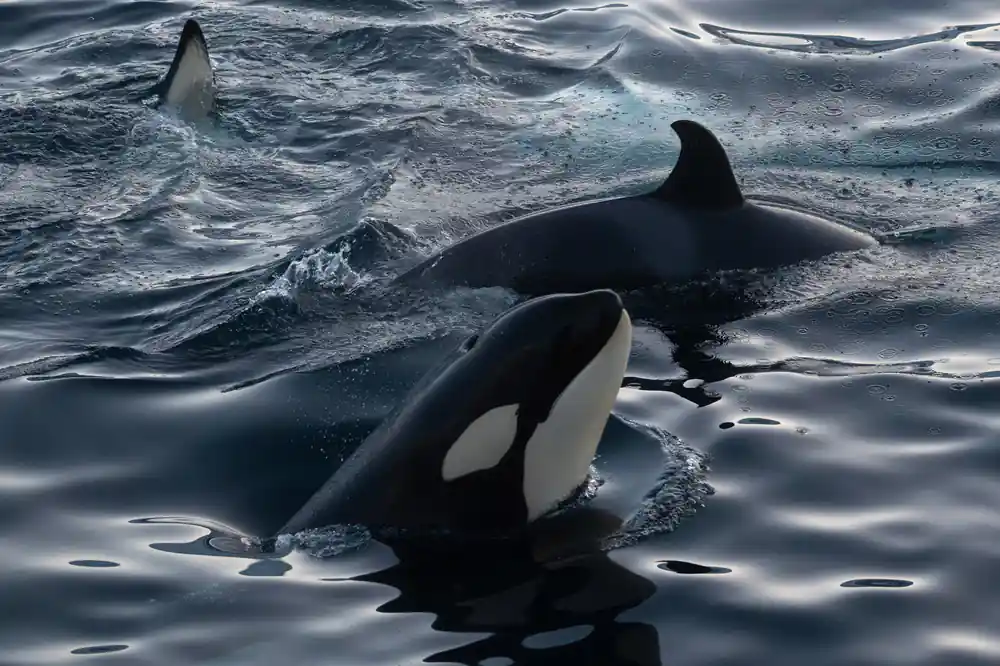
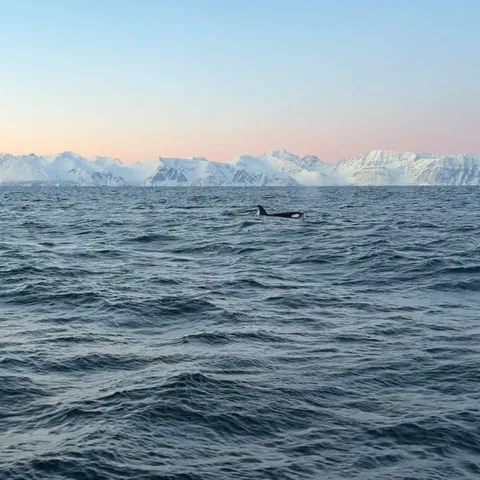
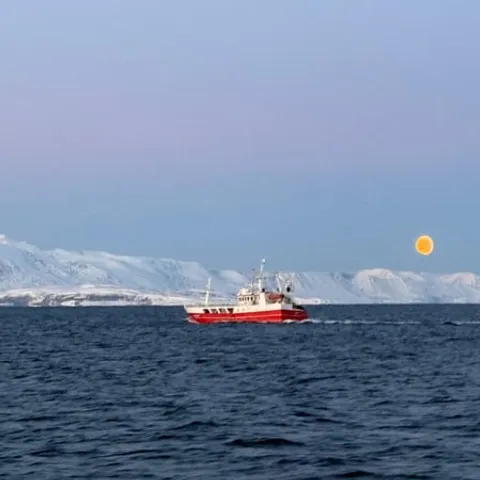
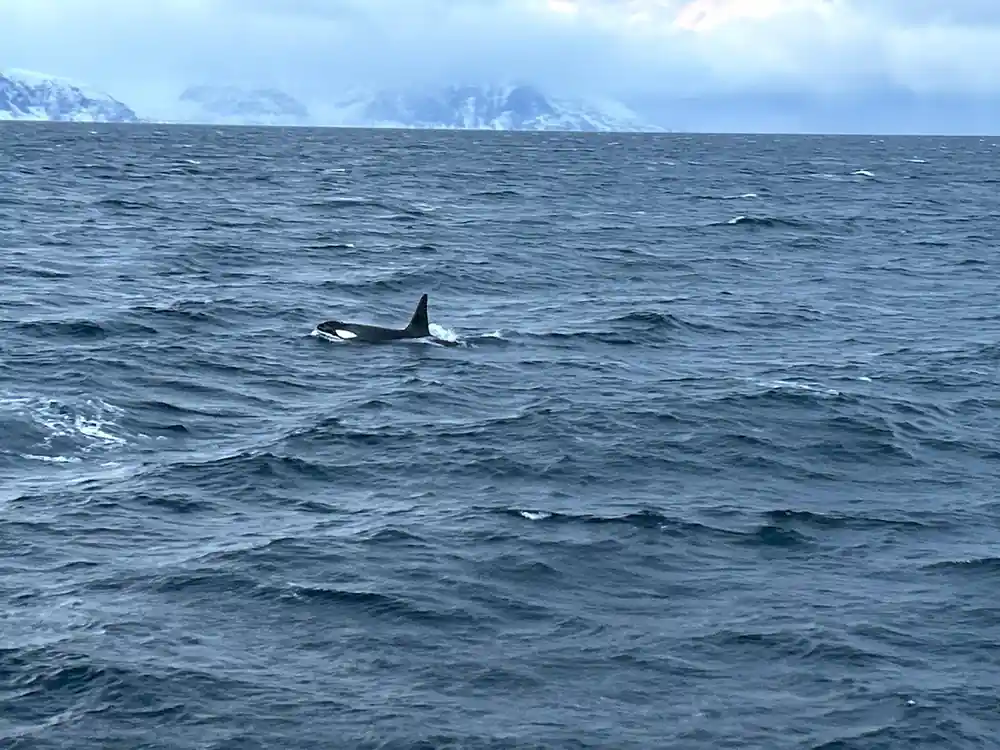
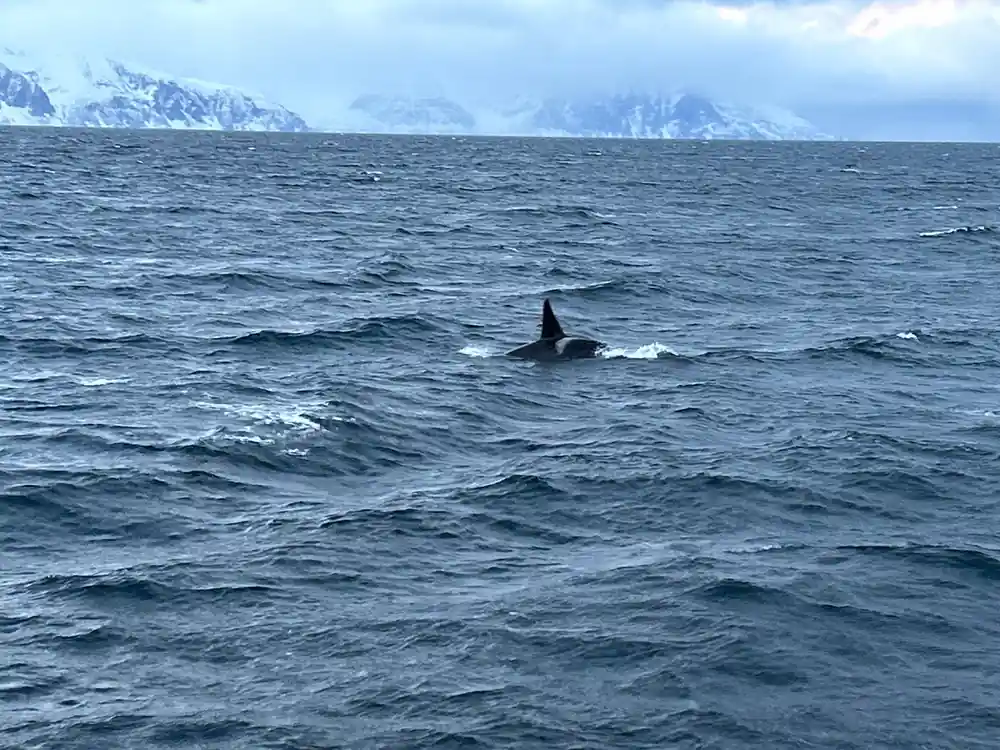
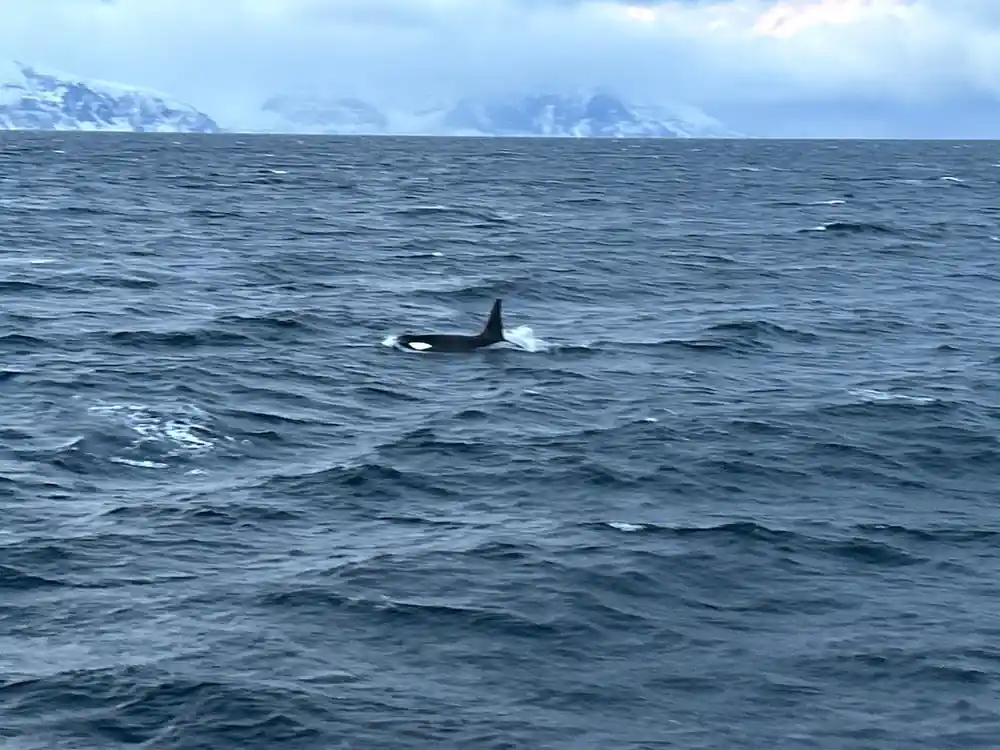
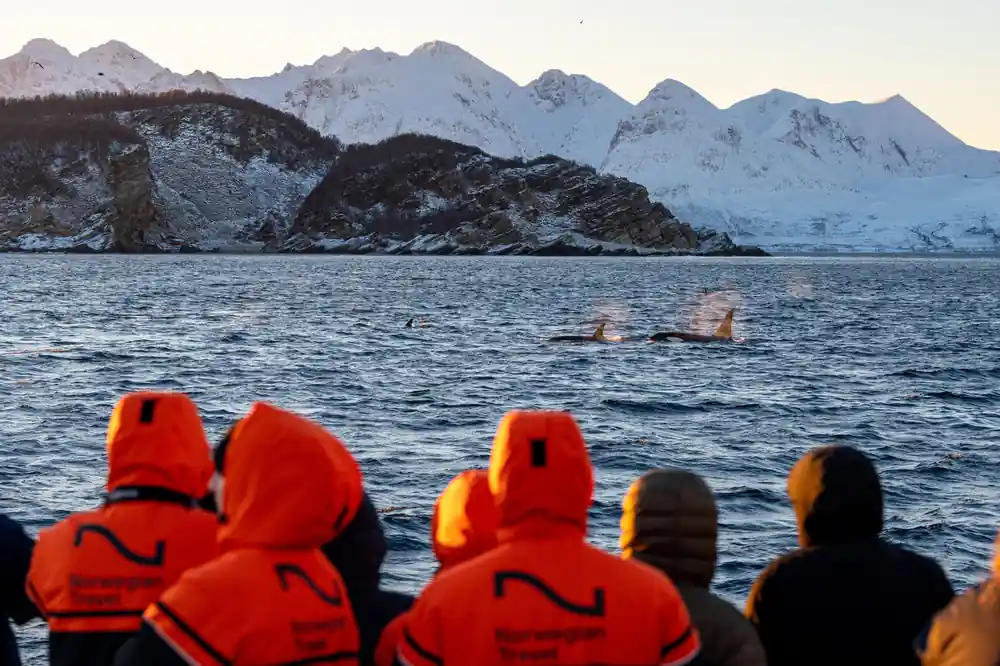
Orcas and humpbacks follow herring into the Tromsø and Skjervøy fjords roughly every November through January.
Is a Tromsø whale safari worth planning your trip around?
Booking tips
How the Tromsø whale season works
In Tromsø, the whale season runs roughly from November through January, when orcas and humpbacks follow herring into the Tromsø and Skjervøy fjords.[1] This is a migration rather than a coincidence: the migration of Norwegian spring-spawning herring draws killer whales into northern Norwegian waters each winter.[8] Since around 2017, whales near Tromsø have usually gathered in the Kvænangen fjords near Skjervøy rather than the waters closer to Tromsø, and the 2025-2026 season followed the same pattern.[1] For a traveller, that means a whale trip from Tromsø is a boat day that heads north out of the city to wherever the fish, and the whales, have settled.
Plan for a full day rather than an hour at the quayside. The whale safari on the high-speed catamaran from Tromsø takes 8 hours and carries a live English-speaking guide.[4] You are heading out into the Arctic winter, where the average temperature in Tromsø sits around -4°C.[3] Nobody can promise a whale on a given morning. Crews stack the odds by watching for birds flying over the water where humpbacks push herring to the surface, and by using radar and sonar to find obstacles in open water.[9]
Whale watching Tromsø November: the season opens
November is the month the season opens. The whale watching season in Tromsø runs roughly from November through January, when orcas and humpbacks follow herring into the Tromsø and Skjervøy fjords.[1] Days shorten quickly. The Polar Night Season in Tromsø begins on November 27th and lasts until January 15th.[2] Sailings early in the season can still catch some daylight on the run north; later on, the boat is lit up and the mountains fade into the dark.
Cold is the thing to plan for. The average winter temperature in Tromsø is around -4°C, and open water with wind feels much colder.[3] Wear a thermal base layer, a fleece, a windproof and waterproof shell, a hat and gloves. Boats working these fjords follow voluntary guidelines asking crews to approach whales slowly, at less than 5 knots when within 300m, and at constant speed, from the side and slightly to the rear.[10] Calm, predictable boat handling also tends to keep the animals nearby long enough for a photograph.
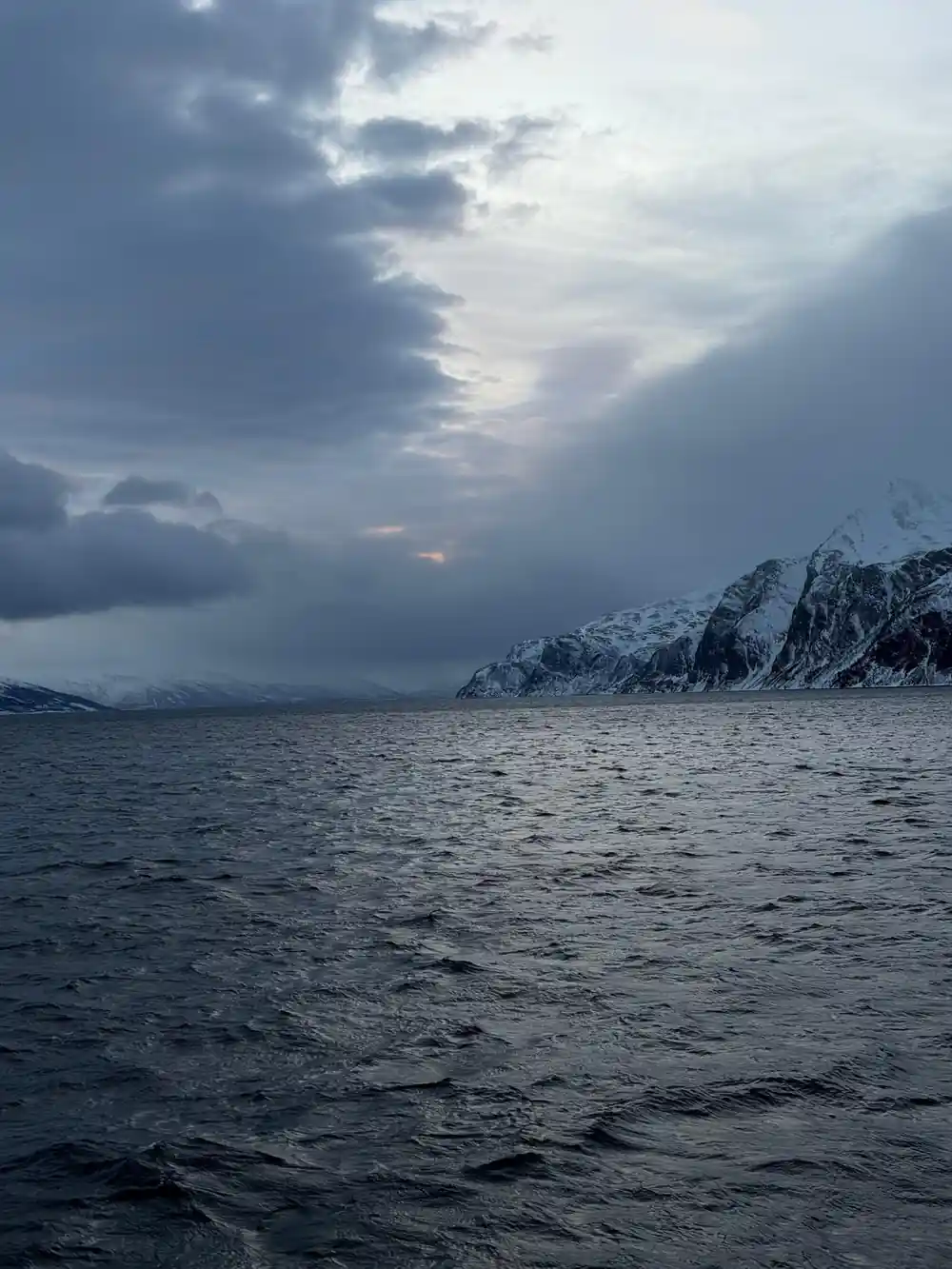
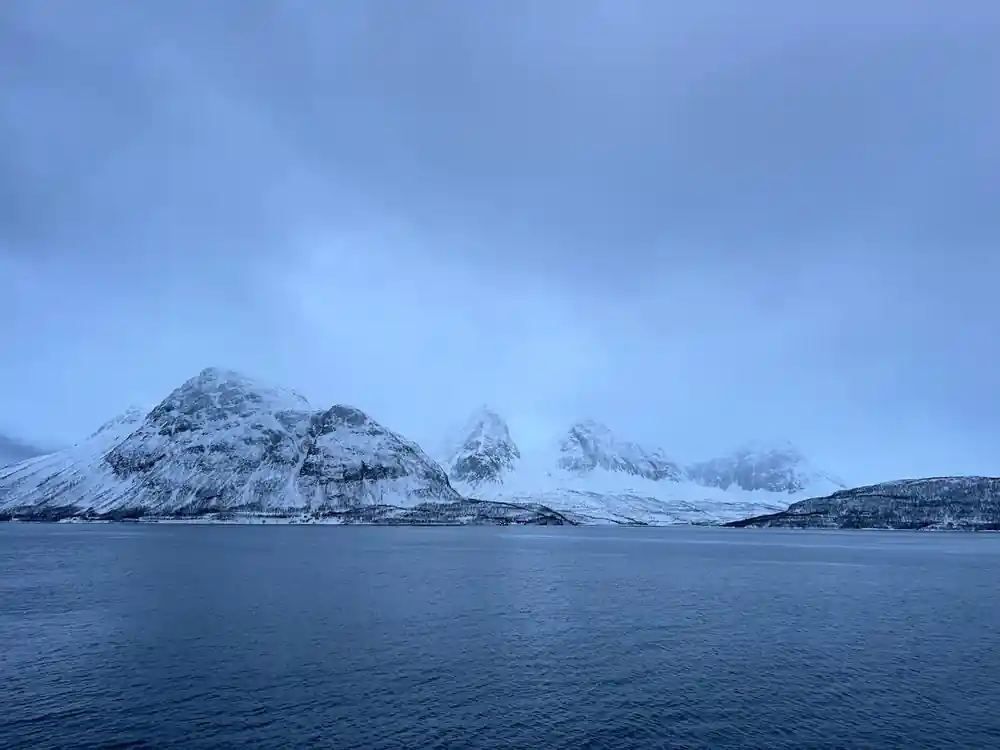
A catamaran crossing a still Skjervøy fjord on a clear winter afternoon
Whale watching Tromsø December: deep polar night
These are the darkest weeks of the Tromsø winter, sitting inside the Polar Night Season, which runs from November 27th to January 15th.[2] The sea is still busy. Orcas and humpbacks follow herring into the Tromsø and Skjervøy fjords roughly every November through January.[1] Since around 2017 that has usually meant the Kvænangen fjords near Skjervøy rather than the waters closer to Tromsø, and the 2025-2026 season followed the same pattern.[1] In practice you spend the middle of the day out among the islands and ride home in the dark.
Preparation decides how good the day feels. Waterproof outer trousers matter more than an extra jumper, and seasickness tablets work best taken well before you leave the quay. The average winter temperature in Tromsø is around -4°C, and wind on deck drops the felt temperature further.[3] Cameras and phones run out of battery quickly in the cold, so keep a spare in an inside pocket. If you would rather stay warm, look for a catamaran with a heated saloon and step outside when a sighting is called.
Whale watching Tromsø January: the season closes
January is the last full month of the whale window. The season runs roughly from November through January, when orcas and humpbacks follow herring into the Tromsø and Skjervøy fjords.[1] The polar night loosens its grip mid-month: the Polar Night Season in Tromsø lasts until January 15th.[2] The herring migration draws killer whales into northern Norwegian waters each winter, and the boats follow the fish north towards Skjervøy.[8]
Book ahead, since popular departure times fill up first. The high-speed catamaran whale safari runs 8 hours from Tromsø with a live English-speaking guide, and it offers free rebooking and the option to reserve now and pay later.[4] Free cancellation is also offered up to 24 hours in advance for a full refund on that listing.[4] That flexibility matters when winter weather reshuffles flights and transfers.
from US$220
The high-speed catamaran safari from Tromsø runs for 8 hours with a live English-speaking guide and is wheelchair accessible.[4]
Whale watching Tromsø February: what to expect
Late winter sits outside the main whale window. The season in Tromsø runs roughly from November through January, when orcas and humpbacks follow herring into the Tromsø and Skjervøy fjords.[1] Whales move with their food, and the dependable gatherings described for Tromsø belong to those winter months. What the tail end of winter does offer is winter itself: snow-covered peaks, dark evenings and quiet fjord roads with far fewer tour boats about. If you travel later in the year instead, minke whales and porpoises are occasionally spotted during summer, although sightings are fewer than in the winter season.[11]
If you do get out on the water in late winter, treat it as a proper Arctic day. The average winter temperature in Tromsø is around -4°C before wind chill.[3] Choose a boat with an indoor saloon if you feel the cold, and remember that RIB operators hand out full-length flotation suits that go over your own clothing.[5] Light returns quickly through the month, and a short run along the fjords can be a lovely half day even without a whale in sight.
Catamaran, RIB or hybrid-electric boat?
The whale trips from Tromsø generally follow a similar shape on the map: out of the city, north towards Skjervøy, and back again. The differences are in the boat. The high-speed catamaran safari takes 8 hours, is wheelchair accessible, and offers free rebooking and free cancellation up to 24 hours in advance.[4] RIB safaris are faster and more exposed, and operators provide full-length flotation suits, often called drysuits or immersion suits, to wear over your own clothing.[5] One Skjervøy RIB listing limits the group to 12 participants.[6] Rødne Fjord Cruise runs a 7-8 hour round trip with no disembarkation at all.[12]
If engine noise bothers you, there are quieter options. Brim Explorer runs a Silent Whale Watching tour on a hybrid-electric ship that operates silently in electric mode to minimise disturbance.[9] Catamarans give you space to move around, warm up and eat, while smaller boats feel more personal. Families may like the Arctic Whale Tours winter whale watching cruise from Tromsø aboard MS Alba, where children can join from age 1 and those under 16 must be accompanied by an adult.[13] Whichever boat you choose, check the meeting point and the return time before you commit to an evening flight.
Planning tips for a cold day on the water
Layers beat one thick coat. Start with a thermal base layer, add a fleece, then a windproof and waterproof outer layer, plus a hat, gloves and warm socks. Bring sunglasses for glare off water and snow, and a dry bag for your phone. Take seasickness tablets well before departure if you are unsure, and eat something light. On deck, keep one hand free for the rail, and go inside to warm up before you get properly cold rather than after.
Booking is the easy part. Look for tours that offer reserve now and pay later and free cancellation, including the catamaran safari, which offers both.[4] Check where your tour leaves from and what time it returns, as a full day on the water and the transfers around it can fill the useful daylight completely. Leave a spare evening in your plan. The whales are wild, the weather decides the route, and a relaxed itinerary handles both better than a tight one.
How long the main whale tours from Tromsø last
From-prices per person for Tromsø whale tours
When to go, month by month
How to plan your whale day
Choose your month
Aim for the November to January window, when orcas and humpbacks follow herring into the fjords.[1]
Pick your boat
Faster boats mean more time with the whales; open RIBs mean more spray and more cold.
Dress for the Arctic
Layers, a windproof shell, hat and gloves. RIB operators provide full-length flotation suits over your own clothing.[5]
Book ahead
Departure times go first in the busiest weeks. The catamaran safari offers reserve now and pay later and free cancellation.[4]
Stay comfortable
Take seasickness tablets before you leave the quay, and keep spare camera batteries somewhere warm.
Join the high-speed catamaran whale safari from Tromsø
from US$220Reserve now & pay later