The essentials
- A live tour guide in English leads the trip, with a crew that spends the day scanning for blows, bird activity and fins on the water on the way to Skjervøy.[1]
- Onboard sessions cover orcas, humpbacks and the herring that draws them into the fjords each winter, with plenty of time for questions as the boat moves north.[2]
- You learn to read a dorsal fin and the grey saddle patch behind it, the two features researchers use to tell one orca from another across seasons.
- Photographs with a time and a position attached are far more useful than a gallery of close-ups, so the crew will show you what to note and when to shoot.
- The safari runs 8 hours from Tromsø and the listing says to check availability to see starting times; free cancellation is available up to 24 hours in advance.[1]
- Top choice High-Speed Catamaran Safari from US$220 Duration8 hours[1]Rating4.61 from 3,768 reviews[1]GuideLive tour guide: English[1]CancellationFree cancellation up to 24 hours[1] Check availability
- RIB Safari at Skjervøy from US$251 Duration3 - 12 hours[3]Rating4.78 from 136 reviews[3]GuideLive tour guide: English[3]CancellationFree cancellation up to 24 hours[3] See this tour
- Fast, Comfortable Catamaran from US$210 Duration7.5 hours[4]Rating4.71 from 661 reviews[4]GuideLive tour guide: English[4]CancellationFree cancellation up to 24 hours[4] See this tour
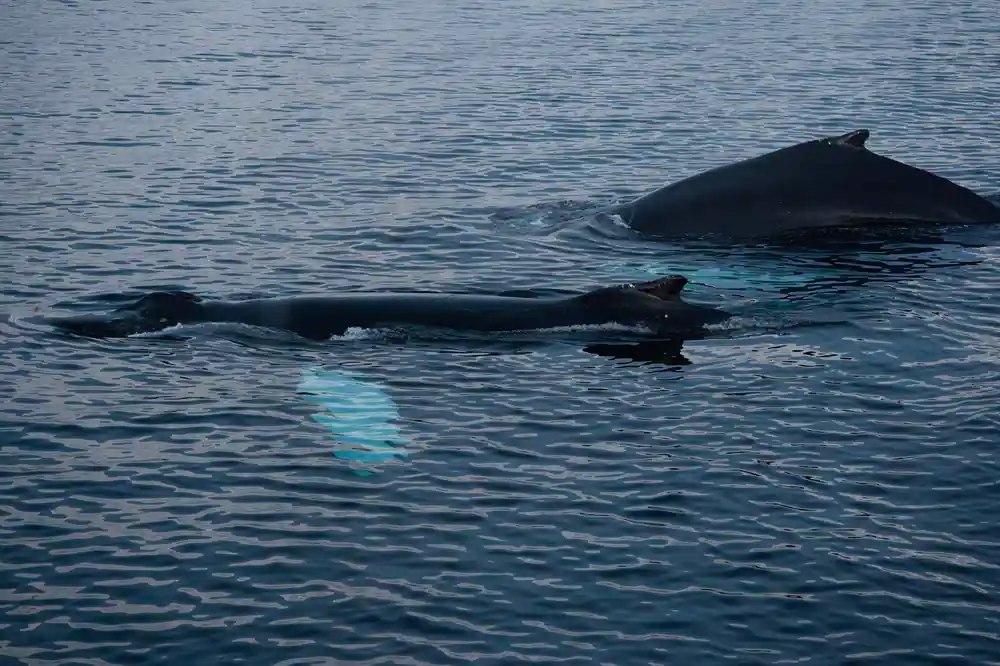
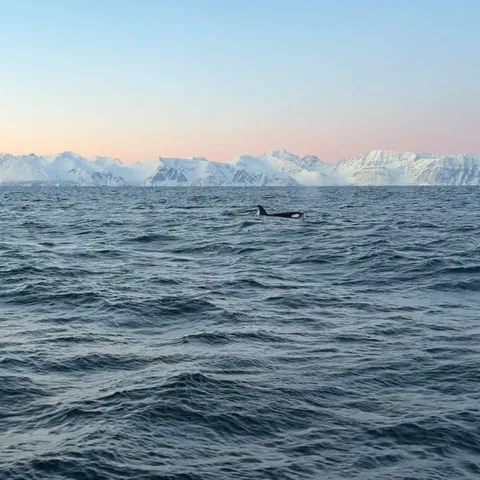
Its also common to find a lot of birds flying overhead where whales are, as they like to eat the herring that is pushed to the surface by the humpback whales. Lastly, we can use modern technology such as radar and sonar to find 'obstacles' in the open water.
Worth it for the science, not just the sighting
On board the catamaran
- Keep the camera out and a dry cloth handy; spray and cold air fog glass quickly.
- The safari runs 8 hours, so pack snacks and water for the long stretch on the water.[1]
- Tell the guide you want to help with photo-ID; they will point out which animals to shoot.
- This whale watching safari on the high-speed catamaran is wheelchair accessible.[1]
Before you sail
Meet Your Onboard Guides
A whale safari out of Tromsø is not a ferry ride with a recorded commentary. The boats that make the long run north carry a small crew whose job is to find animals and explain them: a skipper who knows the fjords, deckhands who keep everyone safe and warm, and a guide or naturalist who gives the talks. On this safari the guiding is live and in English, with room to ask questions while you watch a fin.[1] Small boats mean the crew can answer individual questions, and most of them have spent years working these fjords.
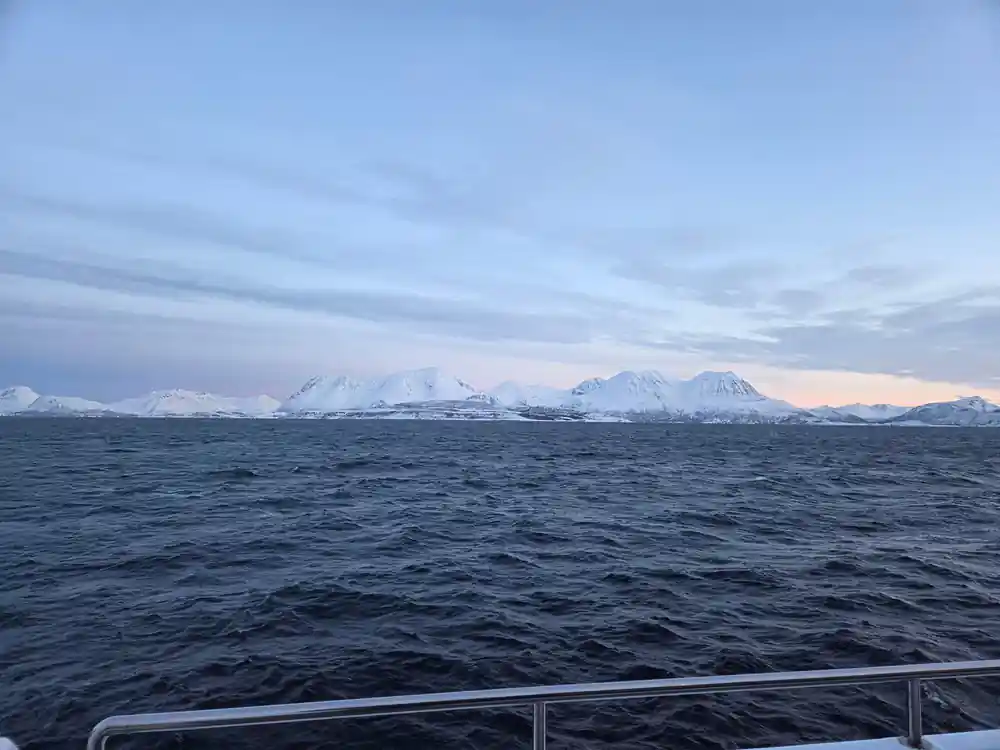
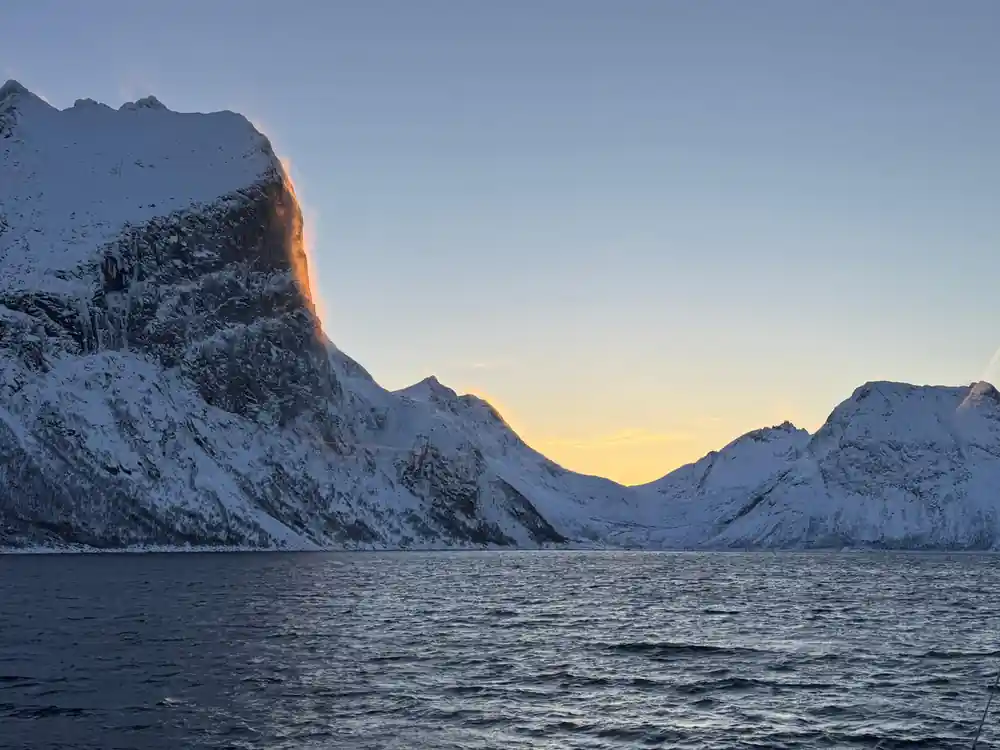
Where the whales are shapes the whole day. They have usually gathered in the Kvænangen fjords near Skjervøy rather than the waters closer to Tromsø.[6] That means a long, scenic run at the start of the trip, with coffee, naps and a lot of looking at mountains. Once the crew picks up bird flocks and blows, the decks fill, the engine note drops, and the guiding turns into play by play: which animal, which side, and how close you might get. Bring binoculars and keep them around your neck rather than in a bag.
What the Whale Presentations Cover
Talks on these trips tend to start with the basics: what an orca actually is, how a humpback feeds, and why so many animals turn up in the same stretch of water each winter. The short answer is herring. The migration of Norwegian spring-spawning herring draws killer whales into northern Norwegian waters each winter.[2] The whale season here runs roughly from November through January, when orcas and humpbacks follow the herring into the Tromsø and Skjervøy fjords.[6] Guides are usually happy to go over what lives under the boat as well, from krill to cod.
Later sessions often turn to behaviour and boat etiquette. Operators keep their distance, and the guidelines used in Tromsø are specific: approach whales slowly, at less than 5 knots when within 300m, at constant speed, from the side and slightly to the rear.[7] A good talk explains what that looks like from the deck, including why the boat holds back when a fin is right there. Expect the light to come up as well: Polar Night in Tromsø begins on November 27 and lasts until January 15.[8]
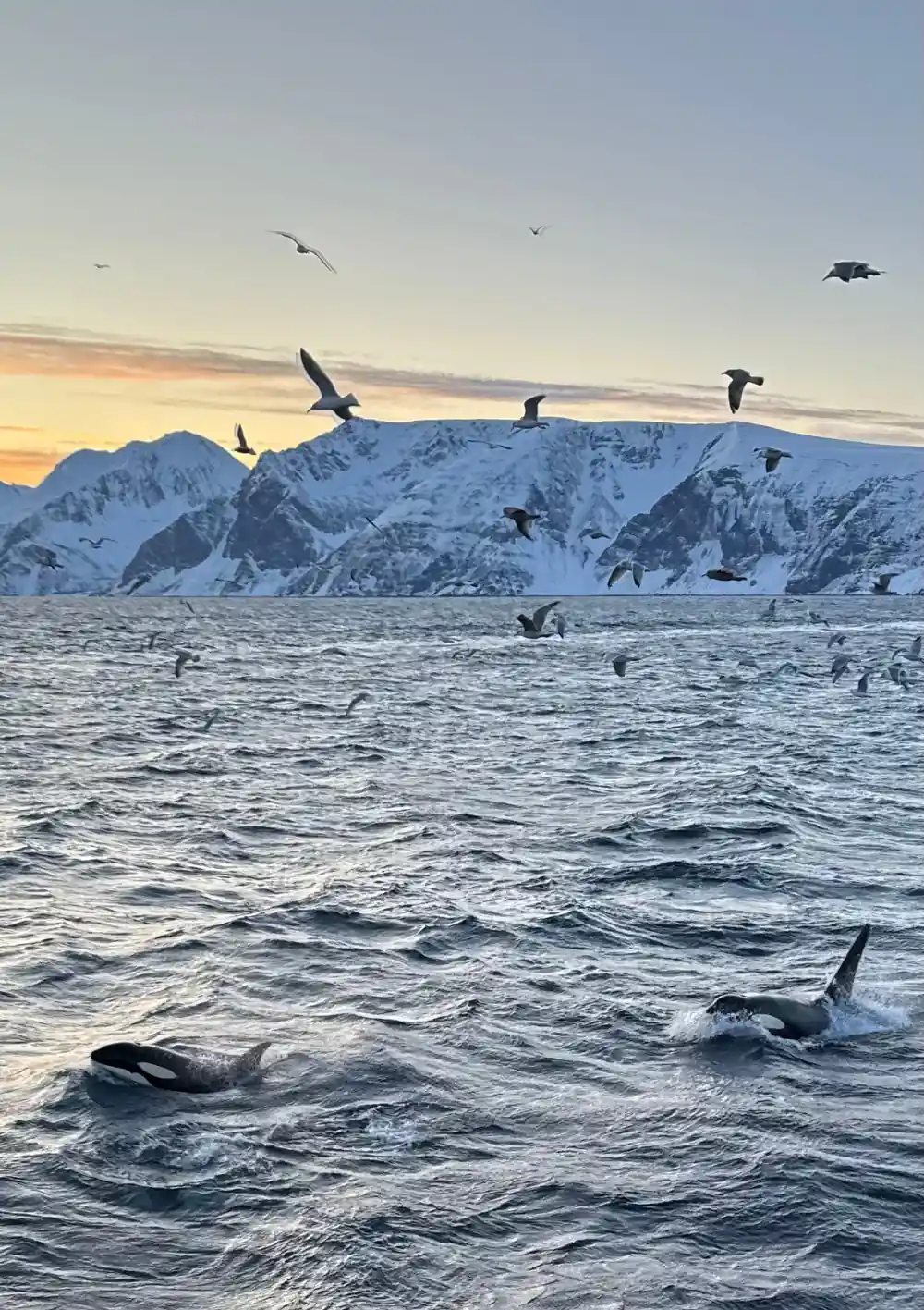
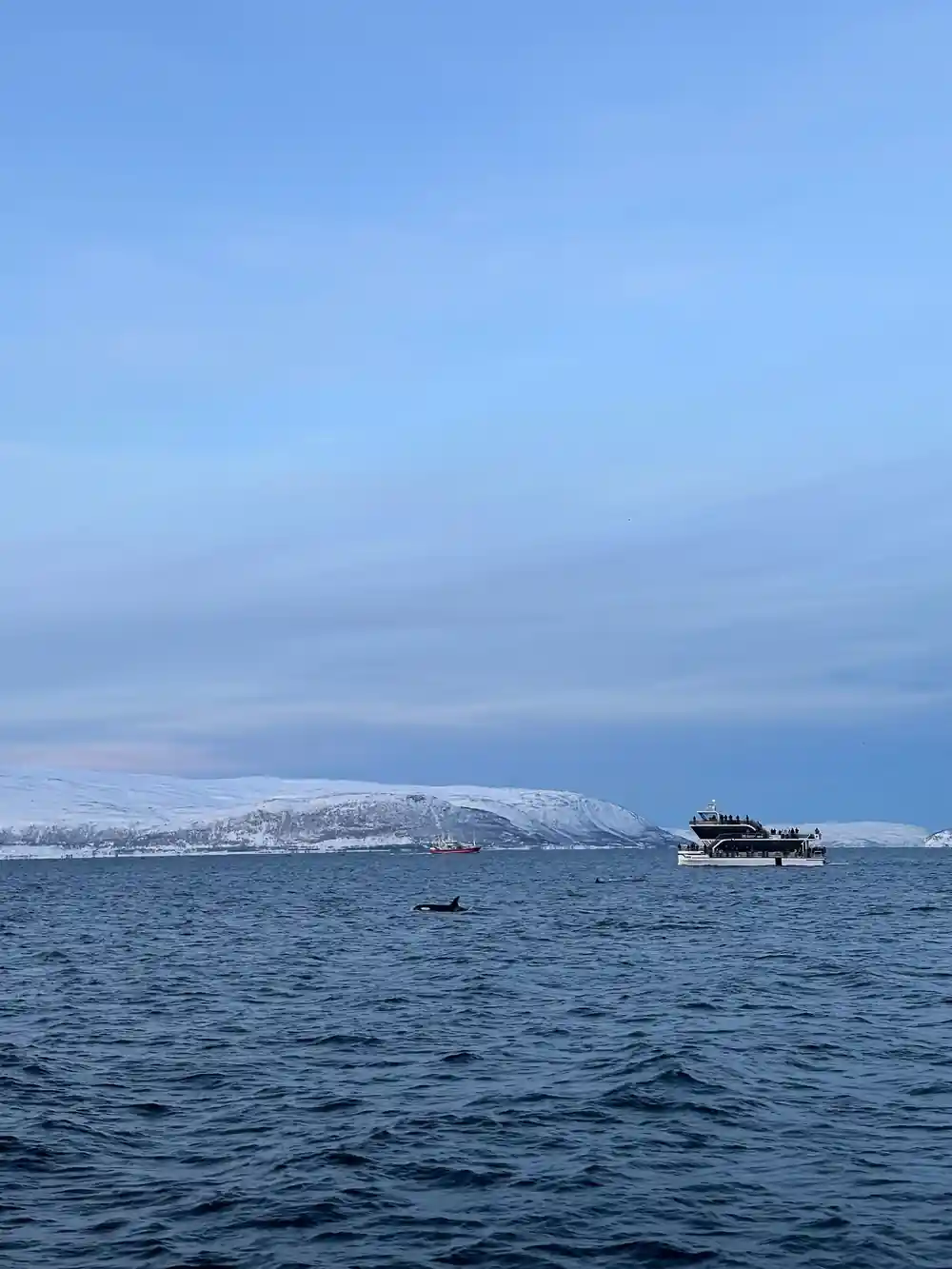
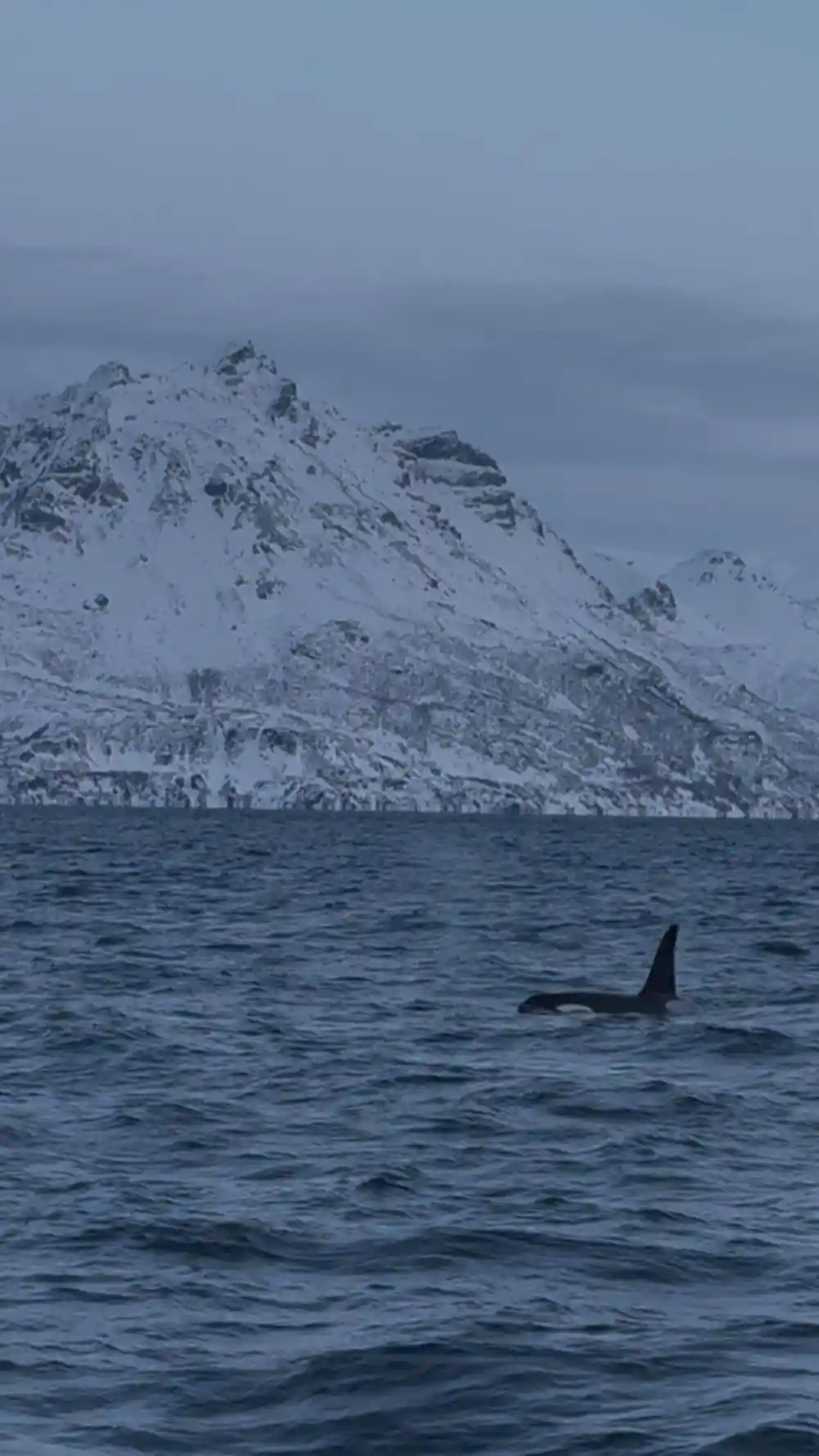
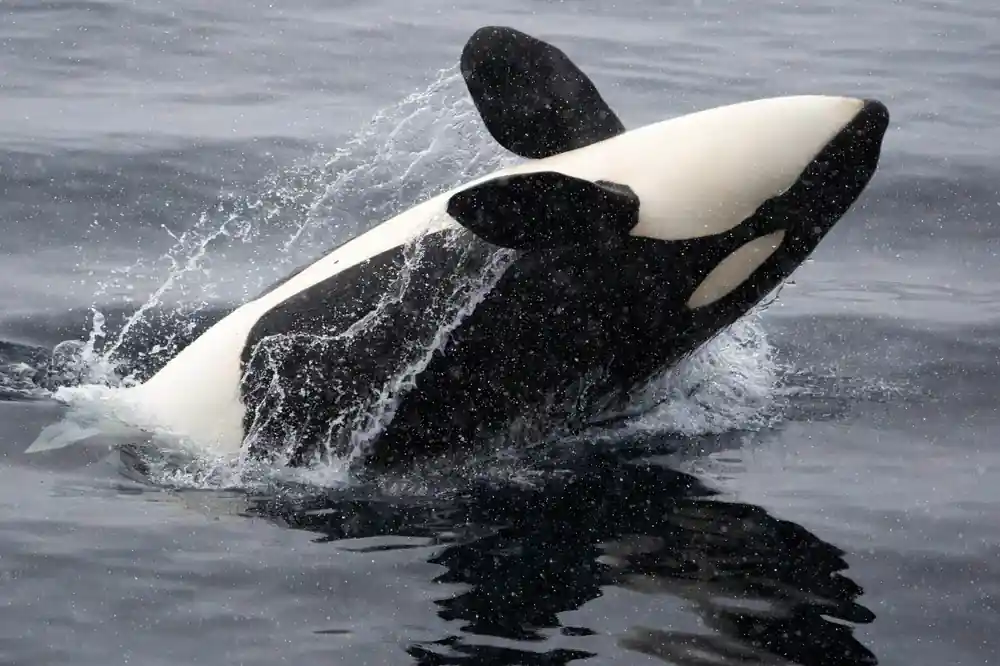
Orcas surface beside the boat in flat winter light near Skjervøy.
Identifying Orcas by Dorsal Fin and Saddle Patch
Every orca carries a signature. The dorsal fin, tall and straight in adult males and more curved in females and young animals, gets nicked and bent over the years, and no two fins seem to break in quite the same way. Behind the fin sits the saddle patch, a grey marking whose shape and shading vary from one individual to the next. Fin plus patch gives you something close to a fingerprint, readable from a photograph taken at the right angle.
Listen for the guide pointing out which side of the animal you are seeing. Photo-ID catalogues generally work from images of the right side, where the saddle patch tends to show most clearly. A sharp profile is worth more than a dramatic shot of a tail fluke going under. Once you can read the features for yourself, a fin in the distance stops being an anonymous black shape and becomes an individual with a history. Photographs taken from a moving deck are rarely perfect, and they do not need to be.
How Your Photographs Enter Research Databases
Finding the animals in the first place is a skill of its own. On Brim Explorer's silent whale watching tour, the crew watch for birds flying overhead where humpback whales push herring to the surface, and use radar and sonar to find large obstacles in open water.[9] Your photographs work differently, but the same principle applies: a sharp profile of the right side, taken while the animal is side on to the boat, plus the time and the position of the shot. That last part is the piece most people forget.
Researchers compare new images with archived ones, matching fin shapes and saddle patches to build a picture of who has been seen where, and when. Some operators pass their own photographs and logs to those projects after the season, and some invite passengers to send in their best frames. Ask the crew on the day what helps, and how they would like files labelled. Keep your bursts too, because a run of shots a second apart is often easier to match than one lucky frame.
from US$220
This safari starts from US$220 and runs 8 hours from Tromsø, is wheelchair accessible and has a live English-speaking guide.[1]
Daily Sightings Logged and Shared
On a working whale boat the day is recorded as carefully as it is enjoyed. Crews note the time and position of each encounter, how many animals were present, what they were doing, the sea state and the light. They also record the effort: how long the boat searched and where it looked. Effort is the part that makes a log useful, since a quiet afternoon with no sightings is data as well.
Approach behaviour goes into the same record. Whale watching guidelines in Tromsø ask boats to approach slowly, at less than 5 knots when within 300m, at constant speed, from the side and slightly to the rear.[7] When a skipper holds station and lets an animal come to the boat rather than driving at it, that is the guideline at work, and it is also the moment when the best photographs tend to happen.
Guests can add to a sightings log with nothing more than eyes and a phone. Note the time of the first blow, the direction the animals are travelling, and how many surface together. Mention anything unusual: a breach, a tail slap, a calf swimming tight beside an adult. Guides collect those notes at the end of the day and fold them into the boat's own record. Nobody expects you to be a scientist; clear, honest notes are worth more than impressive ones.
What Long-Term Study Reveals About These Pods
Individual identification is what turns a run of whale trips into a long study. When the same animals are photographed across seasons, patterns appear: females with calves in tow, groups that travel together, individuals that return to the same fjord. Since around 2017 the whales near Tromsø have usually gathered in the Kvænangen fjords near Skjervøy rather than the waters closer to Tromsø.[6] Where they go next is an open question, and photographed fins help answer it. A single season of photographs is a snapshot; a decade of them is a story about movement.
Winter takes most of the attention, but the fjords are not empty in summer. Minke whales and porpoises are occasionally spotted during summer in Tromsø, although sightings are fewer than in the winter season.[10] Some boats are changing as well. In Tromsø, Brim Explorer runs a Silent Whale Watching tour on a hybrid-electric ship that operates silently in electric mode to minimize disturbance.[9] Quieter engines mean fewer animals reacting to noise, which helps the whales and anyone trying to photograph them.
Prepare for Your Role as a Citizen Scientist
You do not need expensive gear to take part, but a little preparation pays off. Charge everything the night before and carry a spare battery in an inside pocket, where it stays warm. Set a fast shutter speed before the boat slows down and leave the camera switched on. Learn where the zoom ring sits without looking. Dress for standing still on deck in the cold, and keep a dry cloth for the lens. Knee-high boots and a windproof outer layer make a bigger difference than a new camera.
Ask questions while the guide is in front of you. Which animals have been seen this week, which pods the crew can recognise, whether there is a catalogue you can send pictures to. There is a lot of travelling time between encounters on a trip of this length, and the crew usually enjoy the interest. RIB whale watching tours in the area hand out full-length flotation suits, often called drysuits or immersion suits, to wear over your own clothing.[11]
If you are travelling with children, check the age rules for the boat you book. On the Arctic Whale Tours winter cruise from Tromsø aboard MS Alba, children can join from age 1, and those under 16 must be accompanied by an adult.[12] Rules differ between operators, and boarding times and meeting points vary too, so the listing is the place to check before you pay.
How long the whale boats are out
Listed durations: 8 hours[1], 7.5 hours[4], 9 hours[13], 12 hours[14] and 6 hours[15].
From-prices per person on Tromsø whale tours
US dollar from-prices from the GetYourGuide listings[1][3][4][16].
When to go and when to book
Citizen science on board
Listen to the briefing
Find out what the crew hopes to see and how they want photographs taken before the boat reaches the whales.
Learn two features
Fix the dorsal fin shape and the grey saddle patch in your mind; those two details separate one orca from another.
Shoot the right side
Take sharp profiles of the right side, hold the camera steady, and fire a short burst rather than a single frame.
Write down the time
Note the time and, if you can, the position on your phone. An untagged image is much harder for a researcher to match.
Hand over the best frames
Ask the guide how to send your pictures, and pass on anything unusual you saw during the encounter.
Join the talk, then help with the photo-ID work
from US$220Reserve now & pay later