The essentials
- Orcas and humpbacks follow herring into the Tromsø and Skjervøy fjords roughly every November through January.[28]
- Since around 2017, whales near Tromsø have usually gathered in the Kvænangen fjords near Skjervøy rather than closer to the city.[28]
- Brim Explorer's crew watch for birds flying overhead where humpback whales push herring to the surface, and use radar and sonar.[29]
- Tromsø guidelines say to approach whales slowly, at less than 5 knots when within 300m, at constant speed, from the side and slightly to the rear.[30]
- The high-speed catamaran safari from Tromsø takes 8 hours and is wheelchair accessible, from US$220, with free rebooking offered.[31]
- Top choice High-Speed Catamaran Safari from US$220 Duration8 hours[31]Rating4.61 from 3,768 reviews[31]GuideLive tour guide: English[31]CancellationFree cancellation up to 24 hours[31] Check availability
- RIB Safari at Skjervøy from US$251 Duration3 - 12 hours[32]Rating4.78 from 136 reviews[32]GuideLive tour guide: English[32]CancellationFree cancellation up to 24 hours[32] See this tour
- Fast Comfortable Catamaran from US$210 Duration7.5 hours[33]Rating4.71 from 661 reviews[33]GuideLive tour guide: English[33]CancellationFree cancellation up to 24 hours[33] See this tour
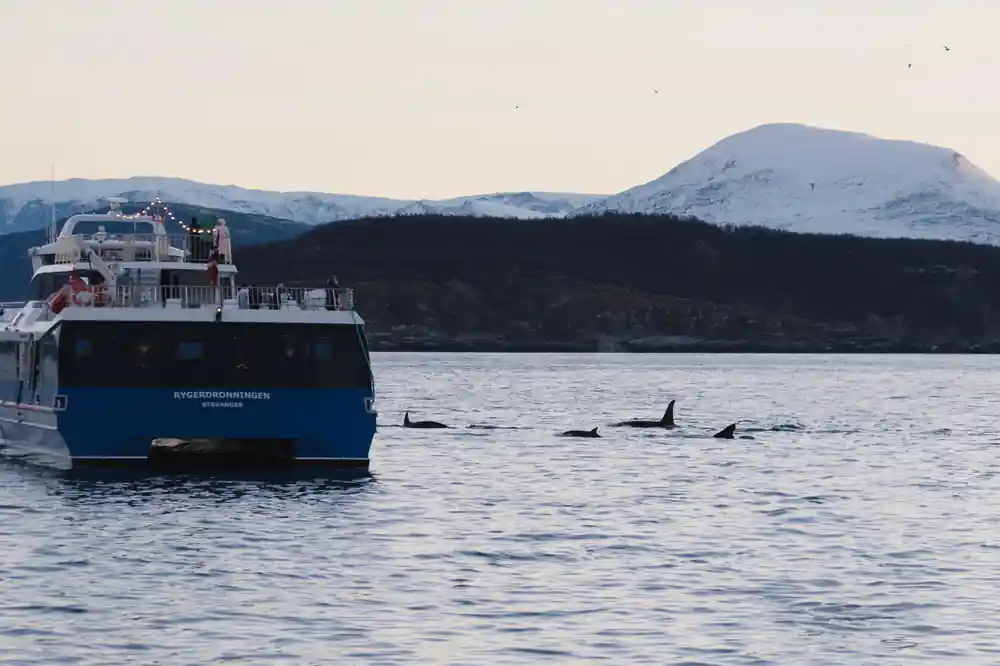
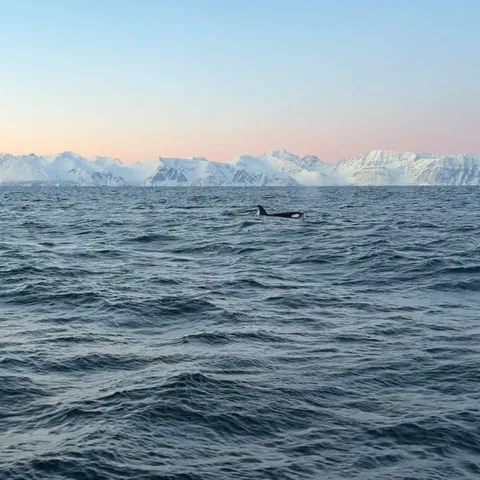
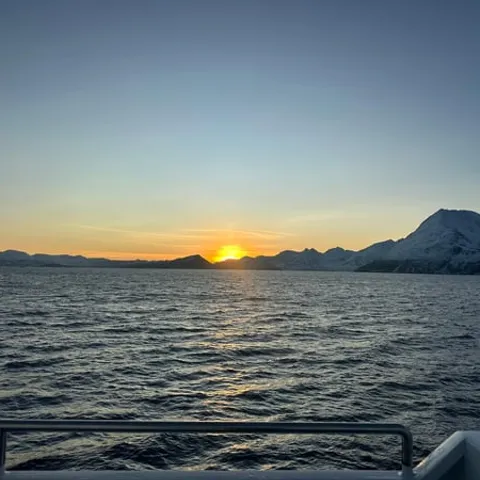
Its also common to find a lot of birds flying overhead where whales are, as they like to eat the herring that is pushed to the surface by the humpback whales. Lastly, we can use modern technology such as radar and sonar to find 'obstacles' in the open water.
Is the high-speed catamaran safari worth a day?
Before you board
Out on the water
Where the Whales Are This Winter
A whale watching day in Tromsø does not begin in the harbour. It begins with a route decision on the bridge, taken long before anyone in a life jacket steps aboard. Orcas and humpbacks follow herring into the Tromsø and Skjervøy fjords roughly every November through January, and the migration of Norwegian spring-spawning herring draws killer whales into northern Norwegian waters each winter.[28][36]
Since around 2017 the whales near Tromsø have usually gathered in the Kvænangen fjords near Skjervøy rather than the waters closer to Tromsø, and the 2025-2026 season followed the same pattern.[28] Plan for a long run north-east out of the city rather than a short hop, with snow-covered peaks standing over the water for most of it and the last stretch spent scanning a flat, grey sea for the first puff of breath.
The season is short and dark enough to shape the whole day. The Polar Night Season in Tromsø begins on November 27th and lasts until January 15th, and the average winter temperature is around -4°C, though temperatures can vary considerably, particularly when travelling inland.[34][37] Out on the fjord, add wind and spray to that. Sailings on the high-speed catamaran safari take 8 hours, which is a full working day on the water rather than a quick look.[31]
The Morning Decision on the Bridge
Long before departure, the captain and crew are weighing ordinary, unglamorous things: wind direction and strength, the sea state in the exposed stretches on the way north, ice on deck and in the small harbours, how much daylight the day gives them, and how far they will have to run if the whales are where they were yesterday. A north-westerly that feels brisk in the city square can be a different animal entirely out near Skjervøy.
The plan is rarely final at the dock. Crews watch what the boats ahead are doing, listen to the radio, and keep a change of route in reserve. That flexibility is the quiet skill of the job. The whales are wild and they are chasing a moving shoal, and no itinerary can move them.
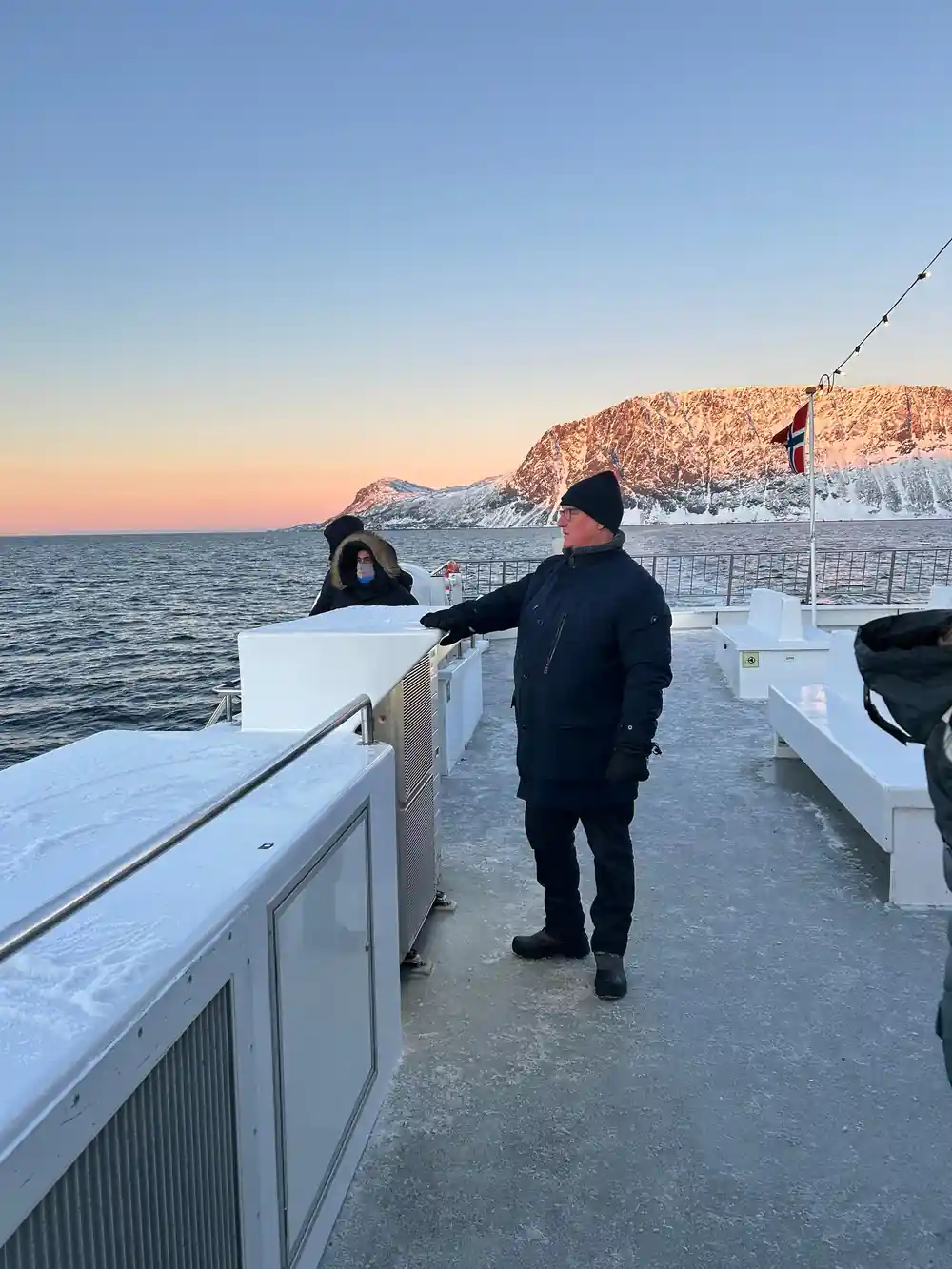
Guests mostly notice the result rather than the process. The boat may run further than you expected, or turn into a sheltered sound to wait out a squall, and the mood on the bridge stays even through both. Bring the layers you would wear for a long winter walk, plus something windproof on the outside, and you can enjoy the search instead of enduring it.
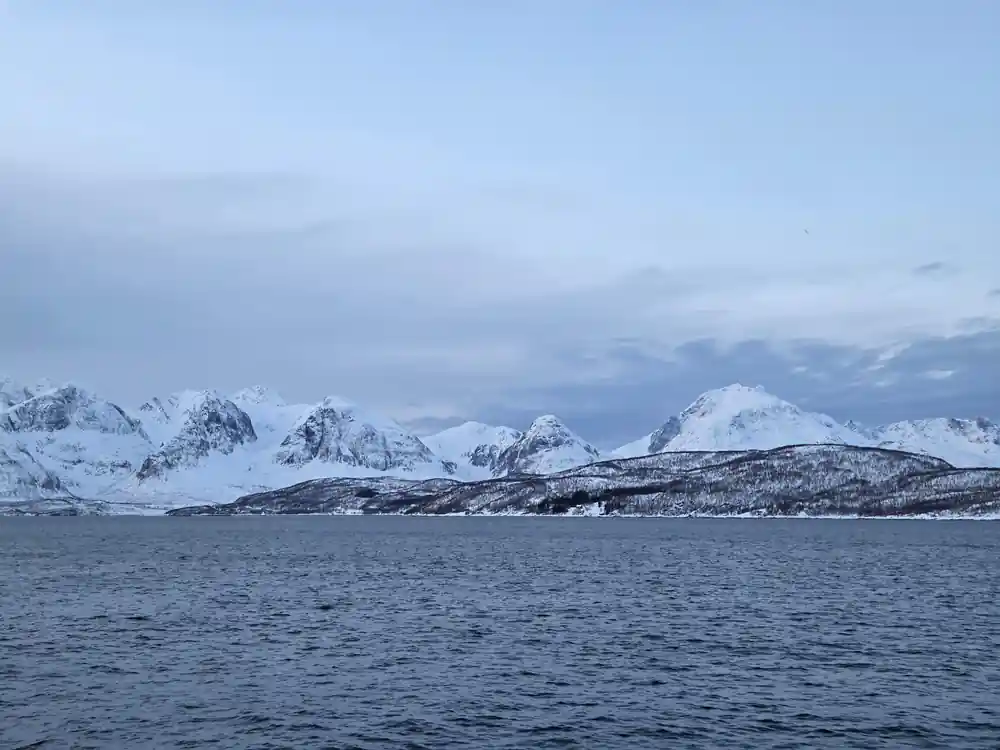
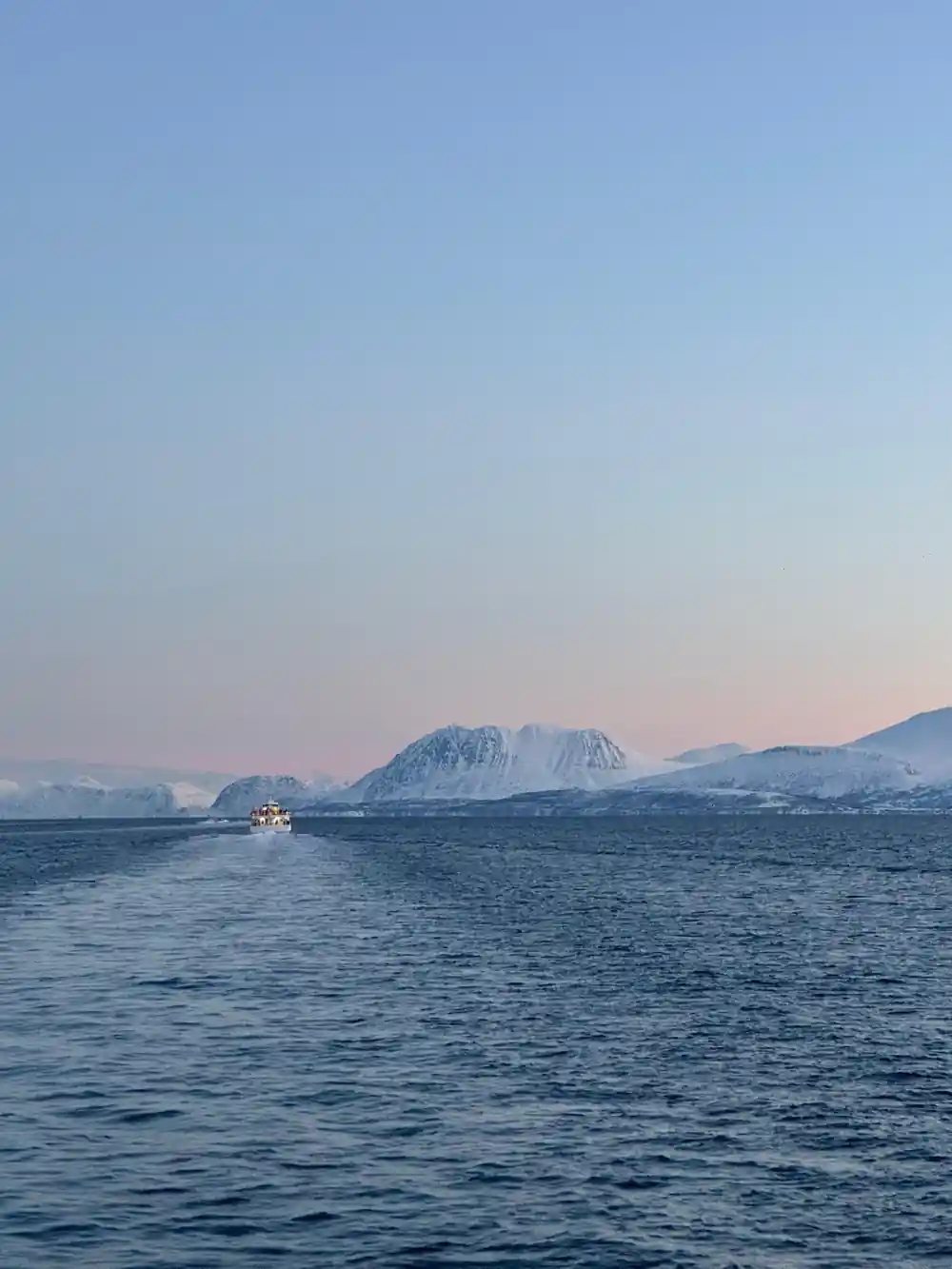
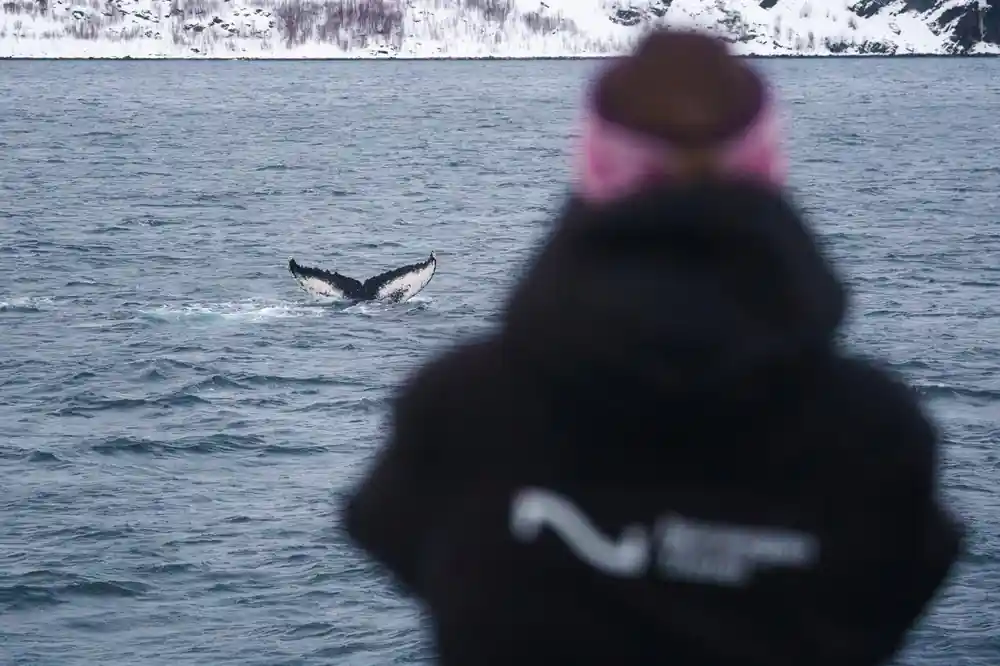
Snow-covered peaks stand over the fjord where herring shoals draw the whales each winter.
Birds, Blows and Boats: Reading the Surface
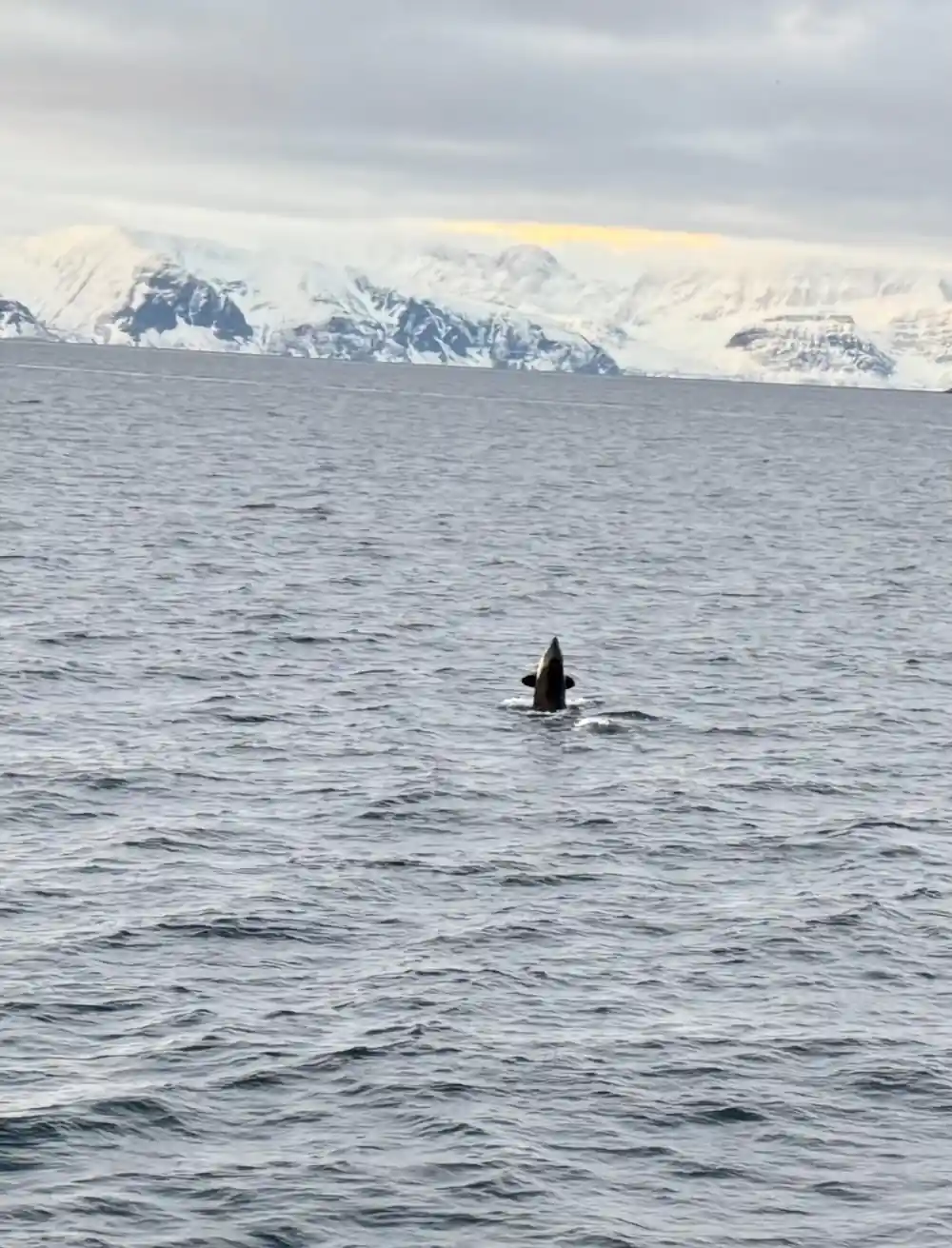
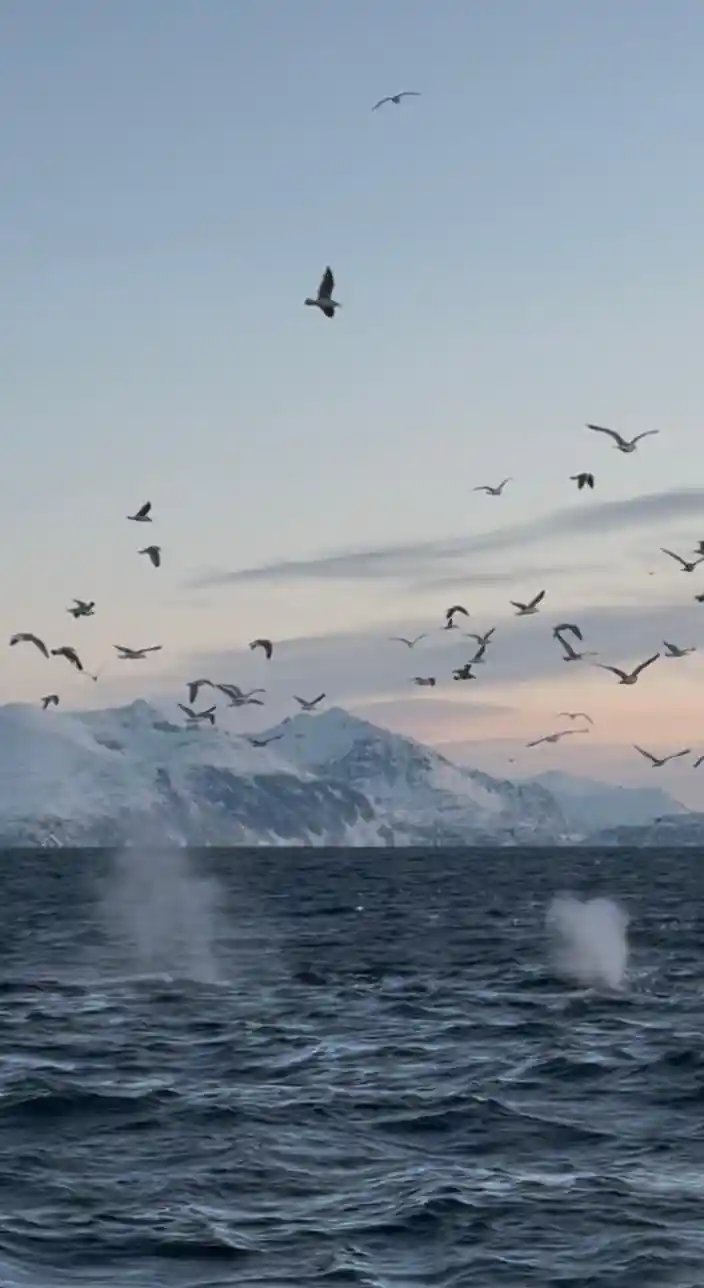
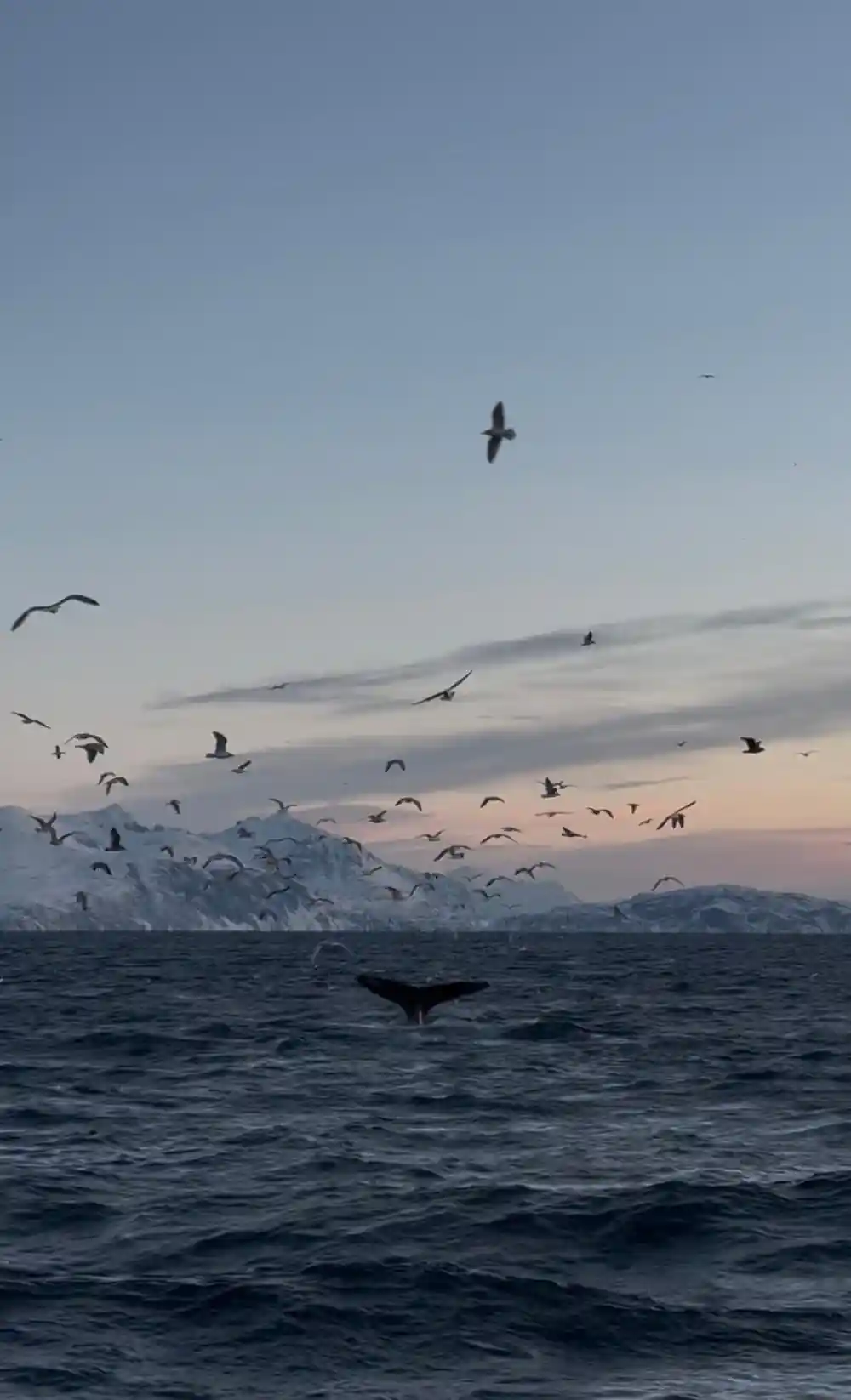
Once the boat is in whale country, looking matters as much as instruments. A blow is usually the first thing a spotter catches, a pale puff of condensed breath that hangs above a flat sea for a second and then vanishes. Humpbacks are often the easiest to pick up this way, and one distant blow on the horizon is enough to send everyone to the rail.
Crews also read the birds. Brim Explorer's crew watch for birds flying overhead where humpback whales push herring to the surface, and they use modern technology such as radar and sonar to detect large obstacles in open water.[29] Flocks that gather and dive in one tight spot are worth a detour, but they are a clue rather than a guarantee.
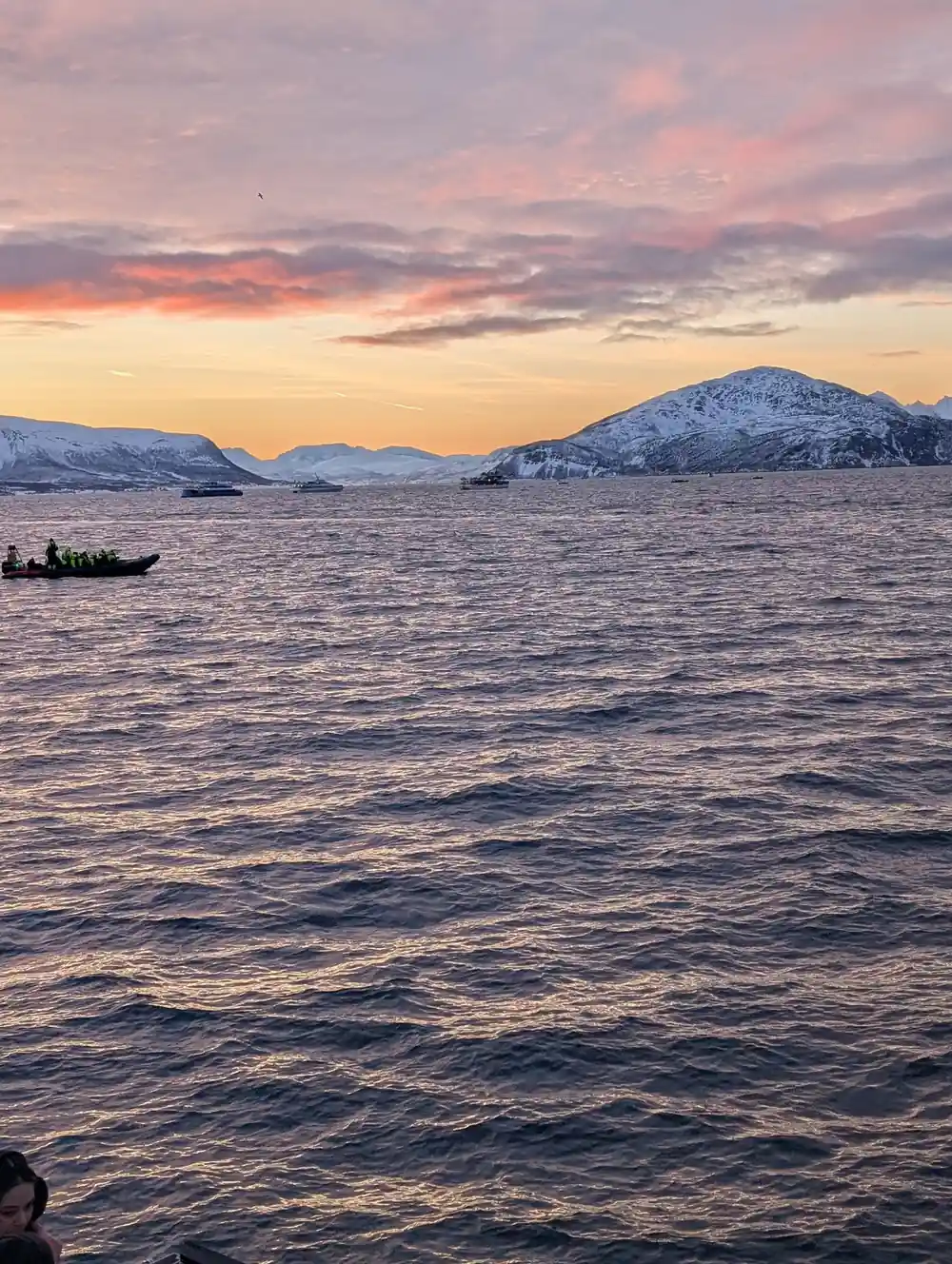
Fishing vessels are the other marker on a working coast. Lines of boats over the same ground suggest where the herring has been in the last day or two, and a short exchange between skippers can turn a vague area into a bearing and a distance. Birds, blows, boats and the radar screen together narrow a search that began on empty water.
Radio, Radar and the Hidden World Below
Radio is the quiet tool of the trade. Boats working the same stretch of fjord pass sightings between them, and a fresh call about a direction and a distance can save an hour of hunting. Many skippers will trust that over any forecast, since a report from a boat already on scene is newer than anything on a screen.
Under the small talk of the radio there is the sound of the whales themselves. Orcas are vocal and social, and hydrophone recordings from these fjords are busy places, full of clicks, whistles and long calls that carry a long way through cold water. Listening does not replace looking, but it can confirm what a pair of eyes has already guessed and give a direction to follow.
There is also the question of what the boat adds to the water. Brim Explorer runs a Silent Whale Watching tour on a hybrid-electric ship that operates silently in electric mode to minimize disturbance.[29] Passengers notice it most when the engines drop away and the fjord goes quiet, with the hull still moving and every splash suddenly loud.
from US$220
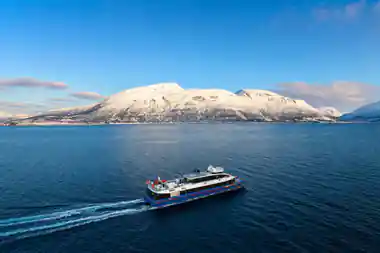
The high-speed catamaran safari from Tromsø runs 8 hours out to Skjervøy and back, from US$220[31]
Slow Approaches and the Guidelines Crews Work To
Finding whales is only half the job. How a boat behaves once it is close matters for the animals and for what you actually get to see. In Tromsø, whale watching guidelines say to approach whales slowly, at less than 5 knots when within 300m, at constant speed, from the side and slightly to the rear.[30]
Those guidelines are voluntary best-practice rather than direct government regulation. Bear that in mind when you compare operators and ask questions before you book. A skipper who slows early, holds a steady course and keeps to the side of an animal is working to a plan. A boat that charges in and cuts across is not.
On a good encounter you can usually read what the whales are doing. Animals moving in a tight line are travelling; animals that have slowed and circled are likely to be feeding, and hanging back lets that carry on. Keep the camera switched on and the settings ready. Most of the drama happens at the surface for seconds at a time.
Why Some Days End Without a Sighting
Whale watching is wildlife watching, and the honest version of it includes blank days. The whales are a wild population following a moving shoal, the weather can close a stretch of coast, and midwinter daylight is short. A slow start, a long run and a brief window of real whale time is a normal shape for the day.
Tromsø whale seeing is weather work as much as wildlife work, and crews are used to managing hopes on the way out. Plan the rest of your trip so that a long day on the water does not wipe out everything else you wanted to do, and keep one free morning as a spare.
Booking terms are worth reading for exactly this kind of day. On the high-speed catamaran safari from Tromsø, free cancellation up to 24 hours in advance for a full refund is offered, free rebooking is offered, and you can reserve now and pay later.[31] Those terms cannot put whales in the fjord, but they do give you room to move when plans change.
Planning Your Own Whale Watching Day
The safari that runs from Tromsø on a high-speed catamaran leaves the city, calls at Skjervøy and returns, and takes 8 hours.[31] Prices start from US$220, there is a live tour guide in English on board, and the boat is wheelchair accessible.[31] Check availability for starting times when you book.
Other shapes of the same day exist. The RIB safari at Skjervøy runs between 3 and 12 hours depending on the option you choose, is limited to 12 participants, and starts from US$251.[32] On RIB whale watching tours, operators provide full-length flotation suits, often called drysuits or immersion suits, to wear over your own clothing.[35]
If you are travelling with small children, one useful comparison: on Arctic Whale Tours' winter whale watching cruise from Tromsø, children can join from age 1, and those under 16 must be accompanied by an adult.[38] Whatever you book, eat properly before you leave, take seasickness seriously, and give yourself an easy evening afterwards.
How long the day runs on the water
Durations as listed for each Tromsø departure:[31][39][40][41]
From-prices for whale watching tours from Tromsø
Adult from-prices per listing; no child rates are listed.[31][32][39][41]
When to plan around the whale season
How the crew finds whales
Check the weather first
Wind, swell and ice decide the route before anyone boards. A calm city morning can mean a lumpy sea further out.
Follow the herring
Whales follow the fish. Orcas and humpbacks follow herring into the Tromsø and Skjervøy fjords roughly every November through January.[28]
Read birds and blows
Crews watch for birds flying overhead where humpback whales push herring to the surface, and use radar and sonar to find obstacles.[29]
Compare notes by radio
Boats in the same water pass sightings between them, and a fresh report from a boat already on scene can cut the search short.
Slow down, stay steady
Guidelines say to approach whales slowly, at less than 5 knots when within 300m, at constant speed, from the side and slightly to the rear.[30]
Plan a winter whale watching day from Tromsø while the season is running
from US$220Reserve now & pay later